Research Overview
Semaglutide and the incretin axis
GLP-1 is an incretin hormone released from intestinal L-cells and cleared within minutes by dipeptidyl peptidase-4. Semaglutide addresses that with two structural changes: an aminoisobutyric acid at position 8 that blocks the DPP-4 cleavage site, and a C18 diacid linker that binds albumin and extends circulation to the order of a week. Its receptor is expressed in pancreatic islets, the gastrointestinal tract and several central nervous system regions, and the published literature covers glucose handling, gastric emptying and energy balance endpoints.
AOD-9604
MOTS-c
MOTS-c is one of a small number of peptides encoded in mitochondrial rather than nuclear DNA — its open reading frame sits within the 12S rRNA gene. Research has linked it to AMPK activation and to folate-methionine cycle intermediates, and rodent studies have examined metabolic homeostasis endpoints. Its mitochondrial origin is why it appears in energy-metabolism panels rather than in receptor pharmacology work.
Why three mechanisms in one kit
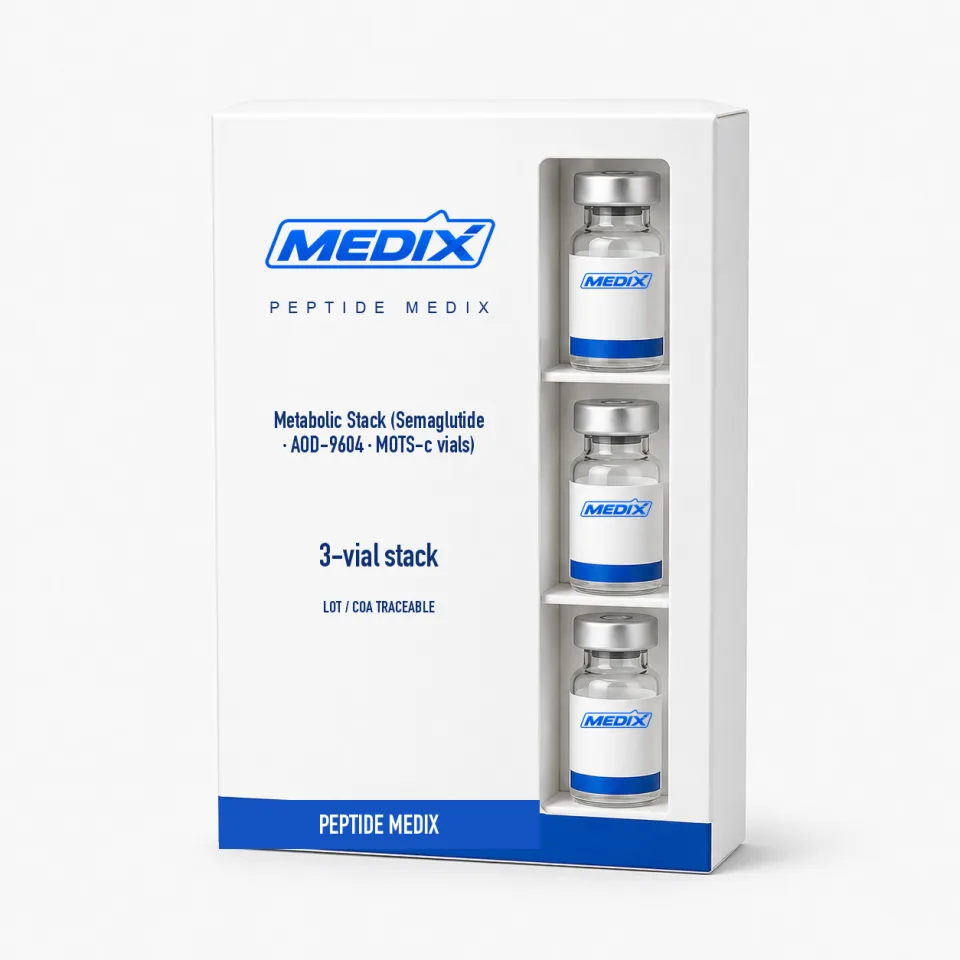
Metabolic phenotypes rarely resolve to a single pathway, and a panel that probes incretin signalling, adipose-tissue handling and mitochondrial energetics separately gives more interpretable data than one that mixes them. Separate vials are what make those independent arms possible.
Regulatory position
Semaglutide is an approved medicine in the United States, but the material supplied here is research grade and is not a pharmaceutical product. AOD-9604 and MOTS-c are not approved drugs. Nothing in this summary describes a human outcome, benefit or indication.