Research Overview
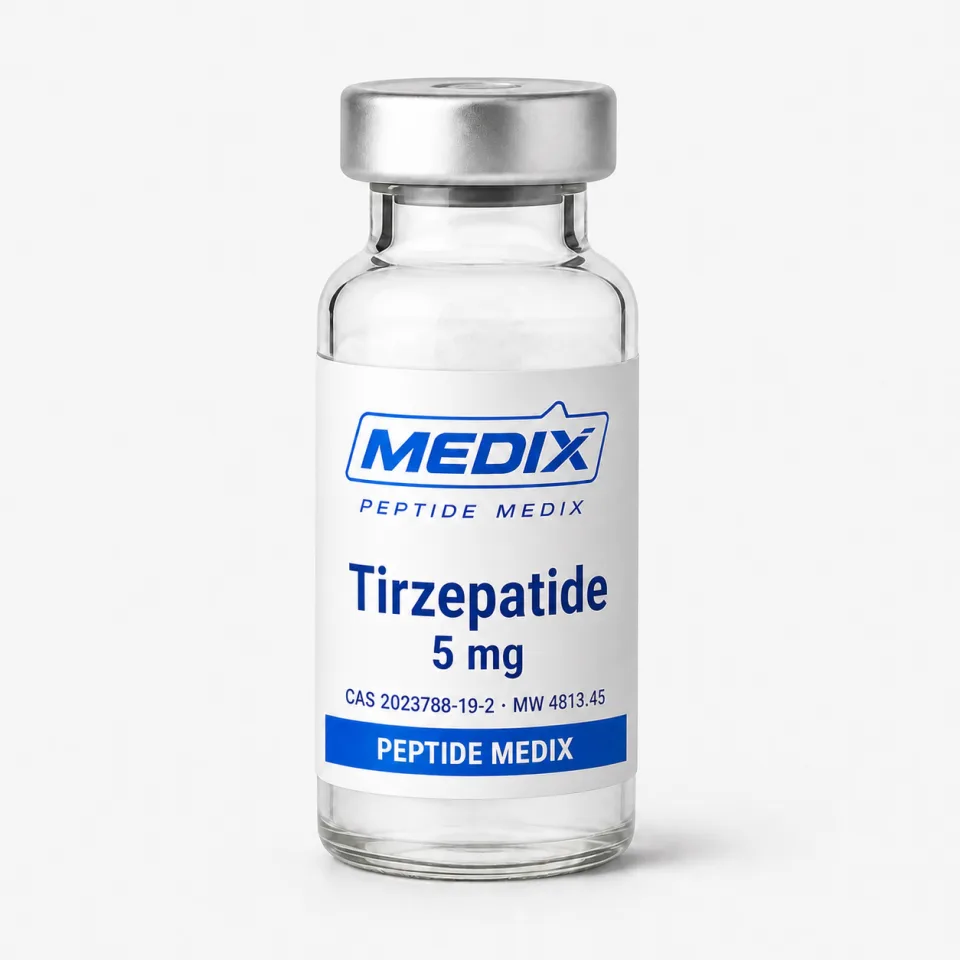
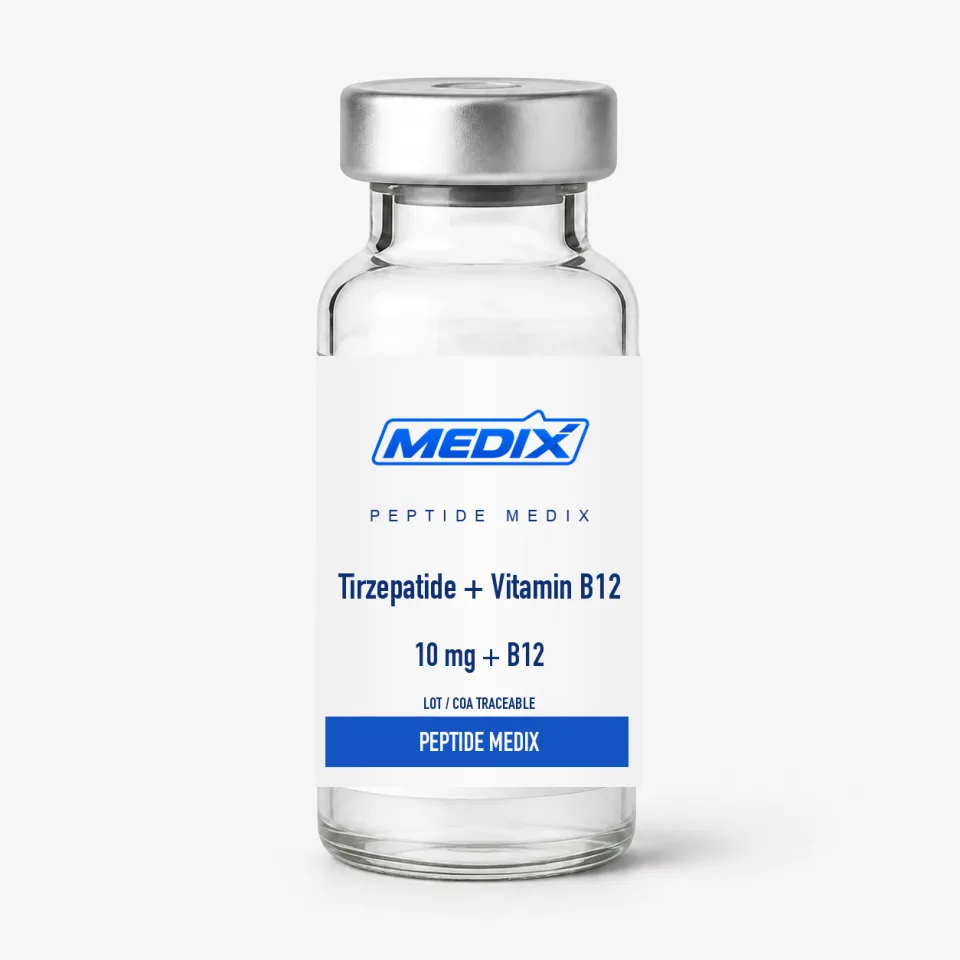
Tirzepatide: the incretin component
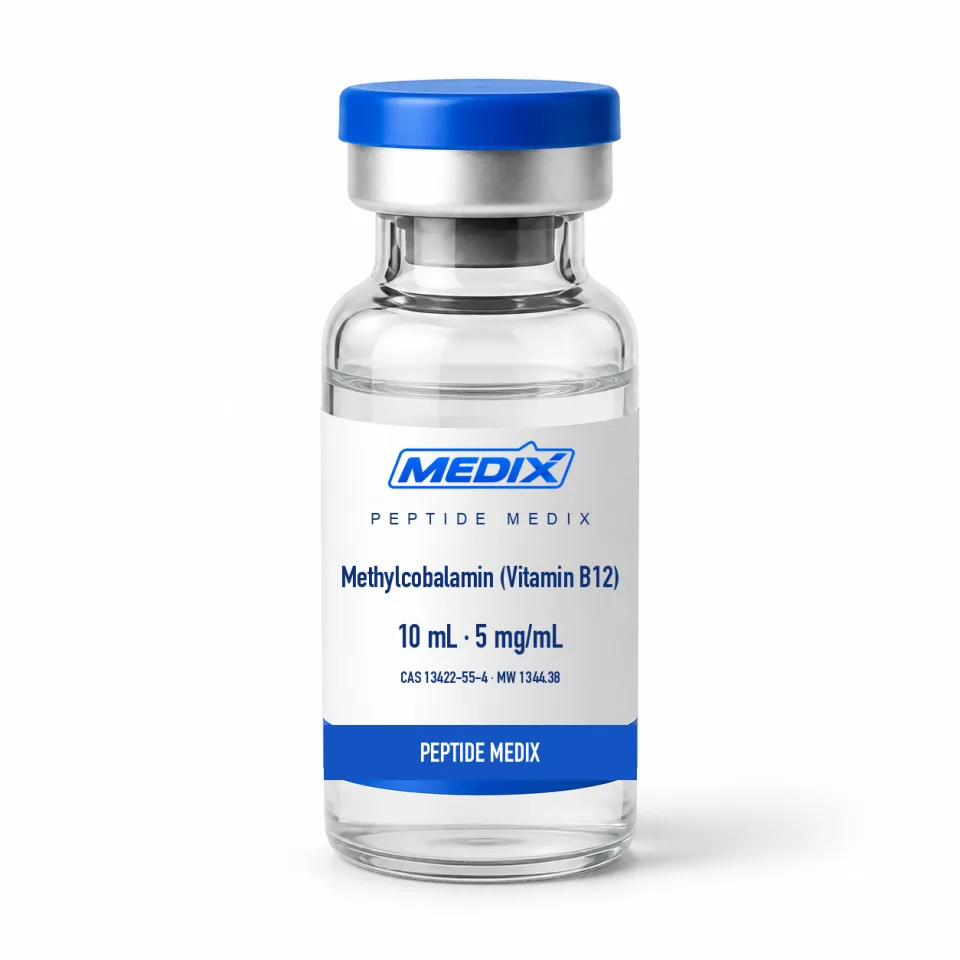
Methylcobalamin: the cofactor component
Methylcobalamin is one of the two active coenzyme forms of vitamin B12 in mammals. It serves methionine synthase in the remethylation of homocysteine to methionine, linking the folate cycle to methylation reactions throughout the cell. Unlike cyanocobalamin, it requires no reductive decyanation to enter that role. It is intensely light-sensitive; photolysis of the cobalt-carbon bond is rapid enough to matter within a working session under bright light.
Why the two are co-formulated
- One vial, one reconstitution step, and a single exposure profile for both components
- B12 status is a background variable in metabolic and energy-balance models
- Co-formulation research asks whether either component's stability changes in the presence of the other
- The corrinoid's colour provides a visual indicator of light exposure during handling
Analytical implications of the blend
Study design note
Where the research question concerns the peptide itself, a matched single-component tirzepatide arm is the appropriate comparator, since any difference attributable to co-formulation cannot be resolved without it.