Research Overview
Dual receptor engagement
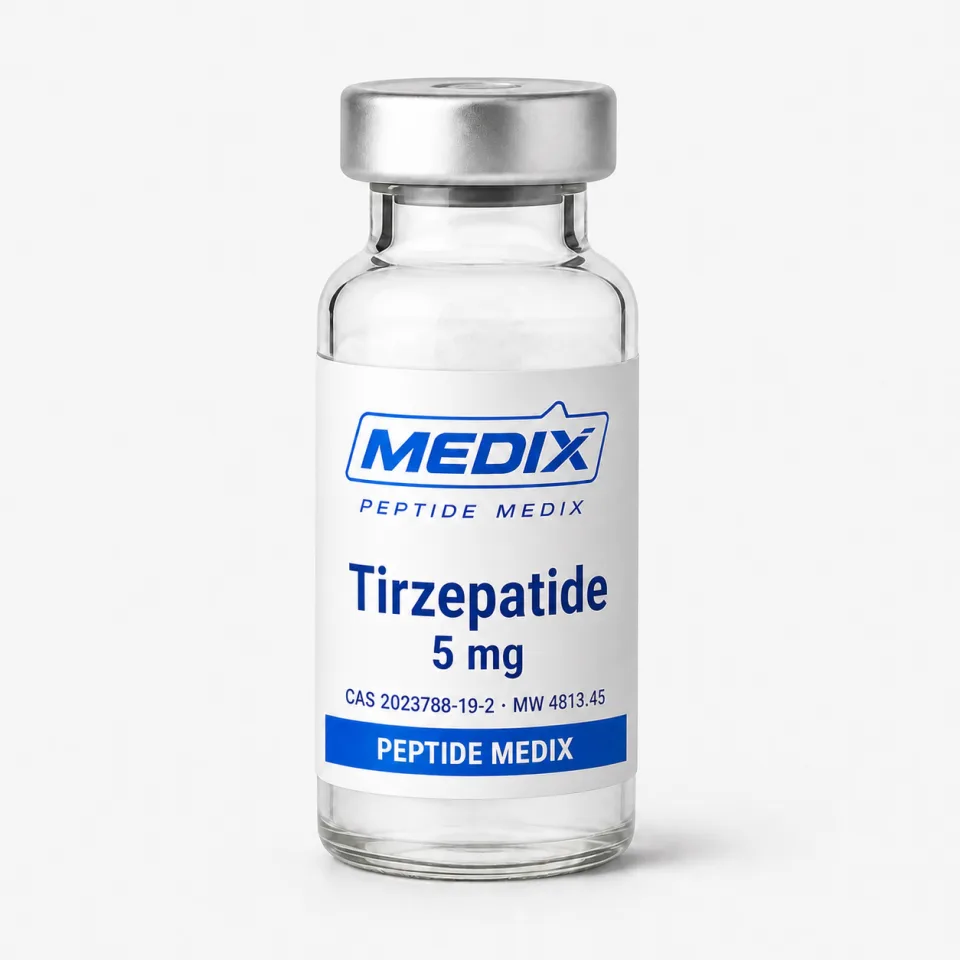
Cell-based work has characterized tirzepatide as a potent GIP receptor agonist with somewhat weaker but still substantial GLP-1 receptor activity. Investigators quantify cyclic-AMP accumulation at each receptor separately, then look for signal bias — reduced beta-arrestin recruitment and slower internalization at the GLP-1 receptor have both been reported in transfected systems.
Islet and secretory studies
In isolated islets and beta-cell lines, researchers examine whether combined GIP and GLP-1 stimulation produces additive or complementary glucose-dependent insulin secretion compared with a single-receptor agonist. Alpha-cell glucagon dynamics and somatostatin release are followed in the same preparations.
Adipose and energy balance
- GIP receptor expression in adipocytes and its reported role in lipid buffering
- Rodent food-intake, energy-expenditure and body-composition endpoints
- Hepatic steatosis and insulin-sensitivity markers in diet-induced obesity models
Medicinal chemistry and analytics
The molecule is a standard reference in structure-activity work on multi-agonist peptides: how Aib placement, linker length and diacid chain length shape protease resistance, albumin affinity and receptor balance. Analytical laboratories use it to develop LC-MS assays and to qualify purity methods for long acylated peptides, since its size and hydrophobic side chain challenge routine reversed-phase conditions.