Peptide Medix product catalog

Peptide Medix

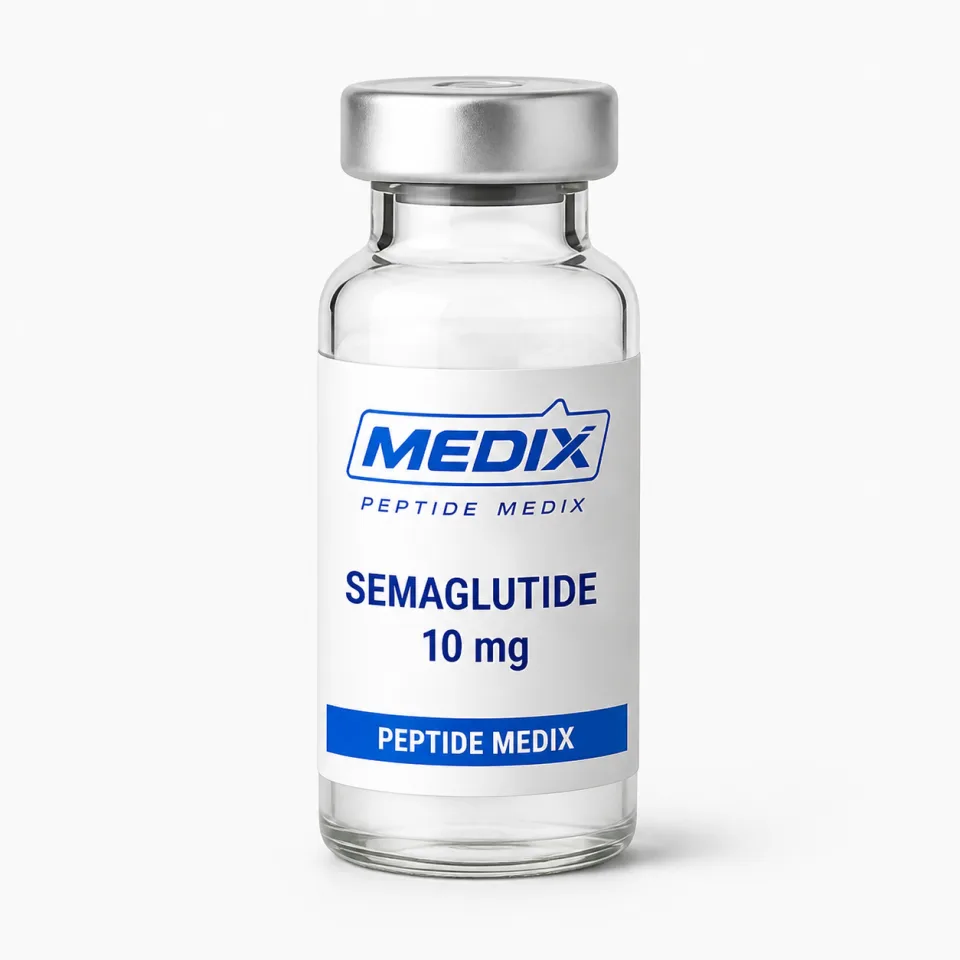
Semaglutide

Acylated 31-residue GLP-1 receptor agonist analog, research grade

Review catalog details Secure payments
Available to order · 8 of 8 options available
$38.00 $45.00 15% OFF

Choose an option

1
Categories: semaglutide , glp-1 peptides , incretin research

Choose your delivery method

Standard Shipping is automatically selected at checkout. Customers can upgrade to a faster delivery option anytime.

Overview

Semaglutide is a synthetic 31-residue analog of glucagon-like peptide-1 (GLP-1), the incretin hormone released from intestinal L-cells after nutrient intake. Two engineering changes distinguish it from native GLP-1: an alpha-aminoisobutyric acid substitution near the N-terminus, which sharply reduces cleavage by dipeptidyl peptidase-4, and a lysine-linked gamma-glutamyl spacer carrying a C18 fatty diacid, which promotes reversible albumin binding. Together these modifications extend circulating persistence from minutes to days in published pharmacokinetic work.

Because of that stability, semaglutide has become one of the most widely referenced tool compounds in incretin biology. Laboratory groups use it to probe GLP-1 receptor binding kinetics, cyclic-AMP accumulation and beta-arrestin recruitment in receptor-transfected cell lines, and downstream signaling in islet, hypothalamic and vagal-afferent preparations. It is also a common positive control when novel GLP-1, dual and triple agonists are characterized side by side.

Specifications

Brand Peptide Medix
Category GLP-1 & Incretin Peptides
Form Lyophilized powder, sealed glass vial with flip-off seal
Purity ≥99% by HPLC; lot-matched COA available
Available sizes 5 mg, 10 mg, 20 mg, 30 mg, 50 mg
CAS number 910463-68-2
Molecular formula C187H291N45O59
Molecular weight 4113.58 g/mol
Peptide class Acylated GLP-1 receptor agonist analog (incretin mimetic)
Backbone length 31 amino acids
Key modifications Aib at position 2; Lys26 conjugated to gamma-Glu-(AEEA)2-C18 diacid
Research areas GLP-1 receptor pharmacology, incretin signaling, appetite and glucose-handling models
Storage (lyophilized) −20 °C, sealed and protected from light and moisture
Storage (reconstituted) 2–8 °C, protected from light; use within the study window
Solubility Bacteriostatic water; also soluble in dilute alkaline or phosphate buffers
SKU SEMAGLUTIDE-2-MG

Highlights

  • ≥99% purity verified by HPLC with mass-spectrometric identity confirmation
  • Lot-matched certificate of analysis available for every vial
  • Five research sizes: 5 mg, 10 mg, 20 mg, 30 mg and 50 mg
  • Lyophilized white powder in a sealed vial; reconstitutes readily in bacteriostatic water
  • Long-acting GLP-1 receptor agonist analog with C18 diacid acylation
  • Studied in incretin receptor signaling, islet secretion and food-intake models
  • Synthesized, tested and shipped from a United States facility

What's Included

  • The vial option and size selected above
  • Final item and quantity confirmed in cart
  • Laboratory-research-use labeling

Research Overview

Receptor pharmacology

Islet and metabolic models

Central appetite circuitry

  • Hypothalamic arcuate and brainstem neuron activation mapped with c-Fos and electrophysiology
  • Vagal-afferent and area-postrema contributions to reported food-intake reduction in rodents
  • Interaction with amylin and melanocortin pathways in combination-agonist experiments

Structure and half-life engineering

Because the C18 diacid side chain drives reversible albumin binding, semaglutide is frequently used as a reference molecule in medicinal-chemistry studies of peptide lipidation, protease resistance and formulation stability. Analytical groups use it to develop LC-MS quantification, plasma-protein-binding assays and aggregation screens.

Analytical use

The compound also serves as an HPLC and mass-spectrometry reference standard when laboratories qualify incoming peptide lots or validate purity methods for long-chain acylated peptides.

Comparative and combination work

Because semaglutide is so well characterized, it anchors head-to-head experiments in which newer scaffolds must show a difference against a known reference. Laboratories combine it with amylin analogs, glucagon-receptor agonists or myostatin-pathway tools to ask whether the reported effects on intake, body composition and lean-mass preservation in rodent models are additive, redundant or opposing. Time-course studies also look at receptor desensitization and at whether tolerance develops in tissue and cell systems during extended exposure.
Handling & Storage

Allow the sealed vial to reach room temperature before opening so that condensation does not settle on the lyophilized cake. Introduce bacteriostatic water or an appropriate buffer slowly down the vial wall, then swirl gently — vigorous shaking can shear and aggregate long acylated peptides. Let the solution stand until fully clear before drawing aliquots. Keep the reconstituted stock refrigerated at 2–8 °C, protected from light, and record the reconstitution date on the label. Avoid repeated freeze-thaw cycles by preparing single-use aliquots. All handling should follow the receiving laboratory's chemical hygiene plan; this material is for research use only.

Semaglutide FAQ

What purity is your semaglutide and can I see a COA?
Every lot is tested by HPLC to at least 99% purity, with identity confirmed by mass spectrometry. A lot-matched certificate of analysis is available on request and is tied to the exact vial number you receive, so results can be traced to your shipment.
What sizes are available?
Semaglutide is offered in 5 mg, 10 mg, 20 mg, 30 mg and 50 mg lyophilized vials. Larger sizes lower the cost per milligram, which suits longer assay programs; smaller vials limit how long a reconstituted stock sits in the refrigerator.
How should the vial be stored?
Store the sealed lyophilized vial at −20 °C, protected from light and moisture. Once reconstituted, keep the solution at 2–8 °C and use it within your documented study window. Prepare single-use aliquots so the stock is not repeatedly frozen and thawed.
How does semaglutide differ from tirzepatide or retatrutide?
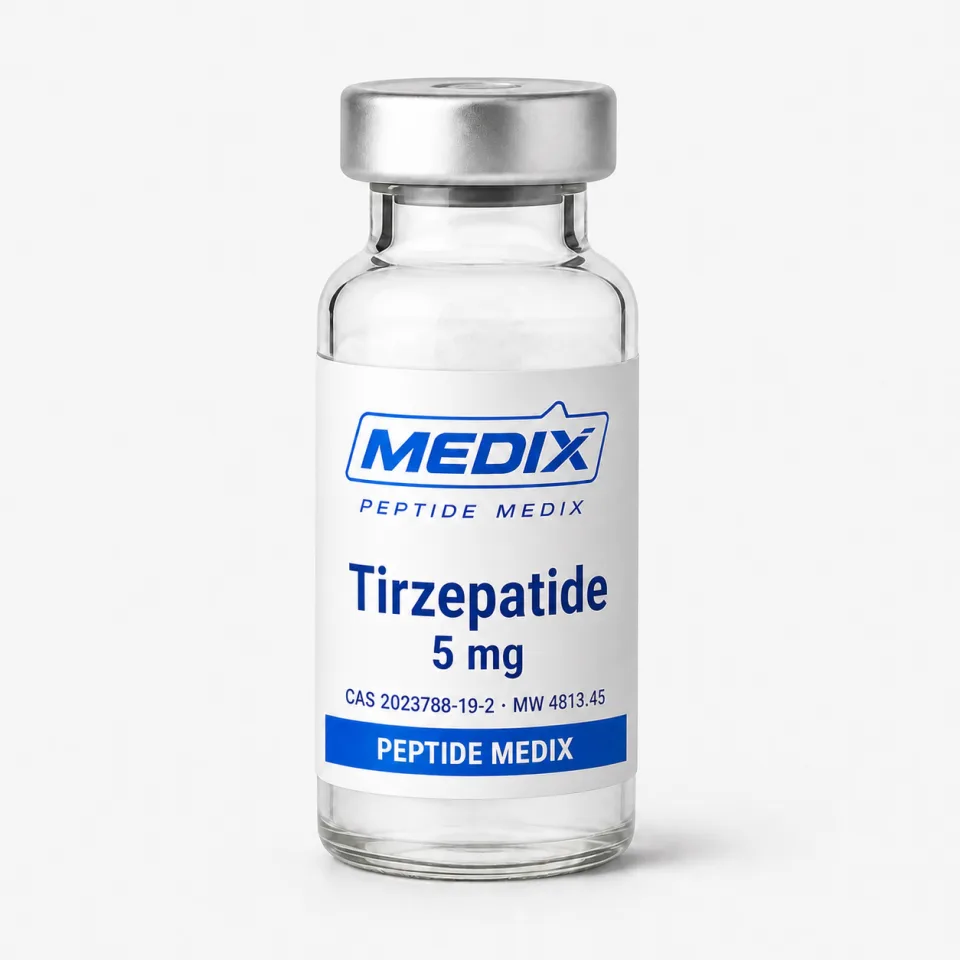
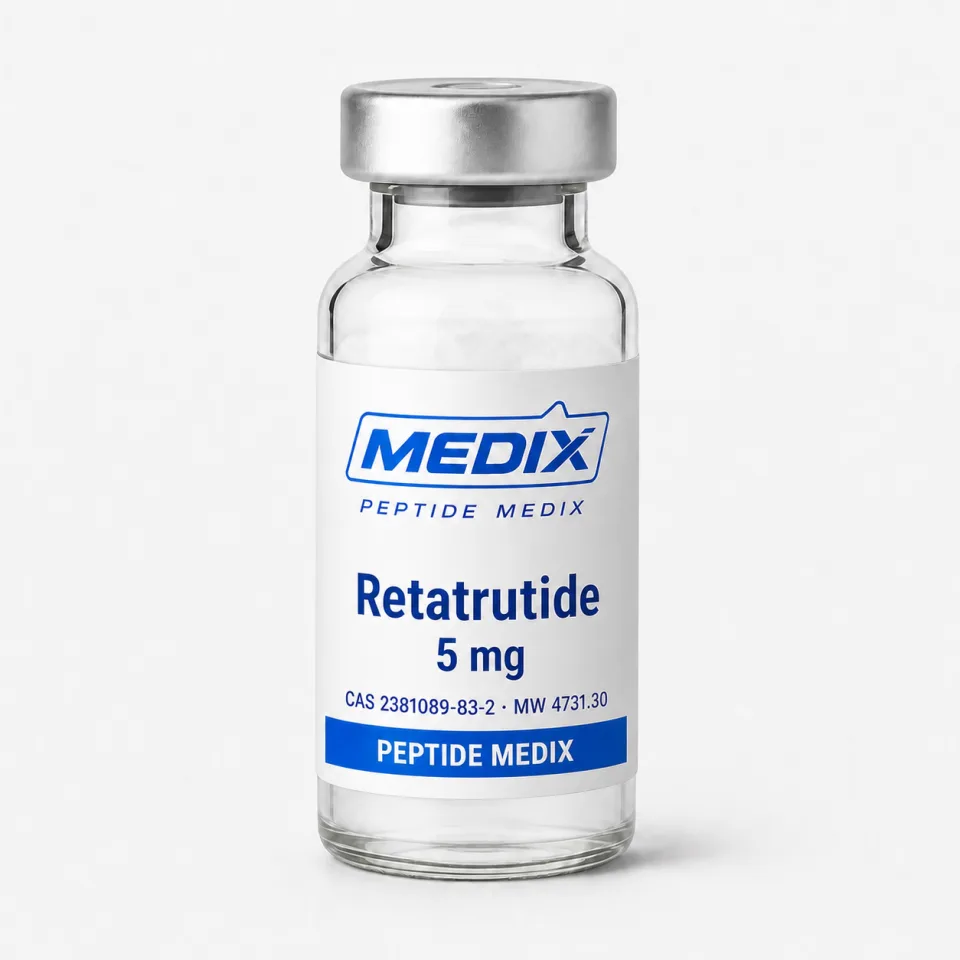
Semaglutide is a single-receptor GLP-1 agonist analog. Tirzepatide engages both GIP and GLP-1 receptors, and retatrutide adds glucagon receptor activity. Laboratories often run all three side by side to compare receptor selectivity and downstream signaling.
What solvent is used for reconstitution?
Bacteriostatic water is the usual choice in research settings; dilute alkaline or phosphate buffers are also used when a specific assay pH is required. Add solvent slowly and swirl rather than shake, then confirm the solution is clear before use.

This catalog listing is for laboratory research use only. It is not represented as a drug, food, supplement, cosmetic or diagnostic product, and it is not offered for human or veterinary use.

Customer Reviews

0 reviews
5 star
0%
4 star
0%
3 star
0%
2 star
0%
1 star
0%

Leave Your Review

Rating

No reviews yet — be the first!

Leave Your Review

Rating

Keep exploring

Related Products & Shopping Guides

Compare Semaglutide with relevant categories, product topics, and practical shopping information.

Often researched together

Related research peptides, blends and lab supplies frequently ordered with Semaglutide.

15% OFF
Tirzepatide

Peptide Medix

Tirzepatide

tirzepatide

8 options

$63.00 $75.00

View options and product details

15% OFF
Retatrutide

Peptide Medix

Retatrutide

retatrutide

8 options

$63.00 $75.00

View options and product details

15% OFF
Cagrilintide

Peptide Medix

Cagrilintide

cagrilintide

2 options

$97.00 $115.00

View options and product details

15% OFF
AOD-9604

Peptide Medix

AOD-9604

aod-9604

2 options

$63.00 $75.00

View options and product details

15% OFF
Liraglutide

Peptide Medix

Liraglutide

liraglutide

2 options

$55.00 $65.00

View options and product details

15% OFF
Exenatide

Peptide Medix

Exenatide

exenatide

2 options

$72.00 $85.00

View options and product details