Research Overview
Receptor signaling
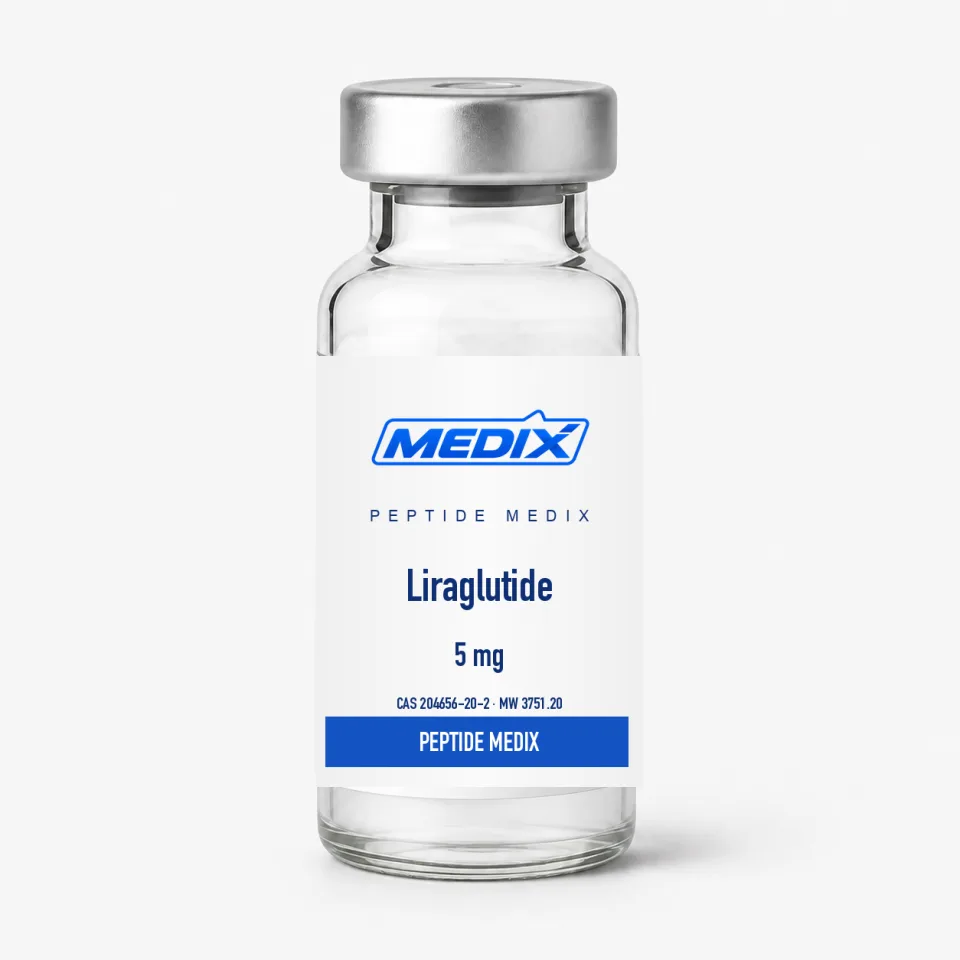
Liraglutide is a full agonist at the GLP-1 receptor and is widely used as the positive control in cyclic-AMP accumulation, beta-arrestin recruitment and receptor-internalization assays. Because its signaling profile is so thoroughly documented, deviations shown by a new analog in the same assay are easier to interpret against it than against native GLP-1.
Islet and secretory studies
Isolated islet and beta-cell work has examined glucose-dependent insulin secretion, insulin biosynthesis, beta-cell proliferation markers and protection against apoptotic stimuli in culture. Alpha-cell glucagon suppression is often measured in the same preparations to characterize the islet-level response.
Appetite and gastric models
- Rodent food-intake, meal-size and body-weight endpoints
- Gastric emptying rate measured by acetaminophen absorption or imaging methods
- Hypothalamic and brainstem neuronal activation mapping
Stability and protease resistance
Unlike later analogs, liraglutide has no alpha-aminoisobutyric acid substitution at position 2, so it remains a substrate for dipeptidyl peptidase-4. Investigators use that property deliberately, comparing its degradation profile in plasma or purified DPP-4 assays against protease-resistant analogs to quantify how much of an analog's duration comes from acylation and how much from backbone modification.
Lipidation and self-association
The palmitoyl chain makes liraglutide a standard model system for studying peptide self-association. Biophysical work uses analytical ultracentrifugation, size-exclusion chromatography and light scattering to characterize its heptameric assemblies and how they dissociate, which informs depot-release modeling for other acylated peptides.
Comparative benchmarking
In studies of newer molecules, liraglutide typically occupies the reference arm. Matched-exposure comparisons against diacid-acylated analogs or dual agonists let investigators quantify how much of a difference is receptor pharmacology and how much is simply longer residence time in the system. Because liraglutide has been characterized across so many laboratories and model systems, an unexpected result in its arm usually signals a methodological problem rather than a novel finding, which makes it a practical internal control as well as a comparator.