Research Overview
Fragment biology
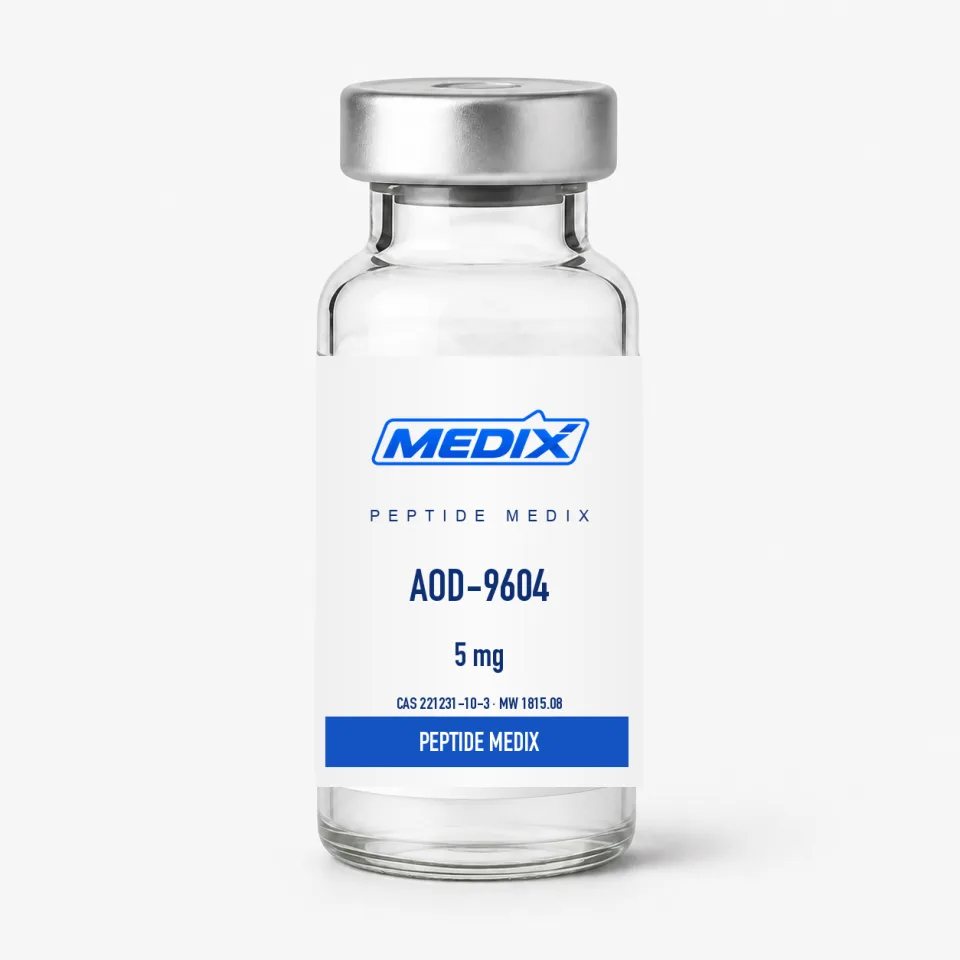
Structure-function studies of growth hormone identified a C-terminal region that appeared to carry lipolytic activity separately from the domains required for GH receptor dimerization. AOD-9604 was constructed around that observation, adding an N-terminal tyrosine to the hGH 177-191 sequence and retaining the disulfide loop that stabilizes the fragment's conformation.
Adipocyte studies
In cultured adipocytes and adipose explants, researchers have measured glycerol and free-fatty-acid release as lipolysis readouts, alongside expression of lipogenic enzymes to test the reported inhibition of new fat synthesis. Beta-3 adrenergic receptor involvement has been examined in knockout and antagonist experiments, with mixed results across models.
Metabolic separation questions
- Whether IGF-1 and insulin-sensitivity markers stay unchanged, unlike with full-length growth hormone
- Comparison against the unmodified hGH 176-191 fragment in the same assay systems
- Rodent body-composition and adipose-depot endpoints in diet-induced obesity models
Stability and analytics
The disulfide bridge is the primary analytical focus for this peptide. Laboratories confirm correct cyclization by mass spectrometry and reversed-phase retention, and check for reduced or dimerized species that can appear if the material is stored improperly or reconstituted into a reducing environment.
Comparative work
AOD-9604 is often studied next to the parent fragment and to other metabolic tool compounds so investigators can ask whether the added tyrosine and cyclization change potency or stability in a measurable way. Because reported effect sizes in the adipose literature vary considerably between species, cell type and assay format, most study designs include a well-characterized lipolytic reference such as a beta-adrenergic agonist so the fragment's response can be scaled against a known positive control rather than interpreted alone.