Research Overview
The enzyme and why it is targeted
Nicotinamide N-methyltransferase transfers a methyl group from S-adenosylmethionine to nicotinamide, producing 1-methylnicotinamide and S-adenosylhomocysteine. It is a cytosolic enzyme, abundant in liver and, importantly for metabolic research, strongly expressed in white adipose tissue. Because nicotinamide is the substrate for NAMPT in the NAD-plus salvage pathway, methylating it removes it from that cycle; and because the reaction consumes SAM, high NNMT activity also draws on the cellular methyl-donor pool that supports methylation of DNA and histones.
- NNMT knockdown in adipose tissue of diet-induced obese mice was reported to protect against weight gain
- Small-molecule NNMT inhibition has been reported to reduce adipocyte size and increase cellular NAD-plus in rodent studies
- Effects on sirtuin activity and on methyl-donor availability have been examined downstream of the enzyme
- Elevated NNMT expression has been described in several tumour types, making the enzyme an oncology target as well
- Muscle regeneration and stem-cell function studies have used NNMT inhibition to probe NAD-plus dependence
Oral format considerations
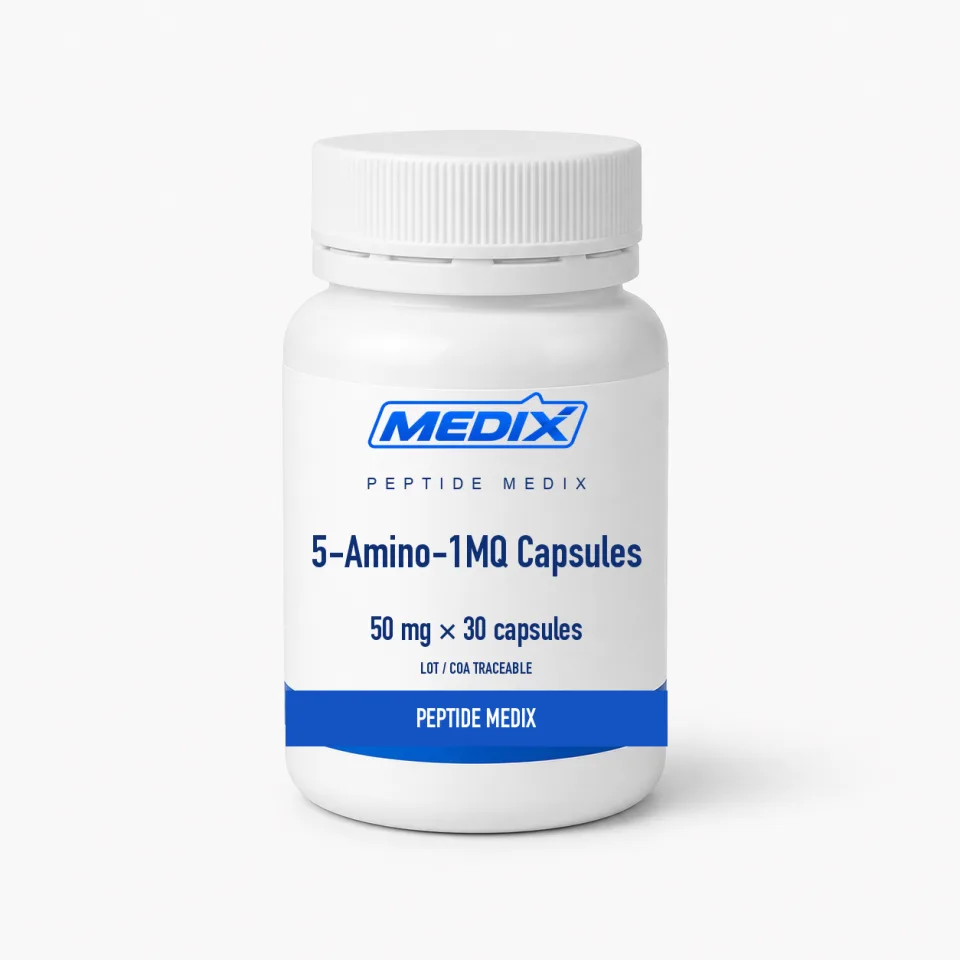
5-Amino-1MQ is a permanently charged quaternary ammonium species, which is unusual for an orally studied small molecule — permanent charge generally reduces passive membrane permeability. That makes the pharmacokinetics of oral administration a genuine research question rather than an assumption, and a fixed-unit capsule is a practical way to run oral arms against parenteral or in-vitro arms under otherwise matched conditions.
Limits of the evidence
All of the metabolic findings above come from cell culture and rodent work. There are no controlled human trials, and the compound is not approved as a medicine or lawful as a dietary ingredient. It is a research chemical, and results should be interpreted within the model that produced them.