Research Overview
The active molecule
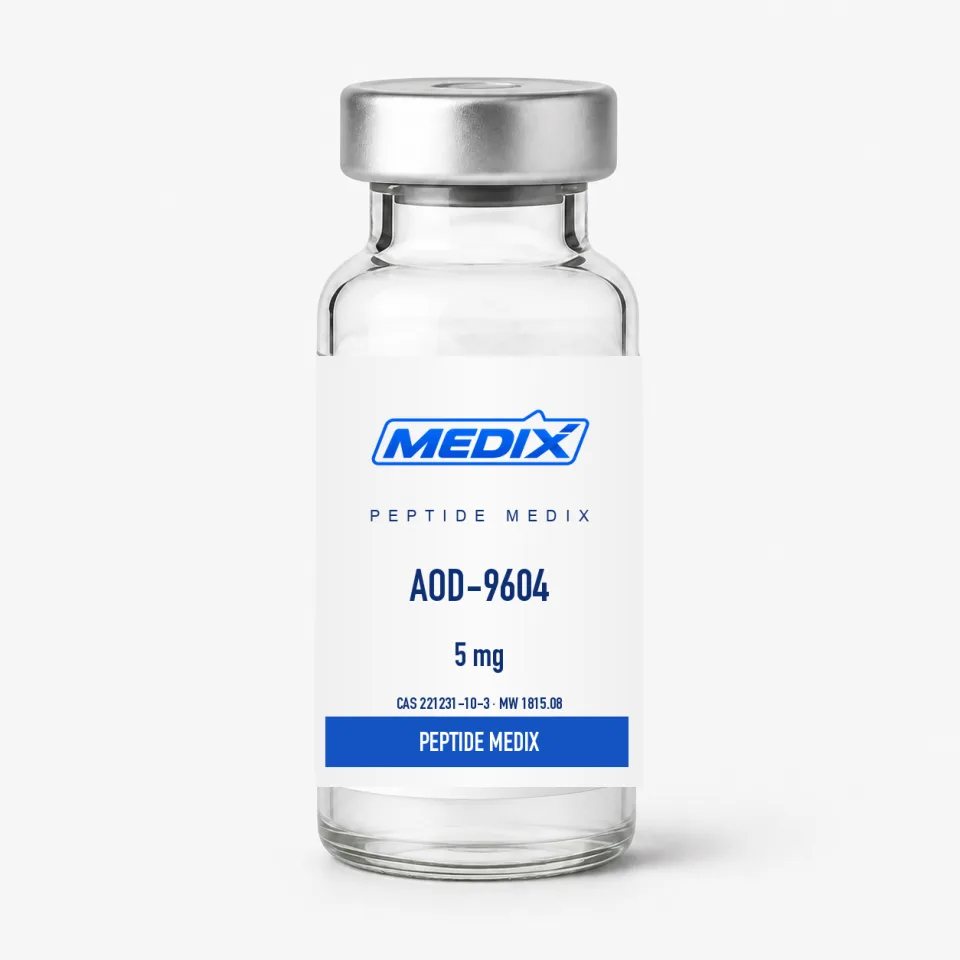
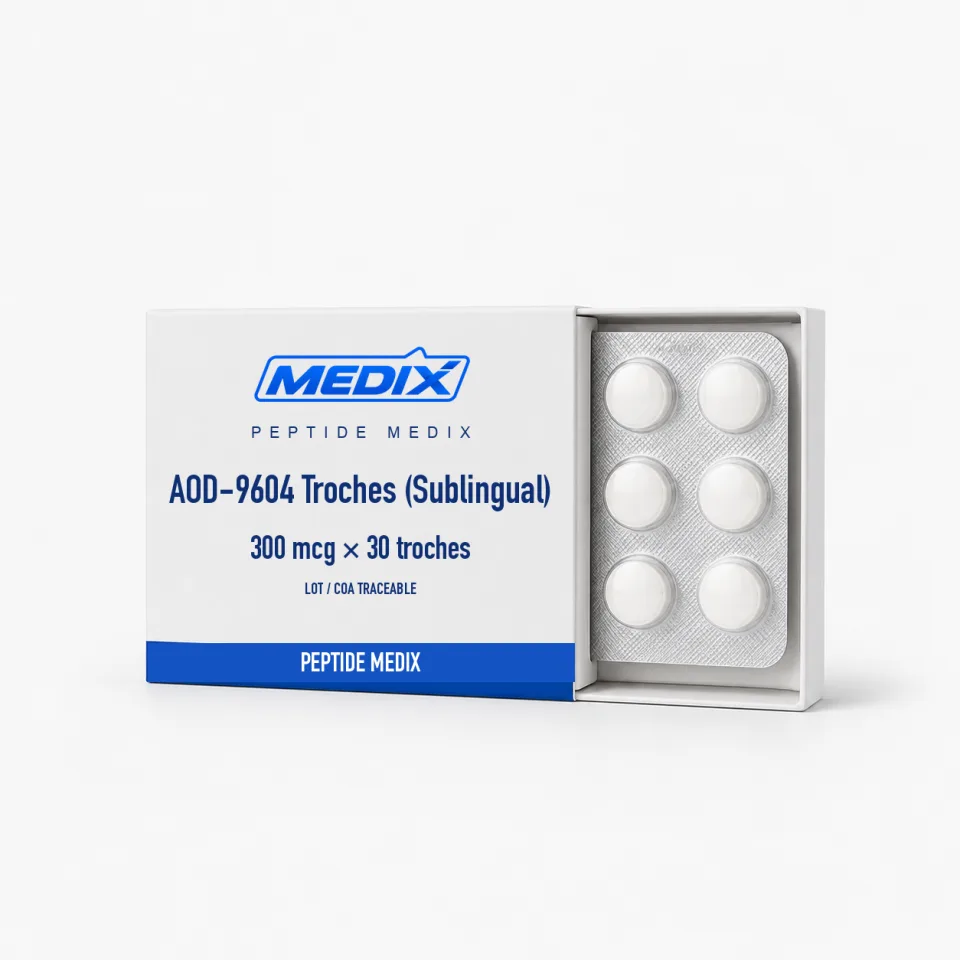
AOD-9604 reproduces the C-terminal segment of human growth hormone associated in structure-function studies with fat-metabolism activity, separated from the domains needed for growth hormone receptor dimerization. Its research record centers on adipocyte cultures, where glycerol and free-fatty-acid release are measured as lipolysis endpoints, and on rodent adipose-depot and body-composition studies.
Why a troche format matters
Peptides this size do not cross epithelial barriers efficiently. Sublingual and buccal mucosa are thinner and more permeable than gastrointestinal epithelium and bypass first-pass hepatic metabolism, which is why transmucosal formats attract formulation research. The practical question is what fraction of the peptide actually crosses, and published estimates for peptides of this molecular weight are generally modest.
Formulation research endpoints
- In-vitro release profile and dissolution time of the troche base
- Permeation across excised mucosal tissue in Franz-cell or Ussing-chamber systems
- Comparative bioavailability against parenteral routes in animal models
Stability considerations
The disulfide bridge that defines the cyclic conformation is the main stability concern. Compounded formats expose the peptide to excipients, moisture and ambient temperature for longer than a sealed lyophilized vial does, so integrity checks by mass spectrometry and reversed-phase chromatography over the storage window are a standard part of this work.
Comparative designs
Laboratories generally run the troche format against reconstituted vialed peptide in the same assay so the formulation variable is isolated from the compound variable. Saliva composition, contact time and base formulation all shift permeation independently of the peptide itself, so a matched-compound design is the only way to attribute a difference to the delivery route. Reported effect sizes in the underlying adipose literature also vary widely between species and assay format, which is why studies of this kind usually include a well-characterized lipolytic positive control alongside the peptide arm.