Research Overview
NNMT biology
Nicotinamide N-methyltransferase sits at a junction between methyl-group metabolism and NAD-plus salvage. Each catalytic turnover consumes S-adenosylmethionine and diverts nicotinamide away from the salvage pathway, so sustained high enzyme activity has been proposed to lower cellular NAD-plus availability while raising 1-methylnicotinamide levels. Adipose and hepatic NNMT expression rise substantially in obesity models, which is what put the enzyme on metabolic research agendas.
Adipocyte studies
Cultured adipocytes are the standard system. After exposure to an NNMT inhibitor, researchers quantify intracellular NAD-plus and NADH, sirtuin-dependent deacetylation, glycerol release as a lipolysis readout, and mitochondrial respiration by extracellular flux analysis. Comparisons against genetic knockdown of NNMT help distinguish on-target effects from compound-specific ones.
Rodent metabolic models
- Fat-pad mass and adipocyte size in diet-induced obesity models
- Tissue NAD-plus content and 1-methylnicotinamide as a target-engagement marker
- Insulin sensitivity and hepatic lipid endpoints measured in parallel
Methyl-donor and epigenetic questions
Because the enzyme consumes S-adenosylmethionine, inhibiting it also alters the cellular methyl-donor pool. Some groups therefore measure the SAM to S-adenosylhomocysteine ratio and histone methylation marks in parallel with metabolic endpoints, asking whether observed changes reflect NAD-plus availability, shifted methylation capacity, or both at once.
Chemical probe considerations
The permanently charged quinolinium core limits passive membrane diffusion, so cell-permeability and transporter-dependence questions come up constantly in this literature. Investigators verify target engagement biochemically, typically by measuring the 1-methylnicotinamide product, rather than inferring it from a downstream phenotype.
Comparative work
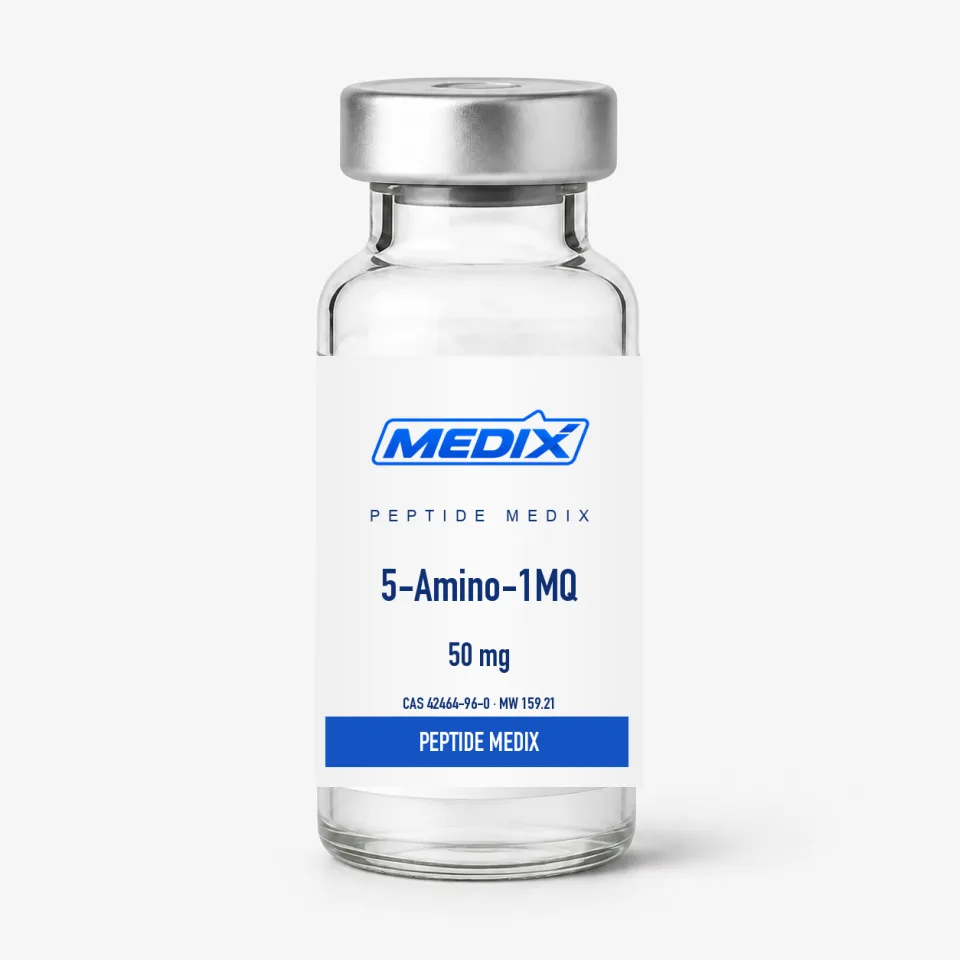
5-Amino-1MQ is often studied alongside NAD-plus precursors and other mitochondrial tool compounds, since raising NAD-plus by blocking its consumption and raising it by supplying precursor are mechanistically distinct approaches to the same measured endpoint. Running both arms in one design is the usual way to test whether the two converge.