Research Overview
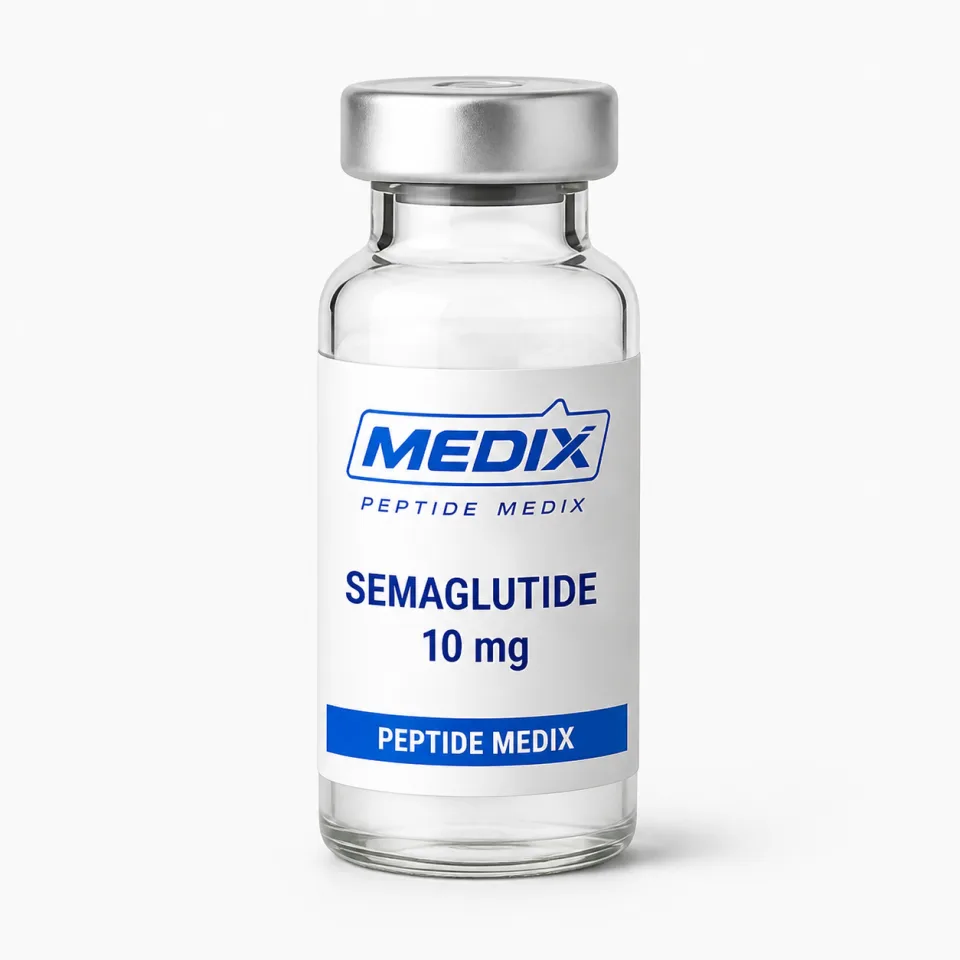
The semaglutide component
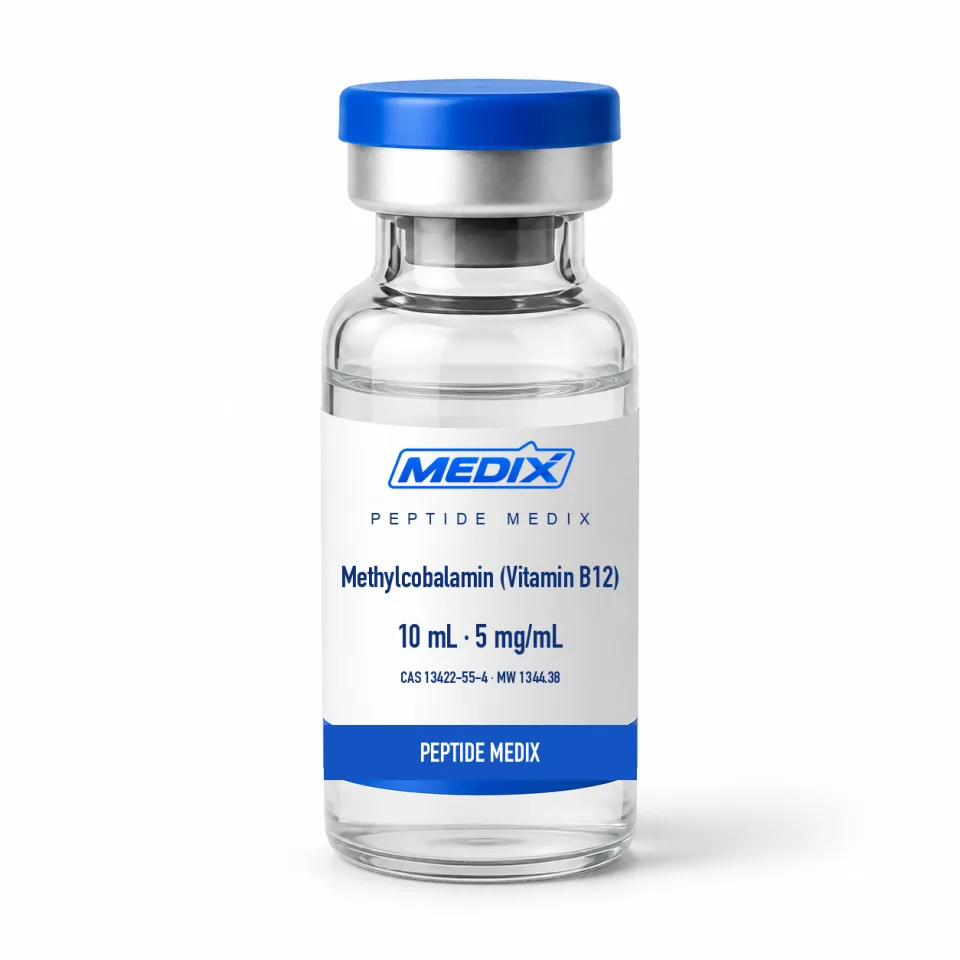
The methylcobalamin component
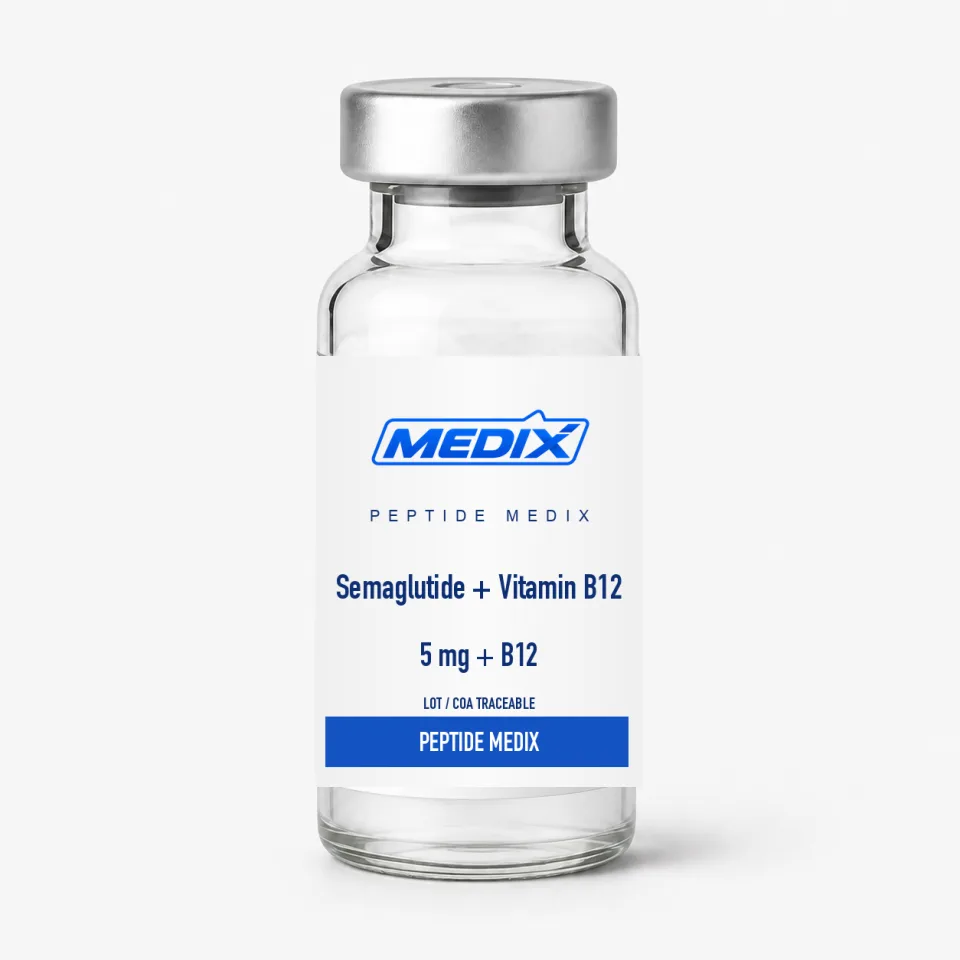
Methylcobalamin is one of the two active coenzyme forms of vitamin B12. It serves as the cofactor for methionine synthase, which remethylates homocysteine to methionine and regenerates tetrahydrofolate — the junction between the folate and methionine cycles, and the reason B12 status shows up in homocysteine measurements. It contributes no incretin activity; in a blend it is an accompanying cofactor, and it is the source of the preparation's colour.
Why the two are combined
- Metabolic study designs that reduce food intake often want cobalamin supply controlled rather than left to vary.
- A single vial means one reconstitution, one dilution calculation and one storage container, cutting handling error.
- Cobalamin is a convenient visual tracer: fading colour signals light exposure that other components would not show.
- Comparator arms against plain semaglutide isolate whether an observed effect belongs to the incretin agonist alone.
Practical and regulatory notes
Semaglutide-containing medicines are approved in several jurisdictions, but this material is not one of them: it is a research chemical supplied for laboratory investigation, not a compounded or prescription preparation. Because the fixed ratio is set at compounding, studies that need to vary the semaglutide-to-B12 relationship should use separate vials. Cobalamin degrades under ambient and UV light, so a blended vial demands stricter light protection than semaglutide alone.