Peptide Medix product catalog

Peptide Medix

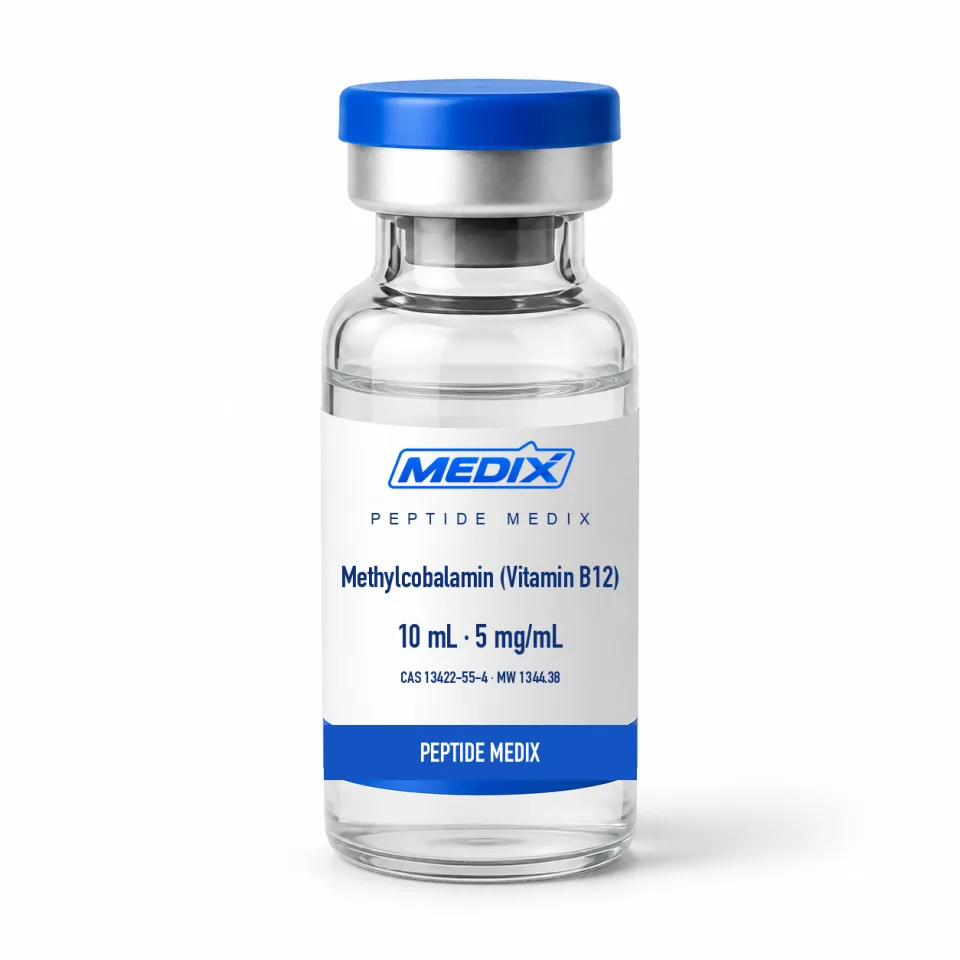
Methylcobalamin (Vitamin B12)

Methylcobalamin solution, 5 mg/mL in 10 mL and 30 mL amber vials

Review catalog details Secure payments
Available to order · 2 of 2 options available
$34.00 $40.00 15% OFF

Choose an option

1
Categories: methylcobalamin , vitamin b12 , cobalamin

Choose your delivery method

Standard Shipping is automatically selected at checkout. Customers can upgrade to a faster delivery option anytime.

Overview

Methylcobalamin is one of the two coenzyme-active forms of vitamin B12, the cobalt-containing corrinoid family. Its structure centers on a cobalt ion held in a corrin ring, with a methyl group as the upper axial ligand — the feature that distinguishes it from cyanocobalamin, where that position holds a cyanide group, and from adenosylcobalamin, the mitochondrial coenzyme form.

Biochemically, methylcobalamin is the cofactor for methionine synthase, the cytosolic enzyme that transfers a methyl group from 5-methyltetrahydrofolate to homocysteine to regenerate methionine. That single reaction links B12 status to folate metabolism, to homocysteine concentration and to the supply of S-adenosylmethionine used across cellular methylation. Researchers study these connections in one-carbon metabolism, methylation and neurological model systems.

Supplied as a ready-to-use aqueous solution at 5 mg/mL in amber vials of 10 mL or 30 mL. The characteristic deep red color comes from the corrin-cobalt chromophore, and it is also a warning: cobalamins are markedly photosensitive, so light protection is the central handling requirement for this material. Lot-matched Certificate of Analysis available. For laboratory research use only.

Specifications

Brand Peptide Medix
Category Vitamins & Cofactors
Form Clear deep-red aqueous solution in an amber vial
Concentration 5 mg/mL methylcobalamin
Available sizes 10 mL and 30 mL vials
CAS number 13422-55-4
Molecular formula C63H91CoN13O14P
Molecular weight 1344.38 g/mol
Chemical class Cobalamin (corrinoid) coenzyme, vitamin B12 family
Axial ligand Methyl group at the upper (beta) cobalt position
Enzyme role Cofactor for methionine synthase (MTR)
Research areas One-carbon and folate metabolism, homocysteine studies, methylation research, neurological models
Photosensitivity High — degrades under ambient and UV light; keep in amber glass and shielded
Storage Refrigerated 2–8 °C, protected from light; do not freeze
SKU METHYLCOBALAMIN-B12-10-ML-5-MG-ML

Highlights

  • Ready-to-use solution at 5 mg/mL — no reconstitution required
  • Available in 10 mL and 30 mL amber vials
  • Methylcobalamin, the methyl-ligand coenzyme form of vitamin B12
  • Cofactor for methionine synthase in one-carbon metabolism research
  • Deep red solution; light protection is essential to preserve the compound
  • Lot-matched Certificate of Analysis available before purchase
  • Filled and shipped from a United States facility

What's Included

  • The vial option and size selected above
  • Final item and quantity confirmed in cart
  • Laboratory-research-use labeling

Research Overview

Cobalamin chemistry

The cobalamin scaffold is a corrin ring — similar in spirit to a porphyrin but with one fewer methine bridge — coordinating a central cobalt ion, with a dimethylbenzimidazole nucleotide tail supplying the lower axial ligand. The upper axial position defines the specific cobalamin. Methylcobalamin carries a methyl group there in a cobalt-carbon bond, one of the very few organometallic bonds found in biology.

Methionine synthase and the methylation cycle

  • Methylcobalamin donates its methyl group to homocysteine, forming methionine
  • The methyl group is replenished from 5-methyltetrahydrofolate, tying B12 to folate turnover
  • Methionine feeds S-adenosylmethionine production, the universal methyl donor for DNA, RNA, protein and small-molecule methylation
  • Impairment of this step causes the methyl-folate trap described in the classic biochemistry literature

Comparison with other cobalamin forms

Cyanocobalamin is the synthetic, stable form used in most fortification and analytical standards, requiring intracellular conversion before use. Adenosylcobalamin is the mitochondrial coenzyme for methylmalonyl-CoA mutase. Hydroxocobalamin serves as a cyanide-scavenging form. Comparative studies of stability, cellular uptake and conversion between these forms remain an active analytical topic.

Photodegradation

Cobalamins photolyse readily, with the cobalt-carbon bond cleaving under visible light to yield hydroxocobalamin and other products. This is the dominant stability concern in any methylcobalamin work: solutions left on a lit bench can lose meaningful content in hours, so amber glass, foil wrapping and low-light handling are standard practice.

Sample preparation for analysis follows from the same chemistry. Cobalamin assays are commonly run under amber lighting with the extraction step completed quickly, and some protocols deliberately convert all forms to the more stable cyanocobalamin before quantification so that total corrinoid content can be measured without form-specific losses.
Handling & Storage

Keep the vial in its amber glass and inside the outer carton, refrigerated at 2–8 °C, and do not freeze. Work under reduced light when withdrawing solution and return the vial to the dark promptly; cobalamins photolyse quickly, and a solution that has faded from deep red has already lost content. Wrap any secondary container in foil, use it the same session where possible, and avoid strong reducing or oxidizing agents in the same buffer. Verify concentration spectrophotometrically if the vial has had extended light exposure.

Methylcobalamin (Vitamin B12) FAQ

What is methylcobalamin?
Methylcobalamin is a coenzyme-active form of vitamin B12 in which a methyl group occupies the upper axial position on the central cobalt ion. It serves as the cofactor for methionine synthase in the one-carbon metabolism pathway.
How does it differ from cyanocobalamin?
Cyanocobalamin carries a cyanide ligand at the same position and must be converted intracellularly before it can act as a coenzyme. Methylcobalamin is already in a coenzyme form. Cyanocobalamin is more photostable, which is why it dominates as an analytical standard.
What concentration and sizes are supplied?
The solution is supplied at 5 mg/mL in either a 10 mL or a 30 mL amber vial. It arrives ready to use, so no reconstitution or weighing of the compound is needed before dilution into your experimental system.
Why is light protection so important?
The cobalt-carbon bond in methylcobalamin photolyses under visible light, converting the compound to hydroxocobalamin and other products. A vial left in ambient light can lose significant content within hours, so amber glass and low-light handling are essential.
Is the material tested?
Yes. Each lot ships with a lot-matched Certificate of Analysis documenting identity, concentration and purity. Because photodegradation is the main risk, confirming the deep red color and spectrophotometric profile on receipt is a useful additional check.

This catalog listing is for laboratory research use only. It is not represented as a drug, food, supplement, cosmetic or diagnostic product, and it is not offered for human or veterinary use.

Customer Reviews

0 reviews
5 star
0%
4 star
0%
3 star
0%
2 star
0%
1 star
0%

Leave Your Review

Rating

No reviews yet — be the first!

Leave Your Review

Rating

Keep exploring

Related Products & Shopping Guides

Compare Methylcobalamin (Vitamin B12) with relevant categories, product topics, and practical shopping information.

Often researched together

Related research peptides, blends and lab supplies frequently ordered with Methylcobalamin (Vitamin B12).

15% OFF
B-Complex

Peptide Medix

B-Complex

b-complex
$42.00 $50.00

View options and product details

15% OFF
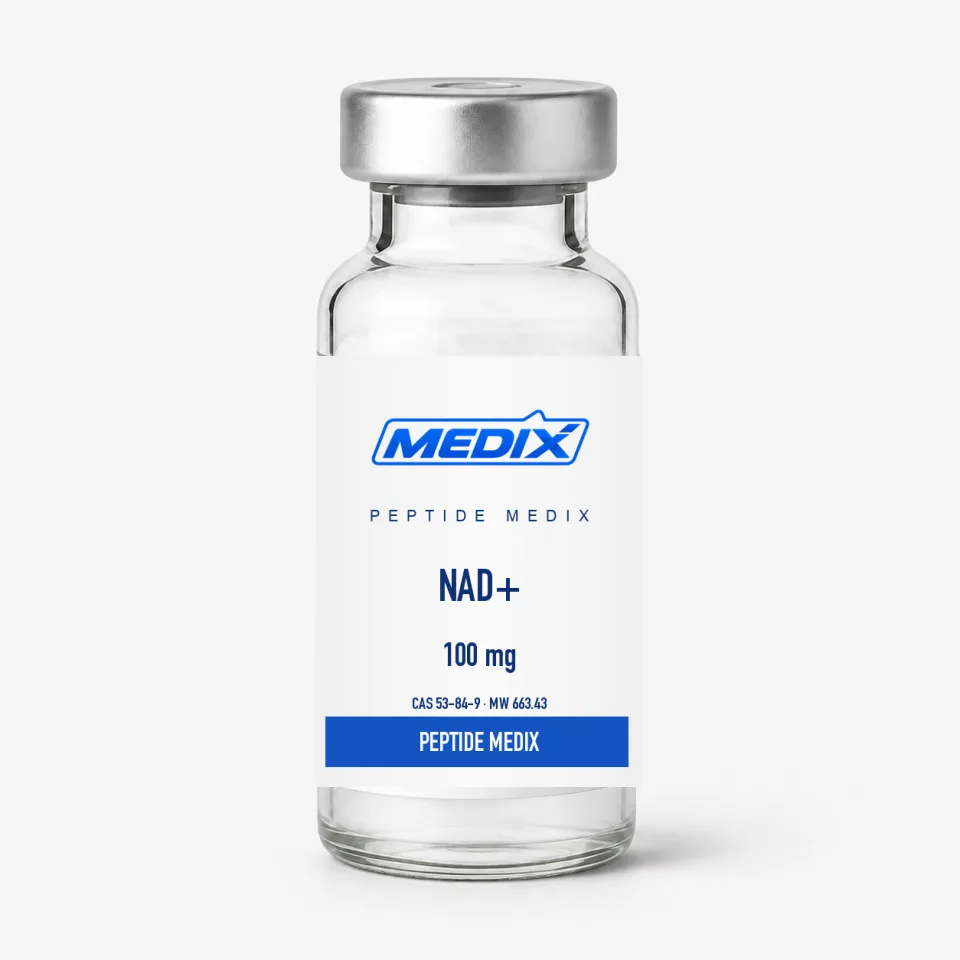
NAD+

Peptide Medix

NAD+

nad+

4 options

$38.00 $45.00

View options and product details

15% OFF
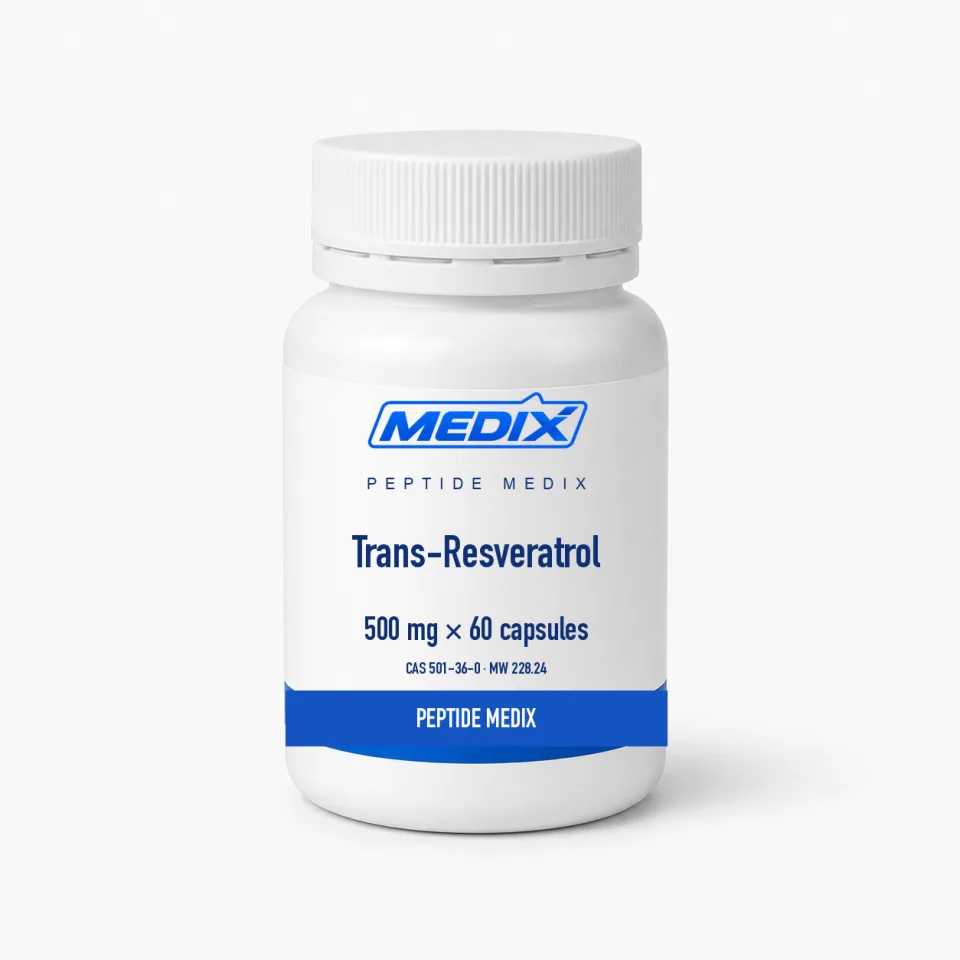
Trans-Resveratrol

Peptide Medix

Trans-Resveratrol

resveratrol
$38.00 $45.00

View options and product details