Peptide Medix product catalog

Peptide Medix

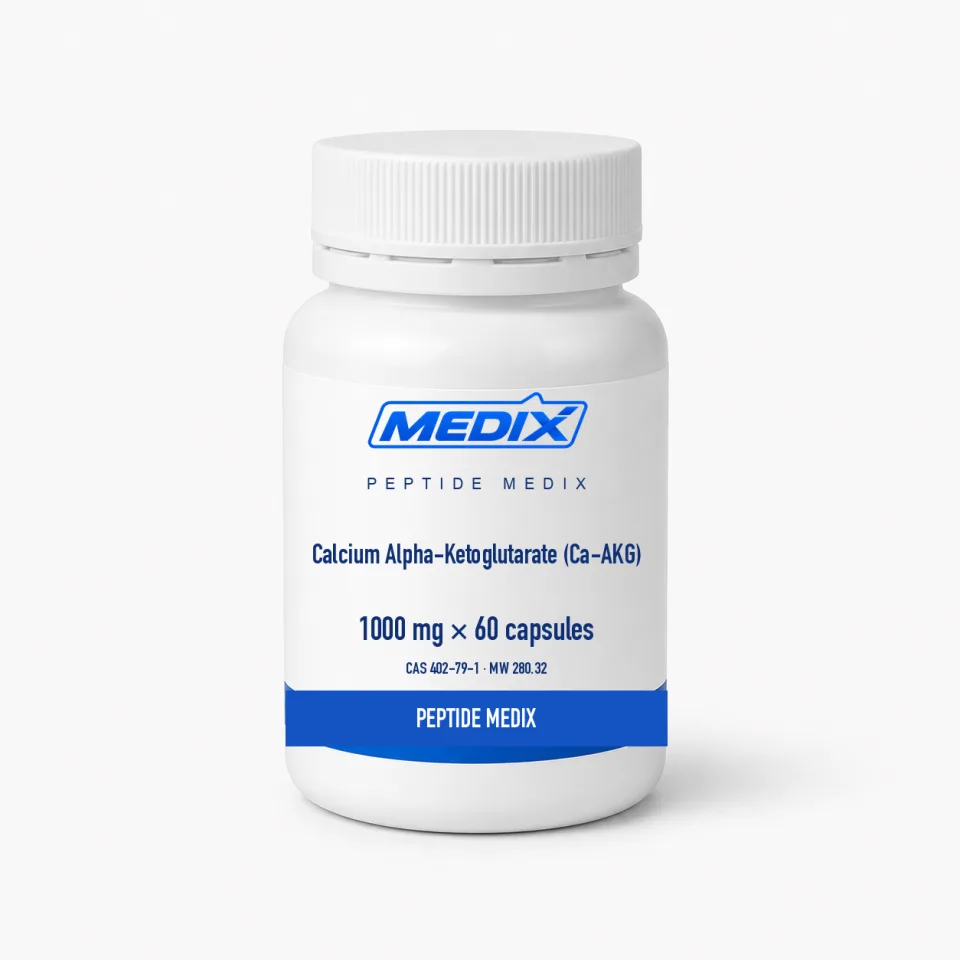
Calcium Alpha-Ketoglutarate (Ca-AKG)

Calcium salt of the TCA-cycle intermediate 2-oxoglutarate, 1000 mg capsules

Review catalog details Secure payments
Available to order
$38.00 $45.00 15% OFF
1
Categories: ca-akg , calcium alpha-ketoglutarate , 2-oxoglutarate

Choose your delivery method

Standard Shipping is automatically selected at checkout. Customers can upgrade to a faster delivery option anytime.

Overview

Calcium alpha-ketoglutarate, usually shortened to Ca-AKG, is the calcium salt of alpha-ketoglutaric acid — better known to biochemists as 2-oxoglutarate, one of the central intermediates of the tricarboxylic acid cycle. Salting the acid with calcium turns a hygroscopic, strongly acidic solid into a stable, free-flowing powder that is far easier to weigh, encapsulate and store, which is why nearly all research material is supplied in this form rather than as the free acid.

2-Oxoglutarate sits at a genuinely busy metabolic junction. It is the product of isocitrate dehydrogenase and the substrate of the alpha-ketoglutarate dehydrogenase complex, it accepts amino groups in transamination reactions that link carbon and nitrogen metabolism, and it is the obligate co-substrate for the large family of 2-oxoglutarate-dependent dioxygenases — enzymes that include the TET DNA demethylases, the JmjC histone demethylases and the prolyl hydroxylases that regulate HIF-1α. That last role is why a simple TCA intermediate turns up so often in epigenetics and aging papers.

Specifications

Brand Peptide Medix
Category Vitamins & Cofactors
Form White to off-white crystalline powder, encapsulated
Available sizes 1000 mg × 60 capsules
Purity Third-party tested; lot-matched COA available
CAS number 402-79-1
Chemical class Calcium salt of alpha-ketoglutaric acid (2-oxoglutaric acid)
Free acid Alpha-ketoglutaric acid, C5H6O5, 146.11 g/mol, CAS 328-50-7
Also known as Ca-AKG, calcium 2-oxoglutarate, calcium alpha-ketoglutarate
Metabolic role TCA-cycle intermediate between isocitrate and succinyl-CoA
Key enzymes Isocitrate dehydrogenase (produces it), alpha-ketoglutarate dehydrogenase complex (consumes it), transaminases
Cofactor role Co-substrate for 2-oxoglutarate-dependent dioxygenases including TET enzymes, JmjC histone demethylases and prolyl hydroxylases
Research areas Mitochondrial metabolism, epigenetic regulation, HIF signalling, nitrogen balance, aging biology
Solubility Sparingly soluble in water; solubility of the calcium salt is lower than that of the free acid
Storage Cool, dry, sealed container protected from light and moisture
SKU CA-AKG-1000-MG-60-CAPSULES

Highlights

  • Calcium salt of alpha-ketoglutarate (2-oxoglutarate), CAS 402-79-1
  • Supplied as 1000 mg capsules, 60 per bottle
  • Salt form is stable and free-flowing where the free acid is hygroscopic and acidic
  • Core TCA-cycle intermediate and nitrogen-metabolism hub
  • Obligate co-substrate for TET, JmjC and prolyl-hydroxylase dioxygenases
  • Studied in mitochondrial metabolism, epigenetic regulation and aging models
  • Third-party tested; lot-matched COA available; ships from the United States
  • Research use only — not a dietary supplement, drug or consumer product

What's Included

  • The product option and count selected above
  • Final item and quantity confirmed in cart
  • Laboratory-research-use labeling

Research Overview

Where 2-oxoglutarate sits in metabolism

Alpha-ketoglutarate is generated in the mitochondrial matrix when isocitrate dehydrogenase oxidatively decarboxylates isocitrate, and it is consumed by the alpha-ketoglutarate dehydrogenase complex to form succinyl-CoA. It is also the principal amino-group acceptor in transamination: glutamate dehydrogenase and the aminotransferases interconvert glutamate and 2-oxoglutarate constantly, which makes this molecule the main chemical bridge between the carbon skeleton of the TCA cycle and cellular nitrogen handling.

Dioxygenase co-substrate chemistry

A large enzyme superfamily requires 2-oxoglutarate, molecular oxygen and ferrous iron to hydroxylate their substrates, releasing succinate and carbon dioxide in the process. Members include the TET family of DNA hydroxymethylases, the JmjC-domain histone lysine demethylases, collagen prolyl and lysyl hydroxylases, and the PHD prolyl hydroxylases that mark HIF-1α for degradation under normoxia. Because these enzymes are sensitive to the ratio of 2-oxoglutarate to succinate and fumarate, researchers use that ratio as a readout linking metabolic state to chromatin and hypoxia signalling.

  • Lifespan and healthspan endpoints in C. elegans, where AKG supplementation was reported to extend lifespan in a manner linked to ATP synthase and TOR signalling
  • Frailty and inflammatory marker endpoints in aged mice given a calcium AKG formulation
  • Effects on collagen synthesis, given the dependence of prolyl hydroxylation on 2-oxoglutarate availability
  • Nitrogen balance and ammonia handling in models of amino-acid metabolism
  • Bone and mineral metabolism, where both the AKG anion and the calcium counter-ion have been examined
Interpreting the data

Handling & Storage

Store capsules in a cool, dry place in the original sealed container, protected from light and moisture. Alpha-ketoglutarate in the free-acid form is hygroscopic; the calcium salt is far more stable, but bulk powder still cakes if left open to humid air, so reseal promptly and avoid repeated opening in a humid room. For solution work, note that the calcium salt is only sparingly soluble in water — many protocols dissolve it with gentle warming and mild agitation, or use the free acid and adjust pH separately. Record lot number, receipt date and opening date. Keep the material clearly labelled for laboratory use and segregated from any consumable stock.

Calcium Alpha-Ketoglutarate (Ca-AKG) FAQ

What is the difference between AKG and Ca-AKG?
AKG refers to the alpha-ketoglutarate anion, sold either as the free acid or as a salt. Ca-AKG is the calcium salt. The salt is far less hygroscopic and less acidic than the free acid, which makes it stable enough to weigh and encapsulate — the same anion, in a more practical solid form.
Why does a TCA-cycle intermediate appear in aging research?
Because 2-oxoglutarate is the obligate co-substrate for a large family of dioxygenases that includes the TET DNA demethylases, JmjC histone demethylases and HIF prolyl hydroxylases. That gives a simple metabolite direct leverage over epigenetic and hypoxia signalling, which is why it recurs in aging papers.
Is purity documentation available?
Yes. Material is third-party tested and a lot-matched certificate of analysis is available on request. Because this is a small molecule rather than a peptide, testing follows small-molecule identity and purity methods rather than the HPLC peptide-purity assays used elsewhere in the catalogue.
How should Ca-AKG be stored?
Cool, dry and sealed, protected from light and moisture. The calcium salt is considerably more stable than the free acid, but bulk powder will still absorb atmospheric moisture and cake if the container is left open, so reseal after each use.
Does Ca-AKG dissolve readily in water?
Only sparingly. The calcium salt is markedly less water-soluble than the free acid. Solution protocols commonly use gentle warming with agitation, or start from alpha-ketoglutaric acid and adjust pH with a separate base, keeping the calcium contribution controlled.
How is it related to NMN and spermidine?
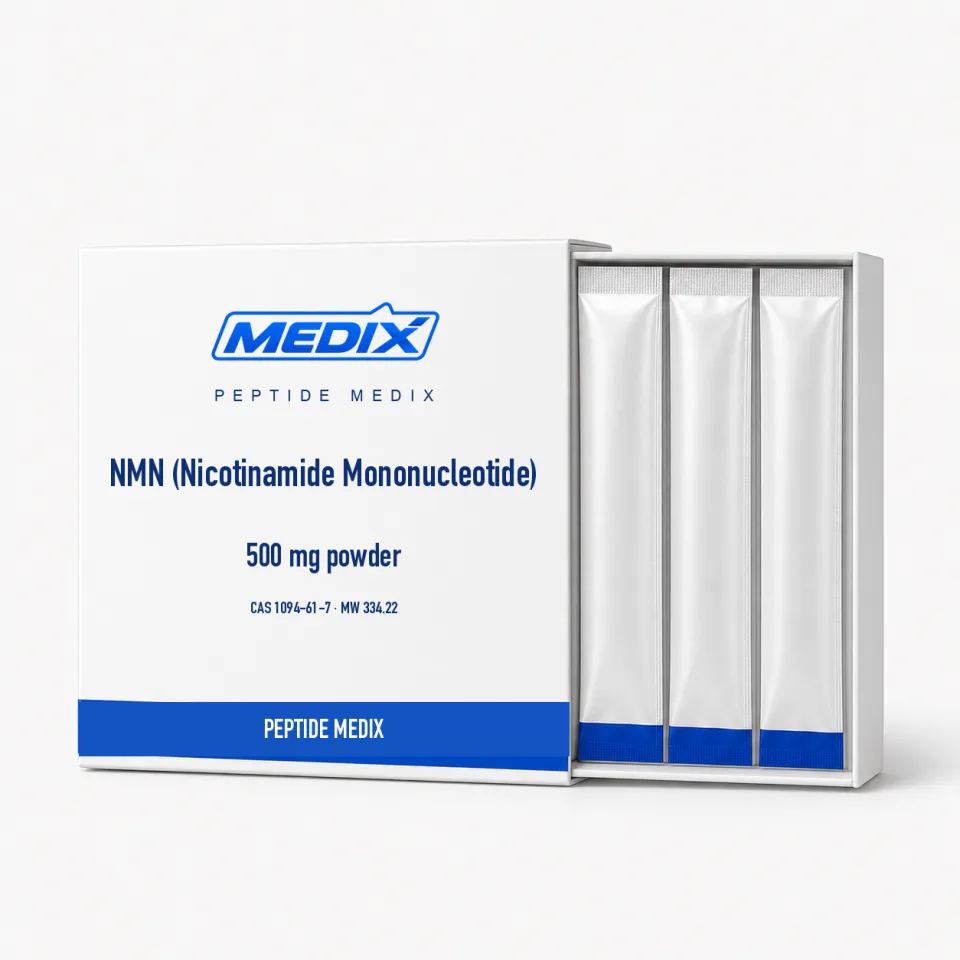
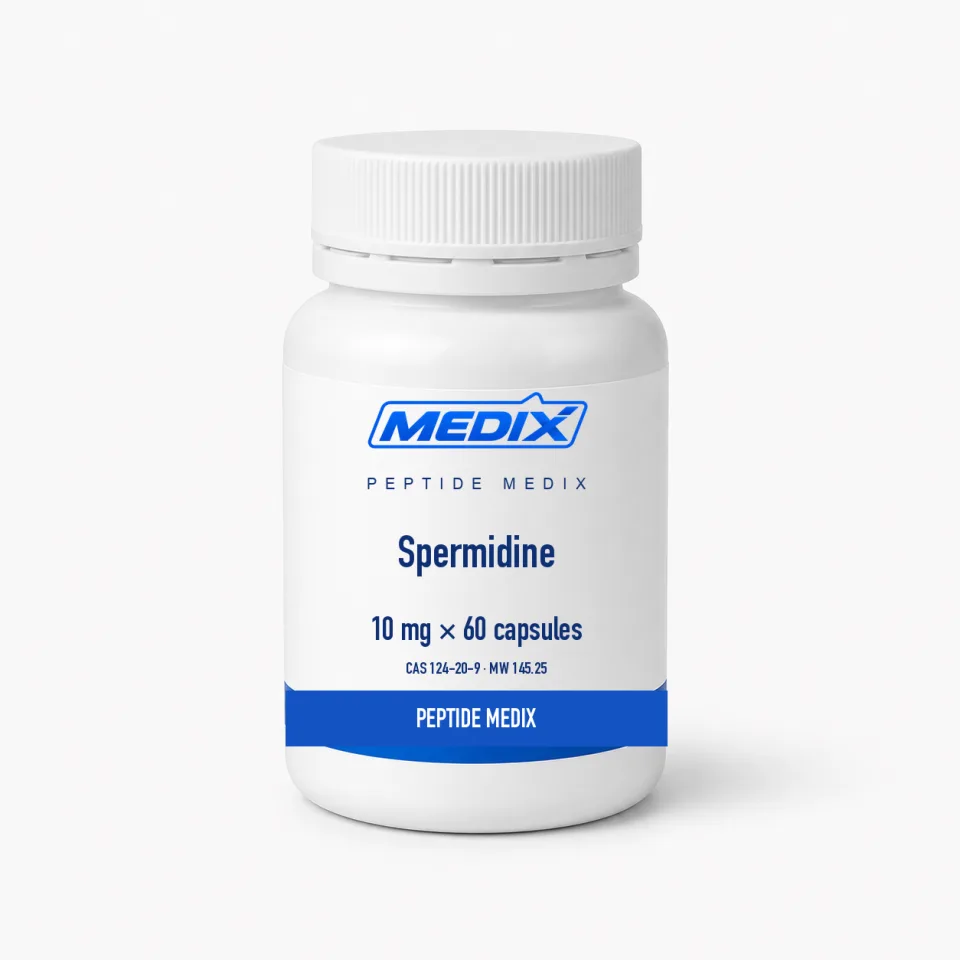
Only by research theme. All three appear frequently in the metabolic and aging-biology literature, but they act through different mechanisms — NAD+ precursor supply, autophagy and polyamine signalling, and dioxygenase co-substrate availability respectively. Co-listing reflects shared subject matter, not a combination protocol.

This catalog listing is for laboratory research use only. It is not represented as a drug, food, supplement, cosmetic or diagnostic product, and it is not offered for human or veterinary use.

Customer Reviews

0 reviews
5 star
0%
4 star
0%
3 star
0%
2 star
0%
1 star
0%

Leave Your Review

Rating

No reviews yet — be the first!

Leave Your Review

Rating

Keep exploring

Related Products & Shopping Guides

Compare Calcium Alpha-Ketoglutarate (Ca-AKG) with relevant categories, product topics, and practical shopping information.

Often researched together

Related research peptides, blends and lab supplies frequently ordered with Calcium Alpha-Ketoglutarate (Ca-AKG).

15% OFF
Spermidine

Peptide Medix

Spermidine

spermidine
$46.00 $55.00

View options and product details

15% OFF
Trans-Resveratrol

Peptide Medix

Trans-Resveratrol

resveratrol
$38.00 $45.00

View options and product details

15% OFF
B-Complex

Peptide Medix

B-Complex

b-complex
$42.00 $50.00

View options and product details

15% OFF
Fisetin

Peptide Medix

Fisetin

fisetin
$42.00 $50.00

View options and product details