Peptide Medix product catalog

Peptide Medix

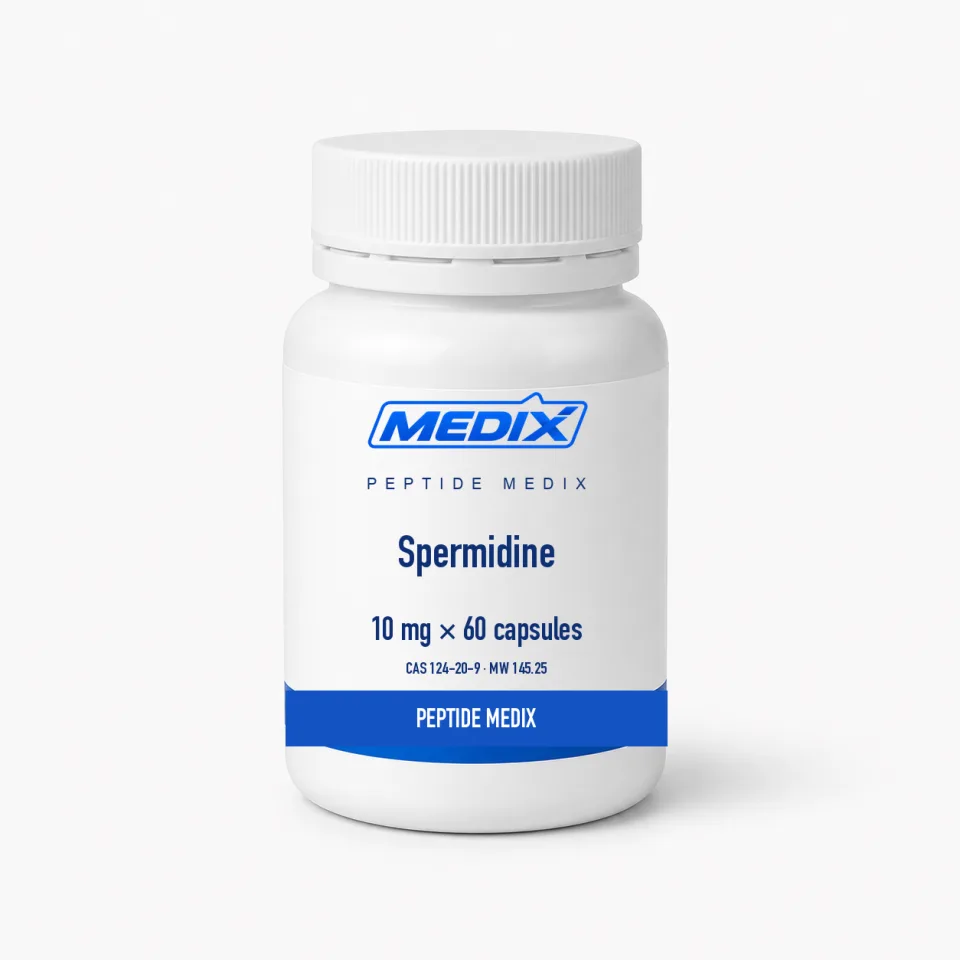
Spermidine

Natural polyamine studied for autophagy and cellular ageing endpoints

Review catalog details Secure payments
Available to order
$46.00 $55.00 15% OFF
1
Categories: spermidine , polyamine , autophagy research

Choose your delivery method

Standard Shipping is automatically selected at checkout. Customers can upgrade to a faster delivery option anytime.

Overview

Spermidine is a naturally occurring polyamine — a small, flexible triamine of formula C7H19N3 and mass 145.25 g/mol, CAS 124-20-9. It is present in every living cell, produced from putrescine by spermidine synthase using decarboxylated S-adenosylmethionine as the aminopropyl donor, and is also supplied by the diet through wheat germ, soybeans and natto, aged cheese, mushrooms and legumes. Tissue polyamine content is reported to decline with age in several species, which is much of the reason the molecule attracts longevity researchers.

Its best-characterised molecular role is not a receptor interaction at all. Spermidine is the exclusive substrate for hypusination, the unusual post-translational modification that activates eukaryotic translation initiation factor 5A. No other molecule can supply the aminobutyl group involved, so eIF5A function is directly tied to spermidine availability. Alongside that, spermidine has been reported to inhibit acetyltransferase activity and to induce autophagy across yeast, flies, worms and mammalian cells.

Specifications

Brand Peptide Medix
Category Vitamins & Cofactors
Form Oral capsule, sealed bottle with tamper-evident closure and desiccant
Content per capsule 10 mg spermidine
Available count 60 capsules
Purity Assayed by HPLC; lot-matched COA available
CAS number 124-20-9
Molecular formula C7H19N3
Molecular weight 145.25 g/mol
Chemical class Biogenic polyamine (triamine)
IUPAC name N-(3-aminopropyl)butane-1,4-diamine
Biosynthesis Formed from putrescine by spermidine synthase; precursor to spermine
Molecular role Exclusive substrate for hypusination of eIF5A; reported acetyltransferase inhibition
Research areas Autophagy induction, cellular senescence, cardiac and neuronal ageing models, translation control
Solubility Freely soluble in water; free base is hygroscopic and air-sensitive
Storage Room temperature or cooler, sealed and dry, protected from light
Preparation required None — fixed unit content, no reconstitution step
Options 1 listed
SKU SPERMIDINE-10-MG-60-CAPSULES

Highlights

  • 10 mg per capsule, 60-count sealed bottle with desiccant
  • Natural biogenic polyamine, CAS 124-20-9, C7H19N3, MW 145.25 g/mol
  • Lot-matched certificate of analysis available on request
  • The sole substrate for hypusination of eIF5A — no other molecule substitutes
  • Widely used inducer of autophagy in yeast, invertebrate and mammalian models
  • Dietary sources include wheat germ, natto, aged cheese and legumes
  • Room-temperature storage; hygroscopic, so keep the bottle sealed

What's Included

  • The product option and count selected above
  • Final item and quantity confirmed in cart
  • Laboratory-research-use labeling

Research Overview

Polyamines and the hypusine pathway

Polyamines are polycationic at physiological pH, which lets them associate with nucleic acids, membranes and acidic proteins, and cells regulate their concentrations tightly through synthesis, catabolism and transport. Spermidine occupies a unique position in that network because eIF5A — the only protein known to contain hypusine — depends on it for activation. Deoxyhypusine synthase transfers spermidine's aminobutyl moiety onto a specific lysine of eIF5A, and hydroxylation completes the modification. Work on translation of polyproline motifs and on mitochondrial protein synthesis has used this dependency to link polyamine supply to protein output.

Autophagy findings

The observation that put spermidine on the longevity map is that supplementation induced autophagy and extended lifespan in yeast, Caenorhabditis elegans and Drosophila, with effects abolished in autophagy-deficient strains. Proposed mechanisms in the literature include inhibition of EP300 acetyltransferase activity, leading to deacetylation of autophagy-related proteins, and hypusination-dependent translation of autophagy machinery such as TFEB.

What research has examined

  • Lifespan and healthspan endpoints in yeast, worms, flies and mice
  • Cardioprotection and improved diastolic function reported in ageing rodent models
  • Immune and T-cell function, where autophagy competence declines with age
  • Hair follicle and skin explant models in dermatological research
  • Observational human nutrition studies correlating dietary polyamine intake with mortality endpoints

Interpretation and limits

Most mechanistic data comes from model organisms and cell culture, and human evidence is largely observational or from small trials with surrogate endpoints. Spermidine is also endogenously produced and dietary, so background levels vary widely between experimental subjects — a confounder worth controlling when designing supplementation studies. Nothing here should be read as a health claim; the material is a research input.
Handling & Storage

Keep the bottle closed, dry and out of direct light, with the supplied desiccant left inside. Spermidine free base is hygroscopic and reacts slowly with atmospheric carbon dioxide, so avoid leaving containers open in humid air and do not decant capsules into unsealed vessels for storage. Where a study needs solution work rather than fixed units, laboratories generally prepare fresh aqueous stocks from analytical-grade material and use them promptly, since polyamine solutions oxidise over time and can generate reactive aldehydes in media containing amine oxidases. Record the lot number against the certificate of analysis before starting.

Spermidine FAQ

What is spermidine?
It is a naturally occurring polyamine found in all living cells and in many foods, notably wheat germ, natto, aged cheese and legumes. Chemically it is a small triamine, C7H19N3, produced from putrescine and serving as the precursor to spermine in the polyamine pathway.
Why is it studied in longevity research?
Supplementation has been reported to induce autophagy and extend lifespan in yeast, worms and flies, with effects that disappear when autophagy genes are removed. Tissue polyamine levels also decline with age in several species, which makes it a natural candidate in ageing research.
What is hypusination?
It is a rare post-translational modification in which spermidine's aminobutyl group is transferred onto a lysine of eIF5A, then hydroxylated to form hypusine. eIF5A is the only protein known to carry it, and spermidine is the only possible donor, which ties translation of certain motifs directly to polyamine supply.
Is a certificate of analysis provided?
Yes. Each lot is assayed for identity and content and a certificate of analysis matched to the lot number on your bottle is available on request. Because polyamines are hygroscopic, content assay rather than appearance is the meaningful check on a capsule product.
How should the capsules be stored?
Keep them at room temperature or cooler in the sealed original bottle with the desiccant in place, away from light and humidity. Do not transfer capsules to unsealed containers, and discard any that have softened, discoloured or fused.
Is this a dietary supplement?
No. Although spermidine occurs in food, this product is supplied as a research material, not as a supplement, food or medicine. It is intended for laboratory research only, and no dosing, protocol or usage guidance for people is provided.
How does it compare with NMN or fisetin?
They act on different pathways. NMN feeds NAD-plus salvage, fisetin is studied as a senolytic flavonoid, and spermidine is studied mainly as an autophagy inducer and eIF5A substrate. Longevity researchers often run them as separate arms to distinguish those mechanisms.

This catalog listing is for laboratory research use only. It is not represented as a drug, food, supplement, cosmetic or diagnostic product, and it is not offered for human or veterinary use.

Customer Reviews

0 reviews
5 star
0%
4 star
0%
3 star
0%
2 star
0%
1 star
0%

Leave Your Review

Rating

No reviews yet — be the first!

Leave Your Review

Rating

Keep exploring

Related Products & Shopping Guides

Compare Spermidine with relevant categories, product topics, and practical shopping information.

Often researched together

Related research peptides, blends and lab supplies frequently ordered with Spermidine.

15% OFF
Fisetin

Peptide Medix

Fisetin

fisetin
$42.00 $50.00

View options and product details

15% OFF
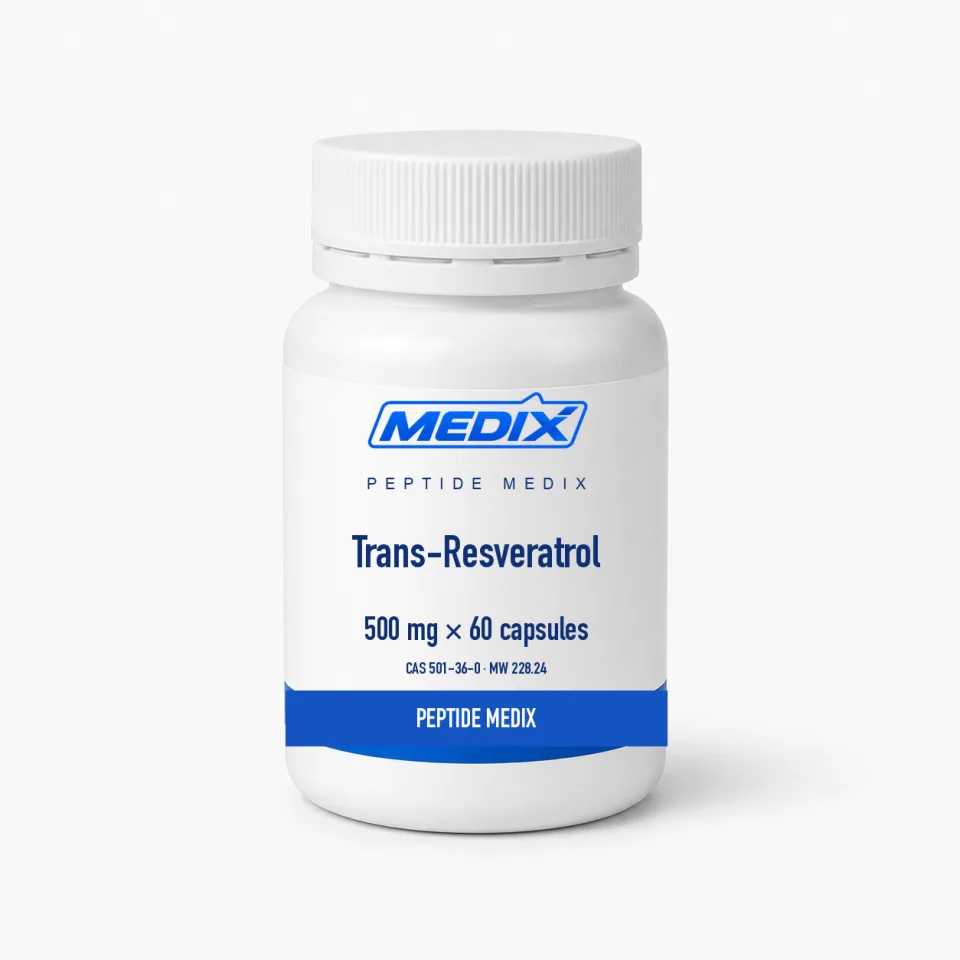
Trans-Resveratrol

Peptide Medix

Trans-Resveratrol

resveratrol
$38.00 $45.00

View options and product details