Research Overview
Where NMN sits in NAD+ metabolism
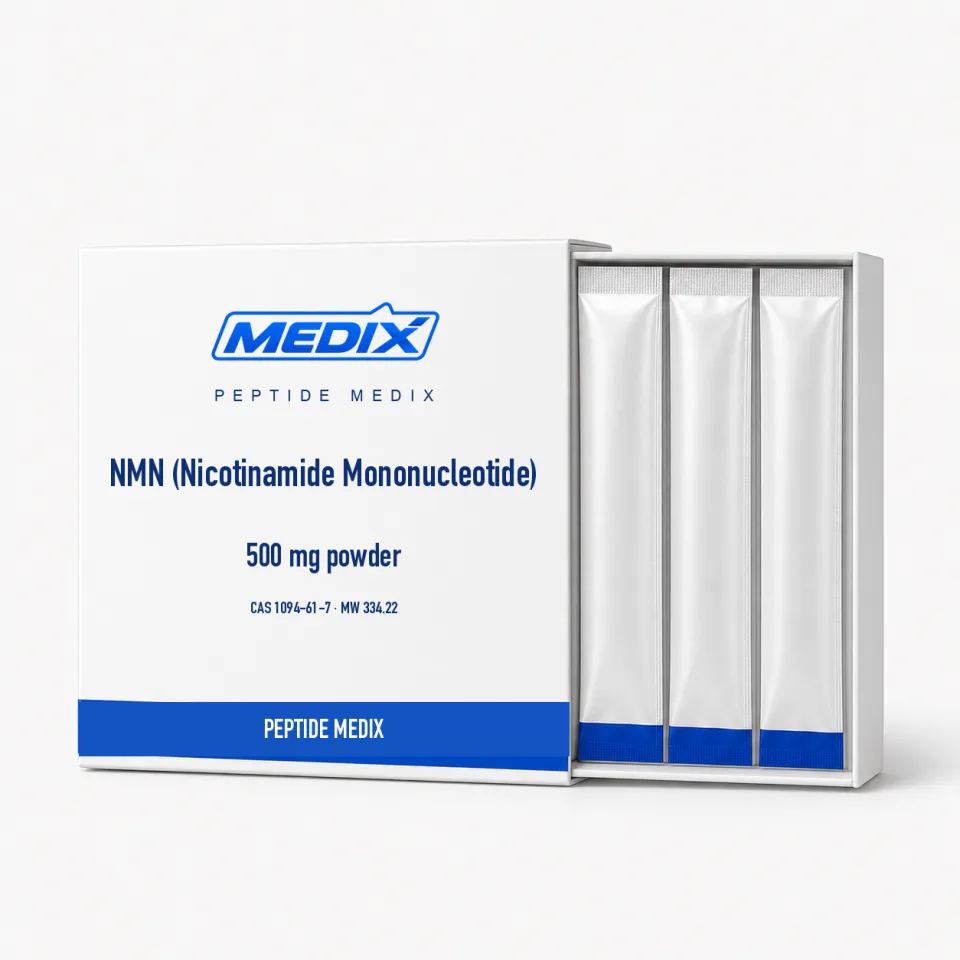
Mammals make most of their NAD+ by salvage rather than de novo synthesis. NAMPT condenses nicotinamide with phosphoribosyl pyrophosphate to form NMN, and NMNAT enzymes — cytosolic, nuclear and mitochondrial isoforms — adenylylate NMN to NAD+. Because NAMPT is rate limiting, supplying NMN bypasses that bottleneck, which is the mechanistic reason it is used as an experimental tool rather than simply adding nicotinamide.
- Tissue NAD+ concentration and NAD+/NADH ratio after precursor administration in rodents.
- Sirtuin-dependent readouts such as protein acetylation state and mitochondrial biogenesis markers.
- Glucose handling, insulin sensitivity and physical-capacity endpoints in aged or diet-challenged animals.
- Endothelial function and vascular ageing measures.
Transport and the uptake debate
How NMN enters cells is an unsettled question. One line of work proposes direct transport by the Slc12a8 transporter in the small intestine; another holds that extracellular NMN is dephosphorylated by CD73 to nicotinamide riboside, taken up, and rephosphorylated intracellularly by nicotinamide riboside kinases. Comparative work on NMN versus nicotinamide riboside versus nicotinamide often turns on this distinction, and results differ by tissue and by model.
Human study status
Regulatory note and evidence limits
The FDA has stated that because NMN was authorised for investigation as a new drug, it falls outside the dietary supplement definition — the reason this material is catalogued as a research chemical. MyPeptide makes no anti-ageing, energy, longevity or health claim of any kind, and supplies NMN solely as a reagent for controlled laboratory investigation.