Research Overview
The sirtuin question
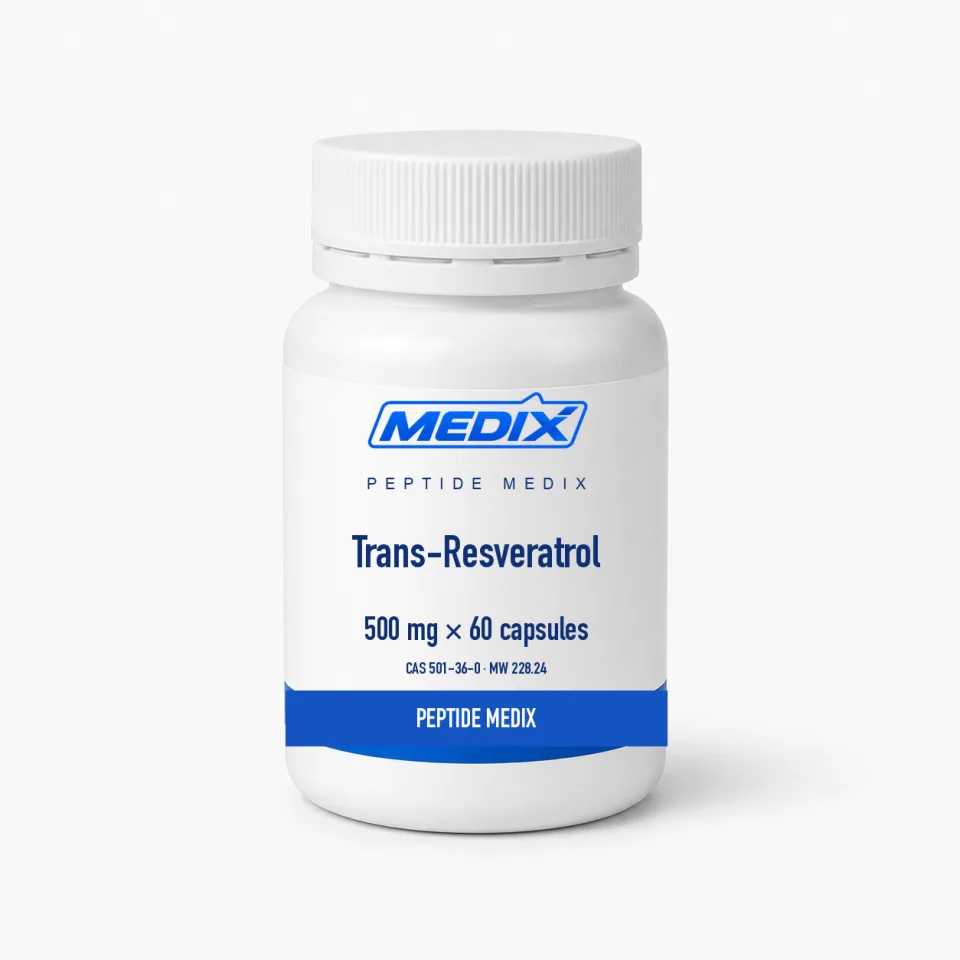
Resveratrol entered mainstream research through reports of SIRT1 activation and lifespan extension in yeast, worms and flies. Later work showed the in vitro activation depended on a fluorogenic substrate and did not reproduce with native peptides, prompting proposals of indirect routes — AMPK activation via phosphodiesterase inhibition and raised cyclic AMP, mitochondrial biogenesis through PGC-1alpha, or NAD-pool effects. Whether these are separate mechanisms or facets of one energy-sensing response is still unresolved, and honest reporting means naming which model was used rather than asserting a single mechanism.
- Cellular senescence and replicative-ageing assays in fibroblast and endothelial culture
- Metabolic models of high-fat-diet-fed rodents, with mixed and strain-dependent outcomes
- Oxidative-stress and inflammation markers, including NF-kB-associated readouts
- Xenohormesis — the hypothesis that plant stress compounds signal environmental stress to consumers
Bioavailability and formulation
Resveratrol is absorbed but rapidly conjugated: glucuronide and sulfate metabolites dominate systemic exposure, and free aglycone concentrations reported in plasma are far below those used in most cell-culture experiments. This gap is the single most common reason in vitro findings fail to translate, and it is why any comparison of culture concentrations to whole-organism exposure should be made explicitly rather than assumed.
Handling chemistry that affects results
The trans isomer photoisomerises under UV, oxidises in alkaline solution and adsorbs to some plastics. Stocks made in DMSO or ethanol should be protected from light, stored frozen in single-use aliquots and checked by HPLC if they are held for long periods, since a degraded stock will read as a lost effect rather than a preparation failure.
Status
Trans-resveratrol supplied here is a research reagent. Nothing above describes a human effect or supports a health claim.