Peptide Medix product catalog

Peptide Medix

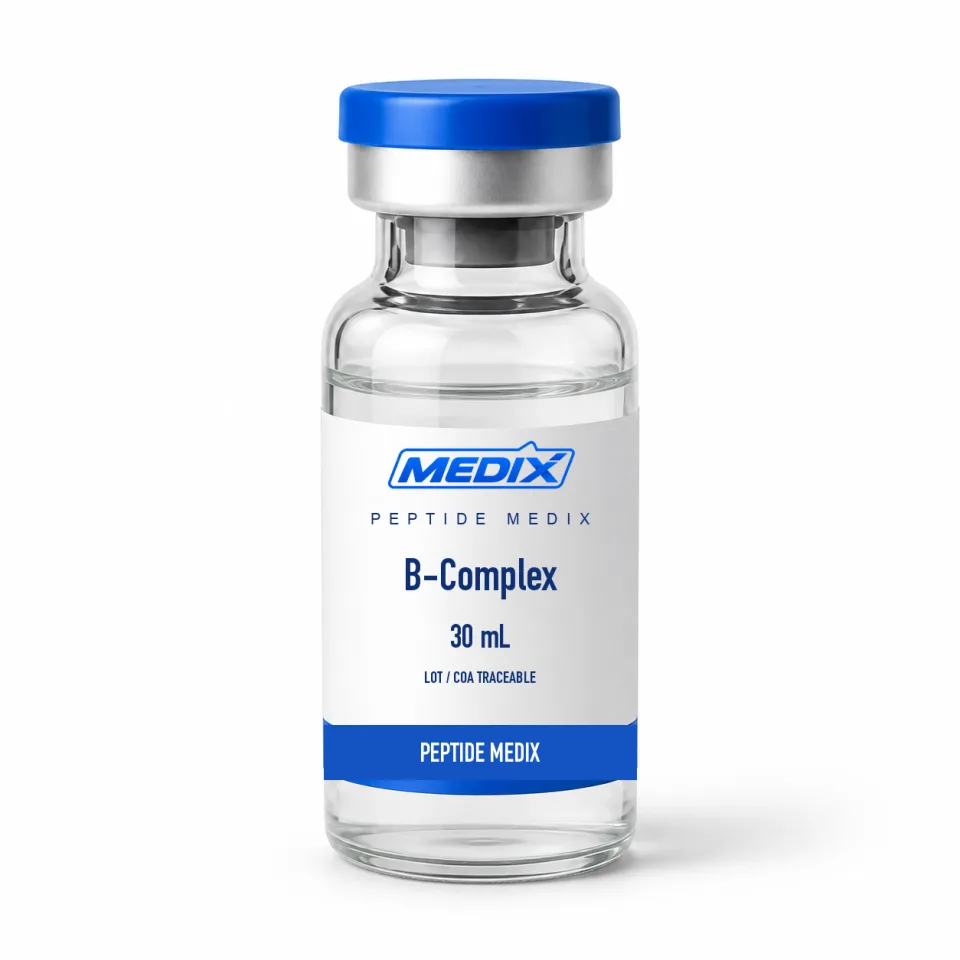
B-Complex

Multi-vitamin B solution in a 30 mL vial with thiamine, niacinamide, B2 and B6

Review catalog details Secure payments
Available to order
$42.00 $50.00 15% OFF
1
Categories: b-complex , b vitamins , thiamine

Choose your delivery method

Standard Shipping is automatically selected at checkout. Customers can upgrade to a faster delivery option anytime.

Overview

This B-complex solution combines four water-soluble B vitamins in a single 30 mL vial: thiamine (B1) at 100 mg/mL, niacinamide (B3) at 100 mg/mL, riboflavin-5-phosphate (the active phosphorylated form of B2) at 2 mg/mL, and pyridoxine (B6) at 2 mg/mL. Grouping them reflects how the vitamins actually work — as interlocking cofactors in the same catabolic pathways rather than as isolated compounds.

Each contributes a distinct coenzyme. Thiamine becomes thiamine pyrophosphate, the cofactor for pyruvate dehydrogenase, alpha-ketoglutarate dehydrogenase and transketolase. Niacinamide is the precursor for NAD+ and NADP+ through the salvage pathway, linking this formulation directly to sirtuin and PARP research. Riboflavin-5-phosphate is FMN itself and the precursor of FAD, the flavin cofactors of complexes I and II. Pyridoxine converts to pyridoxal-5-phosphate, the cofactor for well over a hundred enzymes in amino acid metabolism.

The solution ships ready to use with a lot-matched Certificate of Analysis. Riboflavin in particular is strongly photosensitive, so the vial should be kept shielded from light throughout its working life. Supplied for laboratory research use only.

Specifications

Brand Peptide Medix
Category Vitamins & Cofactors
Vial size 30 mL
Thiamine (B1) 100 mg/mL
Niacinamide (B3) 100 mg/mL
Riboflavin-5-phosphate (B2) 2 mg/mL
Pyridoxine (B6) 2 mg/mL
Coenzyme forms studied Thiamine pyrophosphate, NAD+/NADP+, FMN and FAD, pyridoxal-5-phosphate
Research areas Carbohydrate catabolism, NAD salvage pathway, flavin-dependent enzymes, amino acid metabolism
Appearance note The yellow color comes from the riboflavin component
Photosensitivity High — riboflavin degrades rapidly under light; keep shielded
Solubility All components are water-soluble vitamins already in solution
Storage 2–8 °C, protected from light; do not freeze
Documentation Lot-matched Certificate of Analysis available
SKU B-COMPLEX-30-ML

Highlights

  • Single 30 mL vial containing four B vitamins in solution
  • Thiamine 100 mg/mL and niacinamide 100 mg/mL per milliliter
  • Riboflavin-5-phosphate 2 mg/mL — the active FMN form, not free riboflavin
  • Pyridoxine 2 mg/mL as the B6 component
  • Ready to use with no reconstitution or weighing step
  • Covers cofactor precursors for TPP, NAD+, FMN/FAD and PLP research
  • Lot-matched Certificate of Analysis available before purchase

What's Included

  • The vial option and size selected above
  • Final item and quantity confirmed in cart
  • Laboratory-research-use labeling

Research Overview

Why the B vitamins are studied together

The B group shares no common structure — they are chemically unrelated molecules grouped by solubility and by their historical isolation from the same crude extracts. What links them functionally is that each yields a coenzyme required at a different step of the same catabolic machinery, so a deficiency in one can present much like a deficiency in another.

Component coenzyme roles

  • Thiamine (B1) → thiamine pyrophosphate, cofactor for pyruvate dehydrogenase, alpha-ketoglutarate dehydrogenase and transketolase in the pentose phosphate pathway
  • Niacinamide (B3) → NAD+ and NADP+ via the salvage pathway, making it a substrate feed for sirtuin, PARP and CD38 research
  • Riboflavin-5-phosphate (B2) → FMN directly and FAD after adenylylation; both are prosthetic groups in electron-transport complexes I and II
  • Pyridoxine (B6) → pyridoxal-5-phosphate, the cofactor for transaminases, decarboxylases and the transsulfuration enzymes

Links to other research areas

Because niacinamide feeds NAD+ synthesis and pyridoxal-5-phosphate supports the transsulfuration route from homocysteine to cysteine, this formulation intersects with two heavily studied fields: NAD-dependent enzyme biology and one-carbon metabolism. Laboratories running homocysteine or methylation work commonly examine B6, B12 and folate status in parallel.

Stability

Riboflavin is among the most light-sensitive vitamins known, photodegrading to lumiflavin and lumichrome, and its breakdown products can themselves generate reactive oxygen species in solution. Thiamine is the least stable of the group at alkaline pH. Both facts make light protection, cold storage and prompt use the practical requirements for a combined preparation.

A combined preparation also carries a design caveat: with four vitamins present at fixed ratios, an observed effect cannot be attributed to any single component without running the individual compounds as separate arms. Studies aimed at mechanism generally use single-vitamin preparations, reserving the complex for status and repletion models.
Handling & Storage

Store the vial refrigerated at 2–8 °C inside its carton and do not freeze. Withdraw solution under reduced light and return the vial to the dark immediately, since the riboflavin component photodegrades quickly and its breakdown products can generate reactive species that confound redox-sensitive assays. Wrap any secondary containers in foil. Avoid alkaline buffers, which accelerate thiamine breakdown, and avoid mixing with strong oxidizers. Inspect for color change or particulate matter before use and record the lot number for traceability against the Certificate of Analysis.

B-Complex FAQ

What is in this B-complex vial?
Each 30 mL vial supplies thiamine at 100 mg/mL, niacinamide at 100 mg/mL, riboflavin-5-phosphate at 2 mg/mL and pyridoxine at 2 mg/mL. The four are combined because their coenzyme products act at interlocking steps of the same metabolic pathways.
Why riboflavin-5-phosphate rather than riboflavin?
Riboflavin-5-phosphate is FMN, the already-phosphorylated active form, and it is far more water-soluble than free riboflavin. That solubility is the practical reason it is used in combined liquid preparations where plain riboflavin would not stay in solution.
How does this relate to NAD+ research?
Niacinamide is the direct precursor for NAD+ through the salvage pathway, in which NAMPT and NMNAT rebuild the coenzyme. Laboratories studying sirtuins, PARPs or NAD+ pool dynamics often examine niacinamide supply as one of the input variables.
Why is the solution yellow?
The color comes from the riboflavin-5-phosphate component; flavins are intensely yellow chromophores. Fading of that color is a useful visual indicator that the vial has had light exposure and may have lost riboflavin content.
How should the vial be stored?
Keep it refrigerated at 2–8 °C, inside its carton, protected from light, and do not freeze. Riboflavin is one of the most photosensitive vitamins known, so light exposure is the main threat to the integrity of this preparation.

This catalog listing is for laboratory research use only. It is not represented as a drug, food, supplement, cosmetic or diagnostic product, and it is not offered for human or veterinary use.

Customer Reviews

0 reviews
5 star
0%
4 star
0%
3 star
0%
2 star
0%
1 star
0%

Leave Your Review

Rating

No reviews yet — be the first!

Leave Your Review

Rating

Keep exploring

Related Products & Shopping Guides

Compare B-Complex with relevant categories, product topics, and practical shopping information.

Often researched together

Related research peptides, blends and lab supplies frequently ordered with B-Complex.

15% OFF
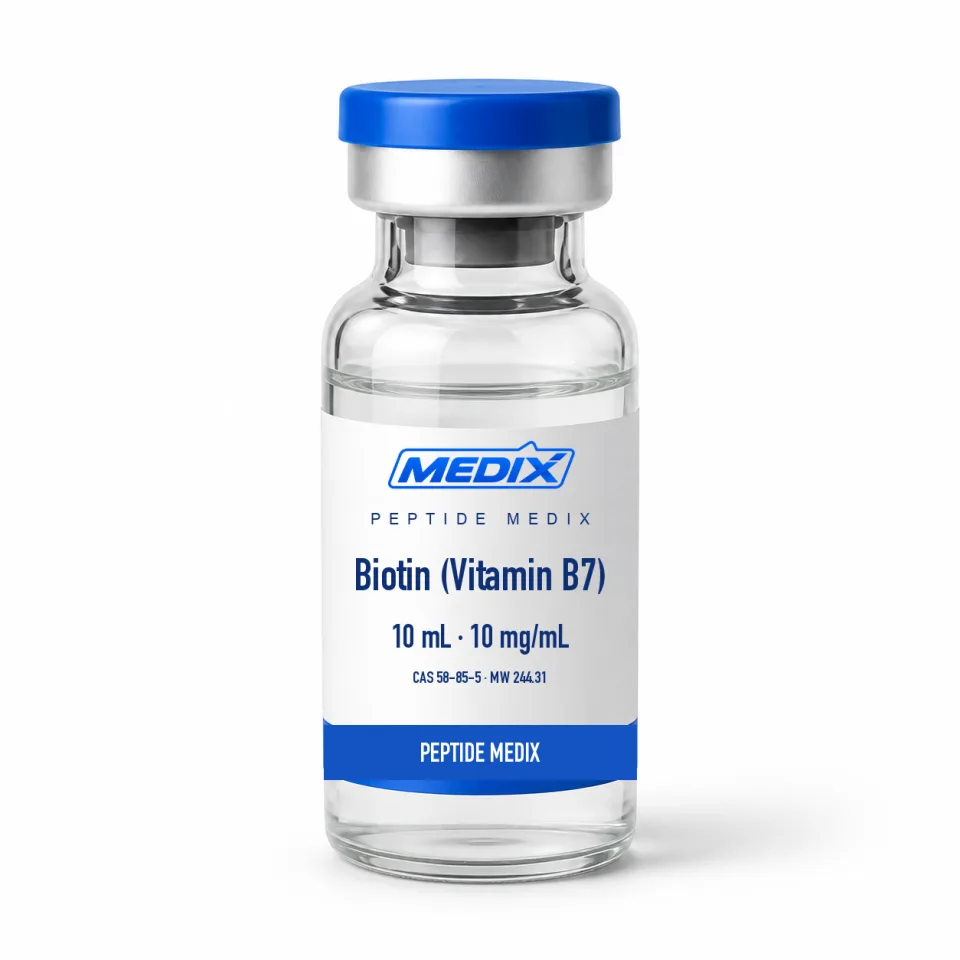
Biotin (Vitamin B7)

Peptide Medix

Biotin (Vitamin B7)

biotin
$68.00 $80.00

View options and product details

15% OFF
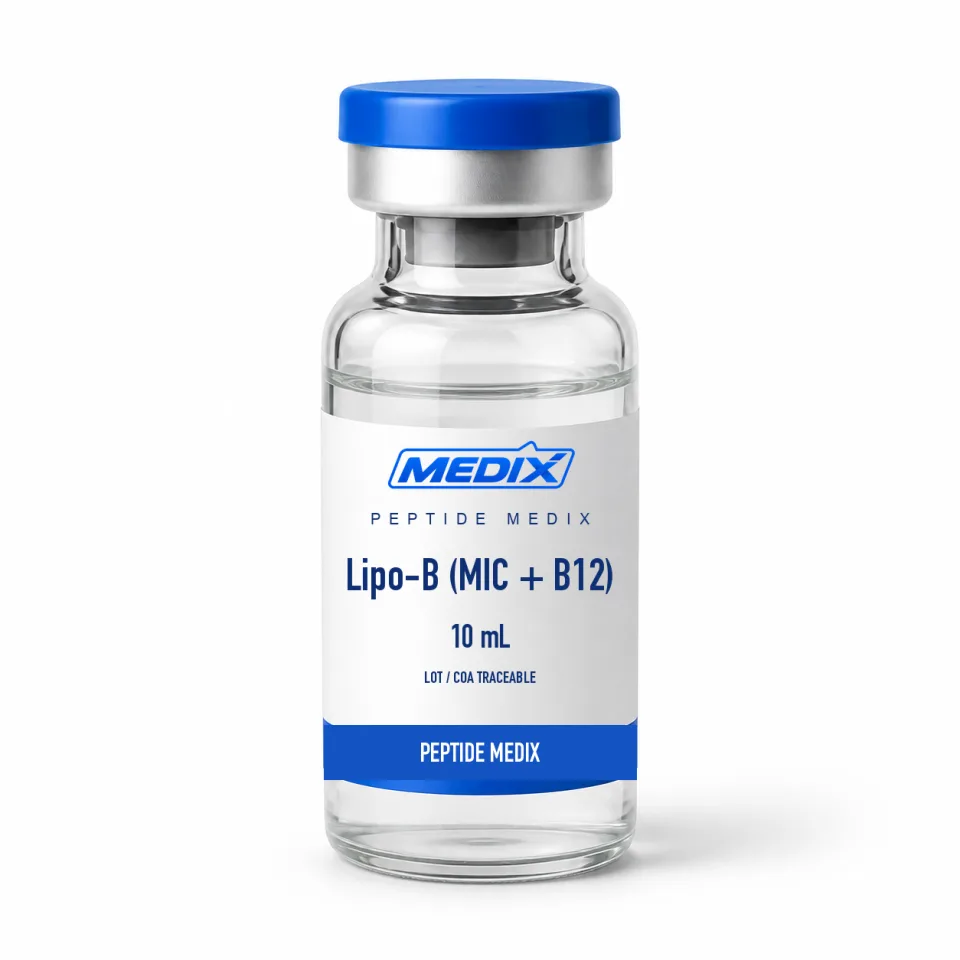
Lipo-B (MIC + B12)

Peptide Medix

Lipo-B (MIC + B12)

lipo-b

2 options

$34.00 $40.00

View options and product details

15% OFF
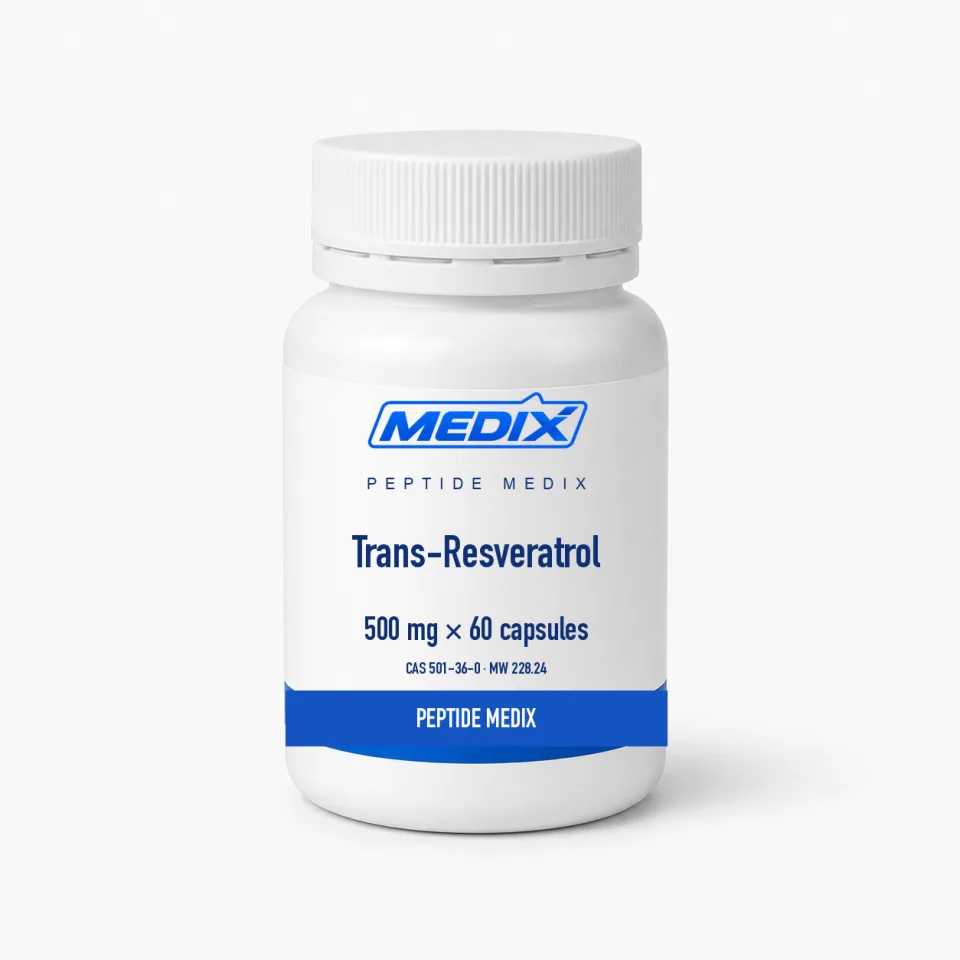
Trans-Resveratrol

Peptide Medix

Trans-Resveratrol

resveratrol
$38.00 $45.00

View options and product details