
Research Overview
Why two receptor arms
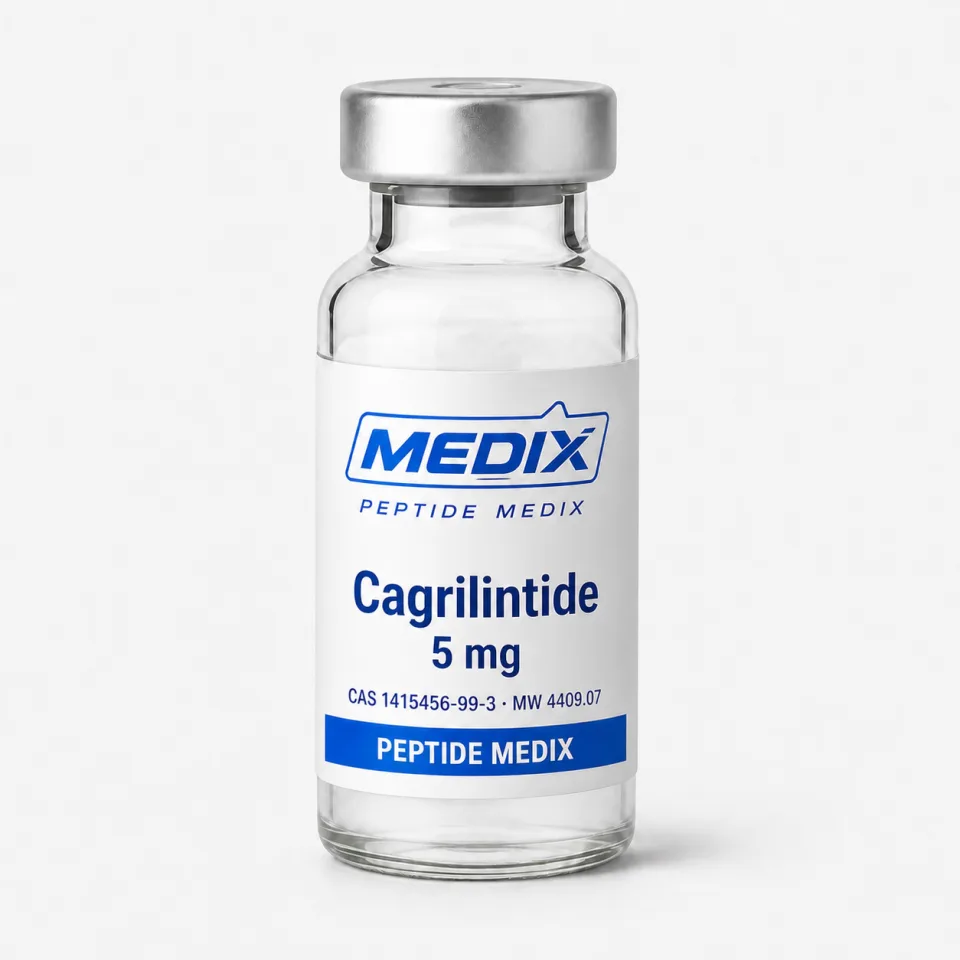
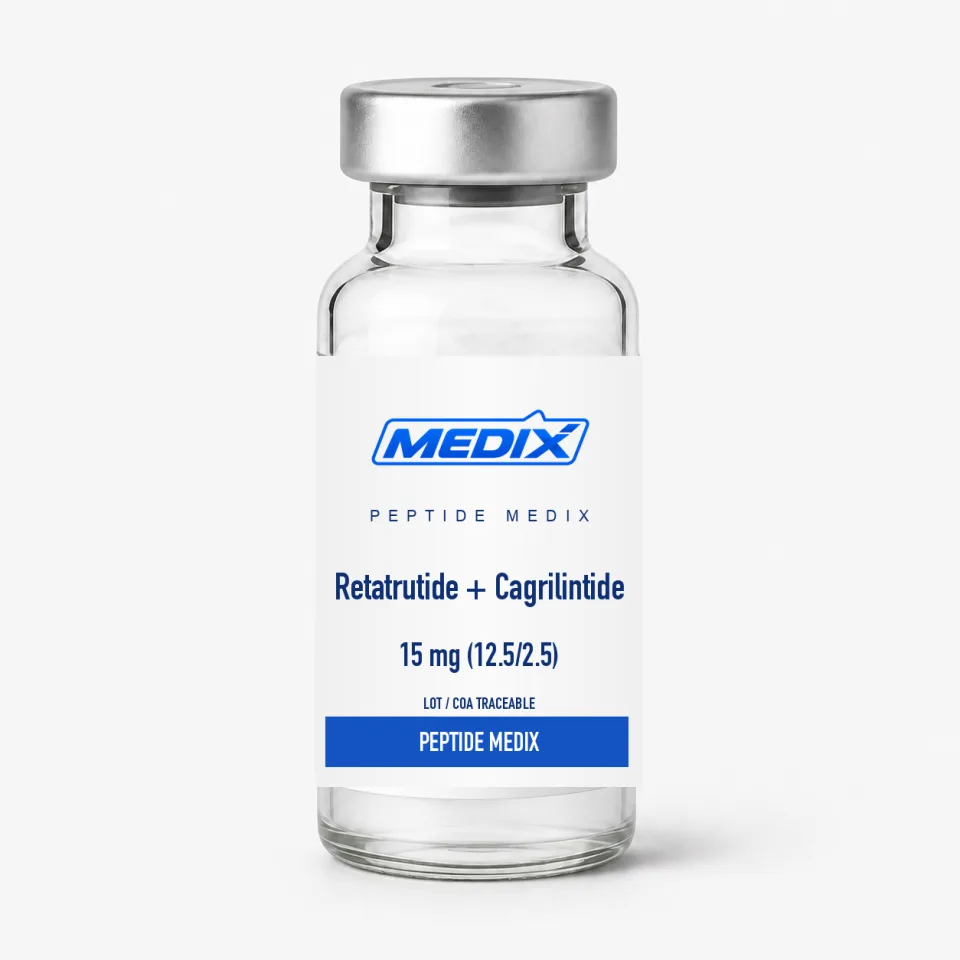
GLP-1 receptor agonists and amylin analogs converge on food intake through different anatomy. GLP-1 receptors are expressed in pancreatic islets, the gut and hypothalamic nuclei, whereas amylin acts principally at calcitonin receptor complexes concentrated in the area postrema. Combination studies test whether recruiting both routes produces larger or more durable changes in intake and body composition than either alone in rodent models.
Endpoints commonly examined
- Cumulative food intake, meal patterning and gastric emptying rate
- Glucose tolerance and insulin secretion in metabolic challenge models
- Neuronal activation mapping in the area postrema, nucleus tractus solitarius and arcuate nucleus
Receptor pharmacology in vitro
Cell-based work uses the two peptides separately and together to build concentration-response curves at the GLP-1 receptor and across the AMY1 to AMY3 complexes. Because the receptors couple to overlapping second-messenger pathways, careful use of selective antagonists or receptor-null cells is needed to attribute a signal to one component rather than the other, and this blend is often accompanied by single-agent controls for that reason.
Formulation and stability questions
Native amylin aggregates into amyloid fibrils, and co-formulating an amylin analog with an acylated incretin raises real physicochemical questions. Analytical laboratories study whether the two peptides remain independently stable in a shared matrix, whether either promotes aggregation of the other, and how the mixture behaves under HPLC and LC-MS separation. Thioflavin-T assays and size-exclusion methods are the usual tools.
Comparative and control design
Investigators typically run the blend against semaglutide alone, cagrilintide alone and vehicle so that additive, synergistic and merely redundant effects can be separated. Matched exposure rather than matched mass is the more informative comparison, since the two peptides have different molecular weights and clearance profiles.