Research Overview
Origin: a metabolite, not a nutrient
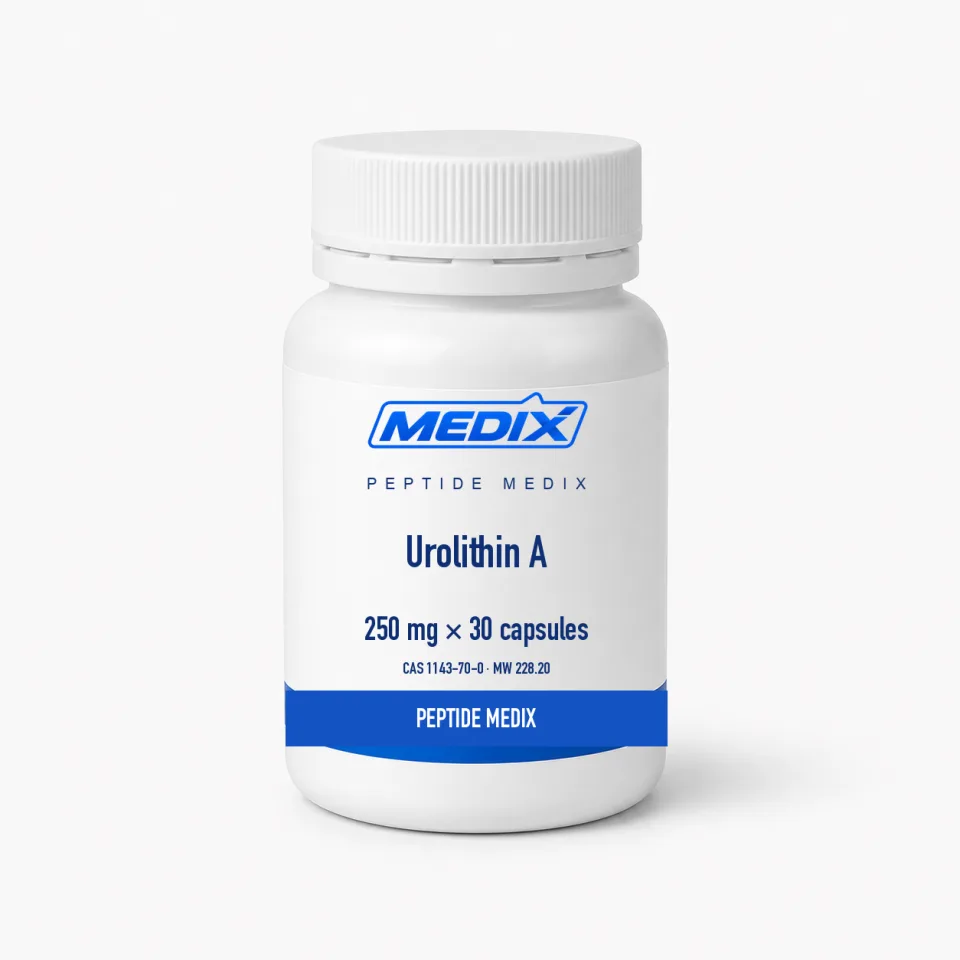
Ellagitannins in pomegranate and walnuts are large, poorly absorbed polyphenols. In the colon they are hydrolysed to ellagic acid and then progressively dehydroxylated by specific gut bacteria to a series of urolithins, of which urolithin A is the most studied. Human metabotype surveys report substantial variation in this capacity, with a meaningful proportion of people producing little or none. That variability confounds studies of the precursor foods and is the principal reason the isolated metabolite became the preferred research article.
Mitophagy and mitochondrial quality control
The compound came to prominence through reports that it triggers mitophagy in nematodes and in rodent skeletal muscle, with accompanying observations on muscle function and lifespan in those model systems. Follow-up work has examined markers of the PINK1/Parkin axis, autophagosome formation, mitochondrial membrane potential and respiratory capacity. The mechanism is still being characterised, and published interpretations vary on how much of the observed effect is direct mitophagy induction versus broader changes in autophagic flux and mitochondrial biogenesis.
Endpoints researchers commonly measure
- Mitophagy reporters such as mt-Keima and mito-QC in cultured cells
- Oxygen consumption rate and spare respiratory capacity by extracellular flux analysis
- Autophagy markers LC3-II, p62 and PINK1/Parkin recruitment by immunoblot
- Muscle endpoints in rodents: fibre cross-sectional area, grip strength, running endurance
- Inflammatory and senescence-associated markers in cell and tissue models
Analytical and formulation caveats
Urolithin A is poorly soluble in water, so exposure in cell culture depends heavily on vehicle and on serum protein binding; matched vehicle controls matter. In vivo, the free aglycone is rapidly conjugated to glucuronide and sulfate species, meaning plasma measurement of the parent compound alone understates total exposure. Studies that report tissue concentrations generally quantify conjugates as well and state whether hydrolysis was performed before analysis.