Peptide Medix product catalog

Peptide Medix

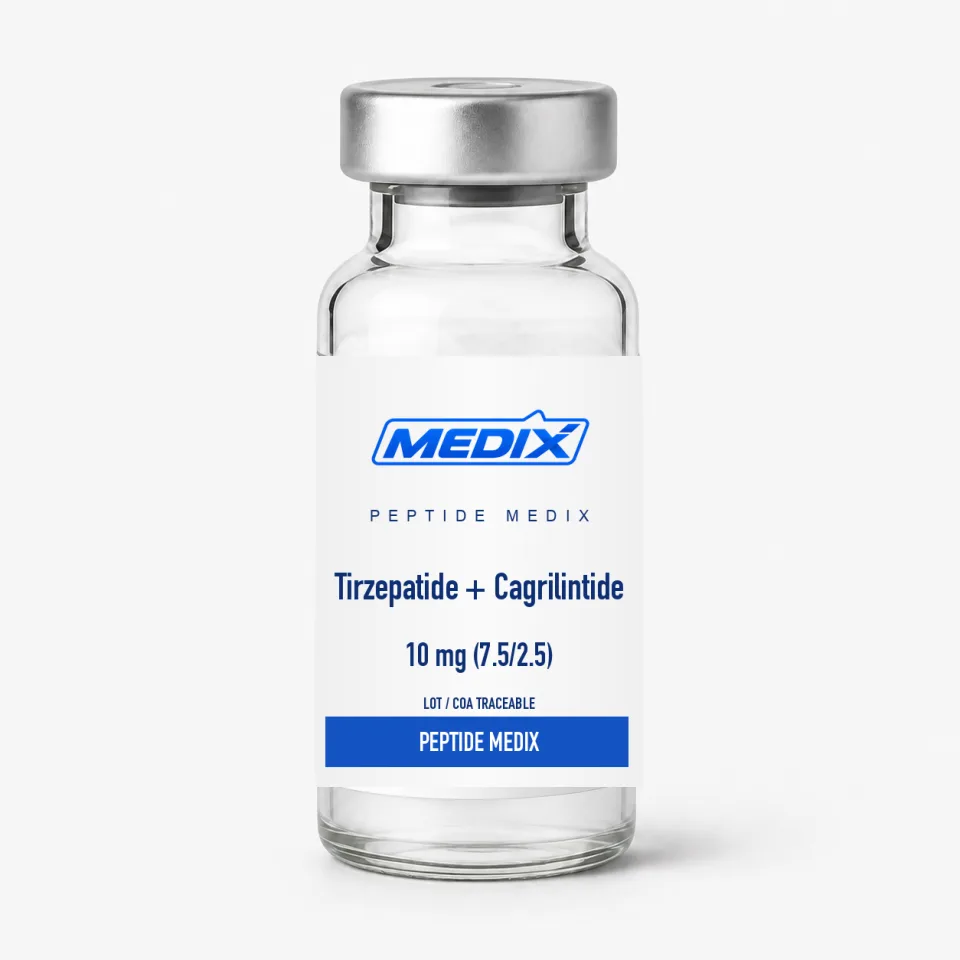
Tirzepatide + Cagrilintide

Co-lyophilized dual GIP/GLP-1 agonist with a long-acting amylin analog

Review catalog details Secure payments
Available to order · 2 of 2 options available
$182.00 $215.00 15% OFF

Choose an option

1
Categories: tirzepatide , cagrilintide , peptide blends

Choose your delivery method

Standard Shipping is automatically selected at checkout. Customers can upgrade to a faster delivery option anytime.

Overview

This blend co-lyophilizes two metabolic research peptides in one vial: tirzepatide, a 39-residue acylated dual GIP and GLP-1 receptor agonist, and cagrilintide, a long-acting acylated analog of amylin (islet amyloid polypeptide). The pairing exists because incretin and amylin signalling reach energy-balance circuits through different receptor systems, and combination pharmacology is one of the most active questions in current metabolic research.

Tirzepatide is built on a GIP-based backbone with aminoisobutyric acid substitutions for protease resistance and a C20 diacid chain attached through a gamma-Glu-(AEEA)2 linker at Lys20, which drives albumin binding and a long circulating half-life. Cagrilintide uses an amylin backbone with anti-fibrillation substitutions, an intramolecular disulfide and its own lipid side chain, and is studied at the calcitonin receptor together with the RAMP-defined AMY1–AMY3 receptor complexes.

Specifications

Brand Peptide Medix
Category Weight Management Blends
Form Co-lyophilized powder, sealed glass vial with flip-off seal
Available sizes 10 mg total (7.5 mg tirzepatide / 2.5 mg cagrilintide); 20 mg total (15 mg / 5 mg)
Blend ratio 3:1 tirzepatide to cagrilintide by mass
Purity ≥99% by HPLC for each peptide; lot-matched COA available
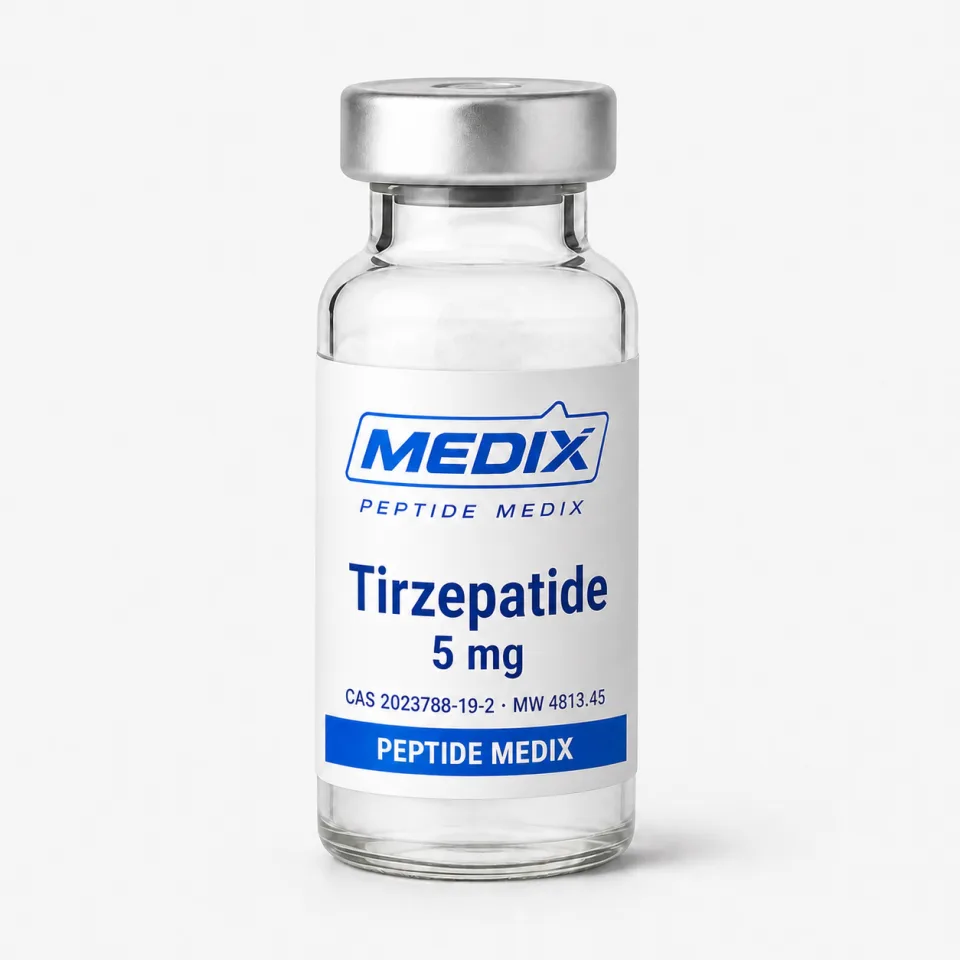
Component 1 Tirzepatide — CAS 2023788-19-2, C225H348N48O68, 4813.45 g/mol
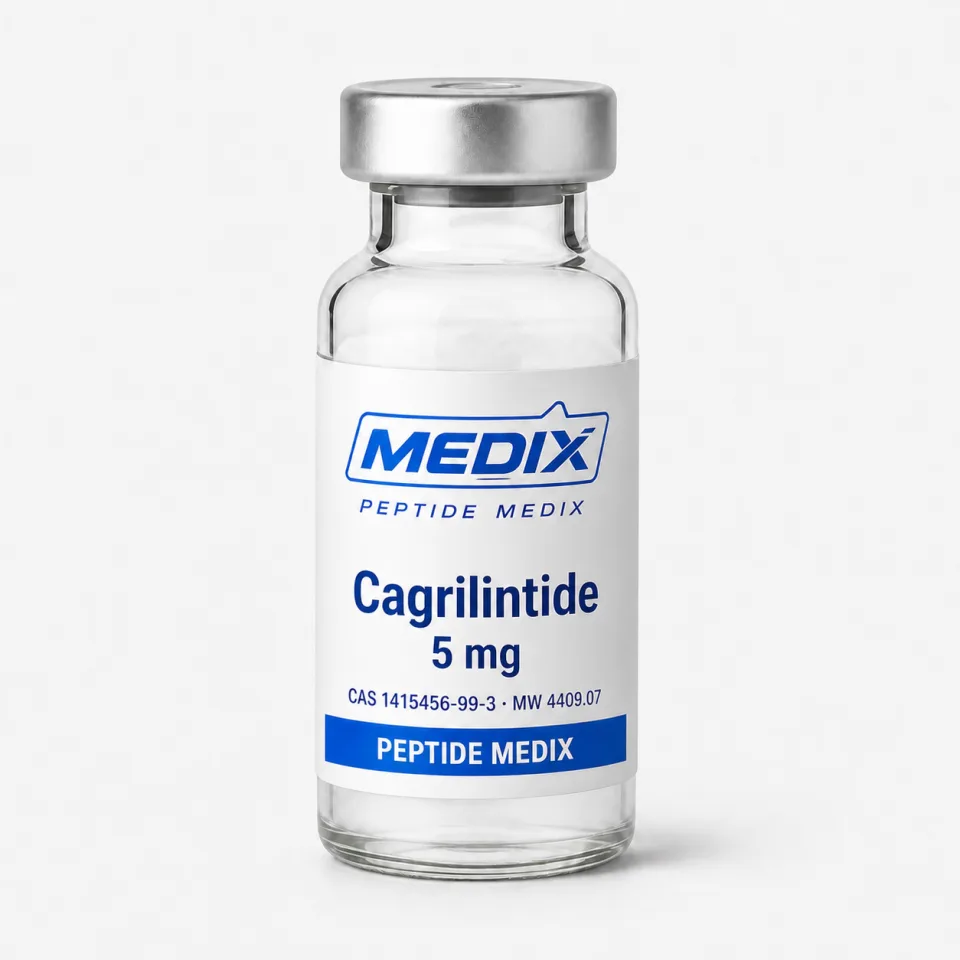
Component 2 Cagrilintide — CAS 1415456-99-3, 4409.07 g/mol
Tirzepatide class Acylated dual GIP/GLP-1 receptor agonist (twincretin), 39 residues
Cagrilintide class Long-acting acylated amylin (IAPP) analog
Key modifications Aib substitutions and a C20 diacid on tirzepatide; anti-fibrillation substitutions, disulfide and lipid chain on cagrilintide
Receptors studied GIP receptor, GLP-1 receptor, calcitonin receptor and AMY1–AMY3 complexes
Research areas Incretin-amylin combination pharmacology, satiation signalling, gastric emptying, adipose and glucose-handling models
Solubility Bacteriostatic water; dilute alkaline or phosphate buffers where assay pH matters
Storage (lyophilized) −20 °C, sealed and protected from light and moisture
Storage (reconstituted) 2–8 °C, protected from light; use within the study window
SKU TIRZEPATIDE-CAGRILINTIDE-10-MG-7-5-2-5

Highlights

  • Two research peptides in one vial: tirzepatide (dual GIP/GLP-1 agonist) plus cagrilintide (amylin analog)
  • Fixed 3:1 ratios — 10 mg vial delivers 7.5 mg / 2.5 mg; 20 mg vial delivers 15 mg / 5 mg
  • Each peptide third-party HPLC tested to ≥99% purity with a lot-matched COA
  • Co-lyophilized so a single reconstitution gives a fixed-ratio working solution
  • Research context: incretin-amylin receptor crosstalk, satiation signalling, gastric emptying models
  • Both components are long-acting acylated analogs designed for albumin binding
  • Cold-chain packed and shipped from a US facility

What's Included

  • The vial option and size selected above
  • Final item and quantity confirmed in cart
  • Laboratory-research-use labeling

Research Overview

Tirzepatide: dual incretin engagement

Cagrilintide: amylin receptor pharmacology

Why the two are combined in research

  • The receptor systems are separate, so additive or synergistic readouts can be tested directly.
  • Amylin analogs act largely through hindbrain circuits while incretin agonists engage both peripheral and central sites.
  • Combination arms let investigators ask whether effects on intake and body composition track a single pathway or two.

Working with a fixed-ratio blend

Evidence limits

Handling & Storage

Store the sealed vial at −20 °C, protected from light and moisture, and let it equilibrate to room temperature before opening. Reconstitute by running bacteriostatic water slowly down the inner wall of the vial and swirling gently until the cake clears — do not shake, since both acylated peptides foam and surface-denature easily. Because the two peptides are co-lyophilized, every withdrawn volume carries the same 3:1 mass ratio; record that ratio with your dilution calculations. Hold the reconstituted solution at 2–8 °C, keep it out of light, avoid repeated freeze-thaw, and label the vial with the lot number and reconstitution date. Dispose of unused material under your institution's chemical waste procedure.

Tirzepatide + Cagrilintide FAQ

How much of each peptide is in a vial?
The 10 mg vial contains 7.5 mg tirzepatide and 2.5 mg cagrilintide; the 20 mg vial contains 15 mg and 5 mg. Both are a 3:1 mass ratio, and the exact fill is restated on the lot-matched Certificate of Analysis so calculations can be verified.
Are the peptides mixed together or supplied separately?
They are co-lyophilized in a single vial, so one reconstitution produces a fixed-ratio working solution. If your design needs to vary the ratio, use the individual tirzepatide and cagrilintide vials instead, which are stocked separately.
Why are an incretin agonist and an amylin analog studied together?
They engage different receptor systems — GIP and GLP-1 receptors versus calcitonin receptor–RAMP amylin complexes — and reach energy-balance circuits by partly separate routes. Combination arms let researchers test whether readouts are additive rather than driven by one pathway.
Is the blend third-party tested?
Yes. Each peptide is analysed by HPLC to confirm ≥99% purity with identity testing, and a lot-matched COA covering the batch you receive is available. Match the lot on the vial to the COA before recording results.
What is used to reconstitute it?
Bacteriostatic water is the usual diluent for multi-draw laboratory preparations; dilute alkaline or phosphate buffers are used where assay pH matters. Add the diluent slowly against the vial wall and swirl rather than shake, because acylated peptides foam readily.
How does this compare with the semaglutide + cagrilintide blend?
The amylin component is the same class; the incretin component differs. Semaglutide is a single GLP-1 receptor agonist, whereas tirzepatide engages both GIP and GLP-1 receptors. Researchers pick between them depending on which receptor question the experiment is asking.

This catalog listing is for laboratory research use only. It is not represented as a drug, food, supplement, cosmetic or diagnostic product, and it is not offered for human or veterinary use.

Customer Reviews

0 reviews
5 star
0%
4 star
0%
3 star
0%
2 star
0%
1 star
0%

Leave Your Review

Rating

No reviews yet — be the first!

Leave Your Review

Rating

Keep exploring

Related Products & Shopping Guides

Compare Tirzepatide + Cagrilintide with relevant categories, product topics, and practical shopping information.

Often researched together

Related research peptides, blends and lab supplies frequently ordered with Tirzepatide + Cagrilintide.

15% OFF
Tirzepatide

Peptide Medix

Tirzepatide

tirzepatide

8 options

$63.00 $75.00

View options and product details

15% OFF
Cagrilintide

Peptide Medix

Cagrilintide

cagrilintide

2 options

$97.00 $115.00

View options and product details

15% OFF
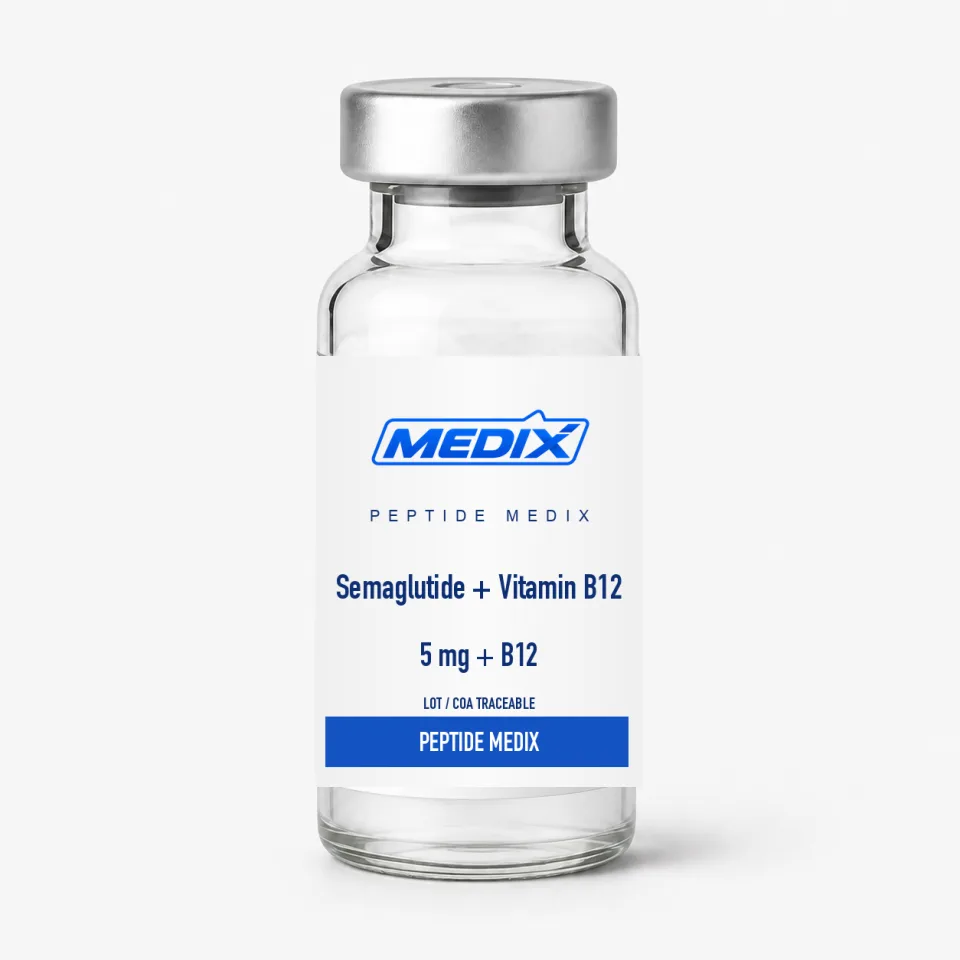
Semaglutide + Vitamin B12

Peptide Medix

Semaglutide + Vitamin B12

semaglutide

2 options

$76.00 $90.00

View options and product details

15% OFF
Tirzepatide + Vitamin B12

Peptide Medix

Tirzepatide + Vitamin B12

tirzepatide

2 options

$119.00 $140.00

View options and product details