Research Overview
Discovery and the zinc requirement
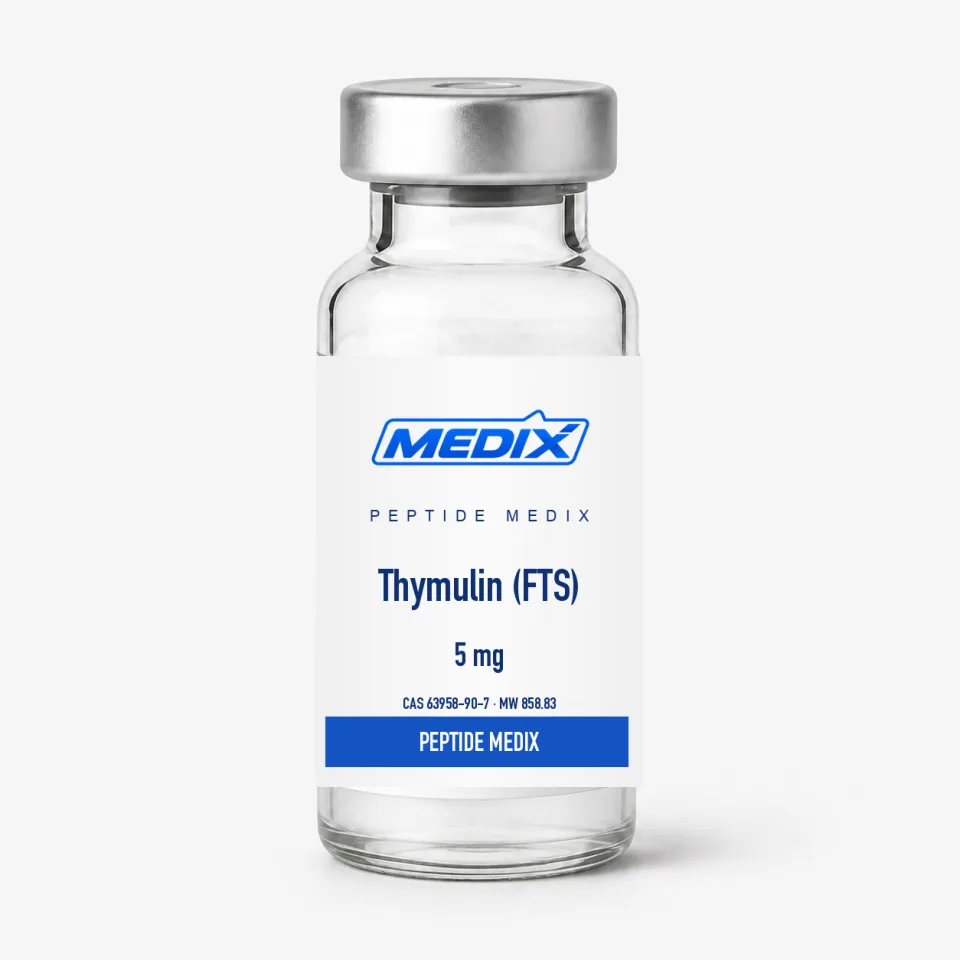
Thymulin was characterised in French laboratories in the 1970s as a serum factor of thymic origin, and its sequence was determined as a nonapeptide with an N-terminal pyroglutamate. The critical finding that followed was that the peptide alone shows no activity in classical rosette assays until zinc is added, after which activity appears. Structural work located the binding site and established the one-to-one stoichiometry with Zn(II).
Zinc status as a research variable
Because activity depends on the metal, circulating thymulin has been used as a functional indicator of zinc availability. Studies of dietary zinc restriction in animals and of zinc supplementation in older subjects report changes in measured thymulin activity, and this link is one of the main reasons the peptide continues to appear in nutritional immunology.
Thymic involution and ageing
Thymulin levels are reported to decline with age in parallel with thymic involution, and the peptide has been used as a marker in studies examining that process. A related literature examines whether the decline reflects reduced peptide production, reduced zinc availability, or both, a question that remains open in the published record.
Neuroendocrine-immune research
Thymulin production is described as responsive to hormones including growth hormone, prolactin and thyroid hormones, and a set of studies examines the peptide within bidirectional signalling between the endocrine system and the thymus. Separate rodent work has examined analogues in inflammatory and nociception models.
Practical note and scope
Because activity is zinc-dependent, buffers, chelators and trace metal content in an experimental system materially affect results. All statements summarise published research; the material is supplied as a laboratory reagent only.