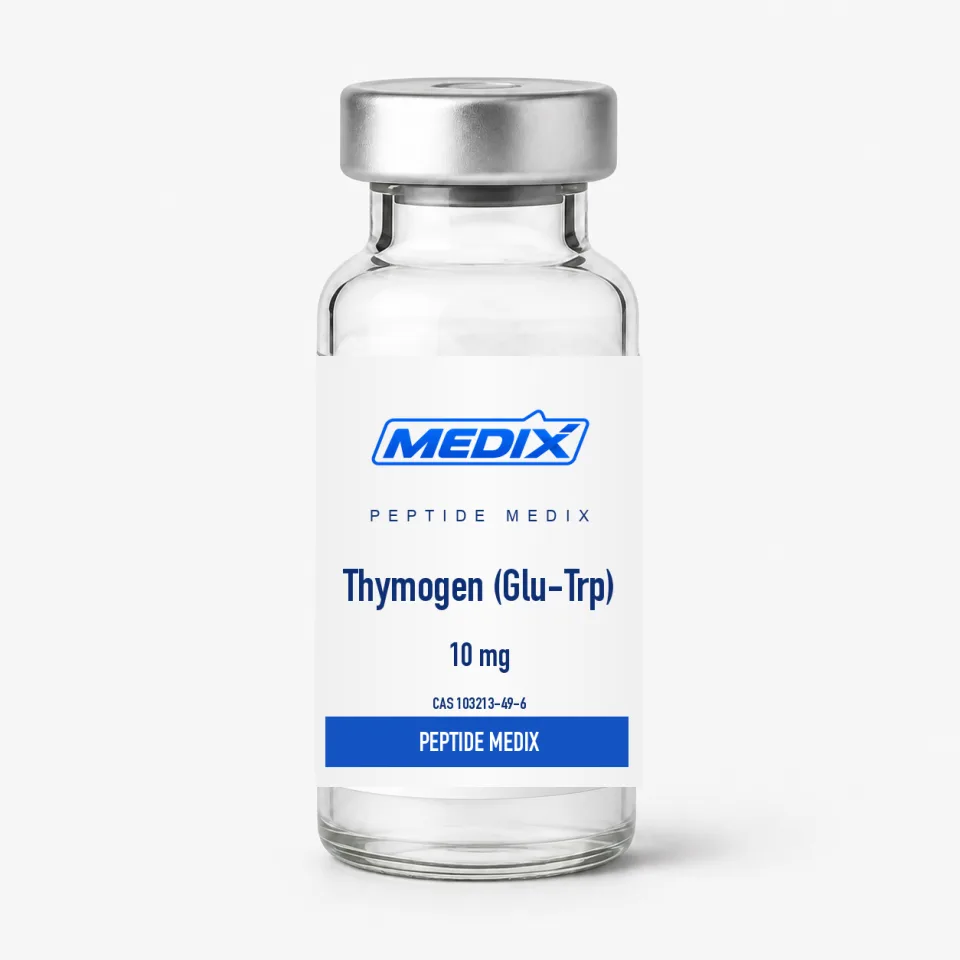
Peptide Medix product catalog

Peptide Medix

Thymogen (Glu-Trp)

Synthetic Glu-Trp dipeptide studied in thymic immune regulation models

Review catalog details Secure payments
Available to order · 2 of 2 options available
$55.00 $65.00 15% OFF

Choose an option

1
Categories: thymogen , glu-trp , dipeptide

Choose your delivery method

Standard Shipping is automatically selected at checkout. Customers can upgrade to a faster delivery option anytime.

Overview

Thymogen is a synthetic dipeptide, L-glutamyl-L-tryptophan, and one of the shortest peptides in the immune research catalog — just two residues, Glu-Trp, with formula C16H19N3O5 and a mass of 333.34 g/mol under CAS 103213-49-6. It emerged from Soviet-era work at the Military Medical Academy in Leningrad, where researchers fractionating thymic extracts sought the minimal active sequence rather than the whole polypeptide mixture, and identified this pair as a candidate.

That heritage places Thymogen in the same lineage as Thymalin and the broader family of peptide bioregulators associated with Vladimir Khavinson and Vyacheslav Morozov: short synthetic sequences intended to reproduce the activity attributed to a tissue-derived extract in a defined, reproducible chemical form. Where Thymalin is a peptide complex isolated from calf thymus, Thymogen is a single synthetic molecule of exactly known structure — which is what makes it a cleaner reagent for controlled work.

Specifications

Brand Peptide Medix
Category Immune Peptides
Form Lyophilized powder, sealed glass vial with flip-off seal
Purity ≥99% by HPLC; lot-matched COA available
Available sizes 10 mg, 20 mg
CAS number 103213-49-6
Molecular formula C16H19N3O5
Molecular weight 333.34 g/mol
Amino acid sequence H-Glu-Trp-OH (L-glutamyl-L-tryptophan)
Chain length 2 amino acids (dipeptide)
Also known as Thymogen, Glu-Trp, EW dipeptide
Peptide class Synthetic thymic peptide bioregulator
Research areas Lymphocyte differentiation, thymic immune signalling, cytokine expression models
Solubility Readily soluble in water and bacteriostatic water
Storage (lyophilized) −20 °C, sealed and protected from light and moisture
Storage (reconstituted) 2–8 °C, protected from light; use within the study window
SKU THYMOGEN-10-MG

Highlights

  • ≥99% purity by HPLC with a lot-matched Certificate of Analysis available
  • Two vial sizes: 10 mg and 20 mg lyophilized powder
  • Synthetic dipeptide Glu-Trp, CAS 103213-49-6, C16H19N3O5, 333.34 g/mol
  • One of the shortest sequences in the thymic peptide family — only two residues
  • Derived from work identifying the minimal active fragment of thymus extract
  • Studied alongside Thymalin and thymosin alpha-1 in immune regulation models
  • Highly water soluble and simple to reconstitute; tryptophan is light sensitive

What's Included

  • The vial option and size selected above
  • Final item and quantity confirmed in cart
  • Laboratory-research-use labeling

Research Overview

From extract to defined molecule

Thymic extracts have been studied since the mid-twentieth century, when it became clear the thymus secretes factors influencing T-lymphocyte maturation. The problem with extracts is chemical: they are mixtures whose composition varies between preparations, which makes reproducible pharmacology difficult. The Soviet research programme behind Thymogen took the reductive route, fractionating thymic material and testing progressively shorter sequences until it arrived at a dipeptide. A two-residue molecule is trivially easy to synthesise and characterise, so batch-to-batch identity is no longer a variable.

Where it sits among thymic peptides

  • Thymalin — a peptide complex extracted from calf thymus, not a single defined molecule
  • Thymulin — a nonapeptide requiring a zinc ion for its biological conformation
  • Thymosin alpha-1 — a 28-residue acetylated peptide, the most extensively studied of the group internationally
  • Thymogen — a synthetic dipeptide representing the minimal sequence identified in that fractionation work

What research has examined

Analytical considerations

The tryptophan residue is the analytically useful part of the molecule and also its vulnerability: it gives strong UV absorbance near 280 nm, convenient for quantification, but is sensitive to photo-oxidation. Solutions held in clear vessels under laboratory lighting can degrade measurably, so amber vials or foil wrapping are standard practice in careful work.
Handling & Storage

Allow the sealed vial to reach room temperature before opening so moisture does not condense onto the lyophilized cake. Reconstitute with bacteriostatic or sterile water run slowly down the vial wall and swirl until clear; a dipeptide this small dissolves almost immediately and should give a colourless solution with no visible particulates. Protect the solution from light, since tryptophan photo-oxidises, and store it at 2–8 °C in an amber or foil-wrapped container for the study window. Aliquot rather than repeatedly freezing and thawing, and record the lot number against the certificate of analysis before starting work.

Thymogen (Glu-Trp) FAQ

What is Thymogen?
Thymogen is a synthetic dipeptide, L-glutamyl-L-tryptophan (Glu-Trp), developed from Soviet-era research that fractionated thymus extracts to find the shortest sequence retaining activity. It has a defined structure of just two amino acids, CAS 103213-49-6 and a mass of 333.34 g/mol.
How does it differ from Thymalin?
Thymalin is a peptide complex extracted from calf thymus — a mixture whose exact composition varies between preparations. Thymogen is a single synthetic molecule of known structure, so identity and purity can be verified analytically lot after lot.
How is purity verified and is a COA supplied?
Each lot is analysed by reversed-phase HPLC to at least 99% purity, with identity confirmed against the expected 333.34 g/mol mass. A certificate of analysis matched to the lot number on your vial is available on request before or after purchase.
Which vial size should a laboratory choose?
The 10 mg vial covers assay development and short pilots, while 20 mg reduces the number of vial openings across longer or multi-arm work. Since the peptide is inexpensive to synthesise, most laboratories choose based on study length rather than cost per milligram.
Why does light matter for this peptide?
The tryptophan residue absorbs strongly in the ultraviolet and is prone to photo-oxidation. That absorbance is convenient for quantifying the peptide near 280 nm, but it also means solutions left in clear vessels under laboratory lighting can degrade, so amber or foil-wrapped storage is standard.
How should it be stored and reconstituted?
Keep the lyophilized vial at −20 °C, sealed and dry. Reconstitute with bacteriostatic or sterile water, swirling rather than shaking; it dissolves readily. Hold the reconstituted solution at 2–8 °C protected from light and use it within the planned study window.

This catalog listing is for laboratory research use only. It is not represented as a drug, food, supplement, cosmetic or diagnostic product, and it is not offered for human or veterinary use.

Customer Reviews

0 reviews
5 star
0%
4 star
0%
3 star
0%
2 star
0%
1 star
0%

Leave Your Review

Rating

No reviews yet — be the first!

Leave Your Review

Rating

Keep exploring

Related Products & Shopping Guides

Compare Thymogen (Glu-Trp) with relevant categories, product topics, and practical shopping information.

Often researched together

Related research peptides, blends and lab supplies frequently ordered with Thymogen (Glu-Trp).

15% OFF
Thymalin

Peptide Medix

Thymalin

thymalin

2 options

$46.00 $55.00

View options and product details

15% OFF
Thymulin (FTS)

Peptide Medix

Thymulin (FTS)

thymulin

2 options

$76.00 $90.00

View options and product details

15% OFF
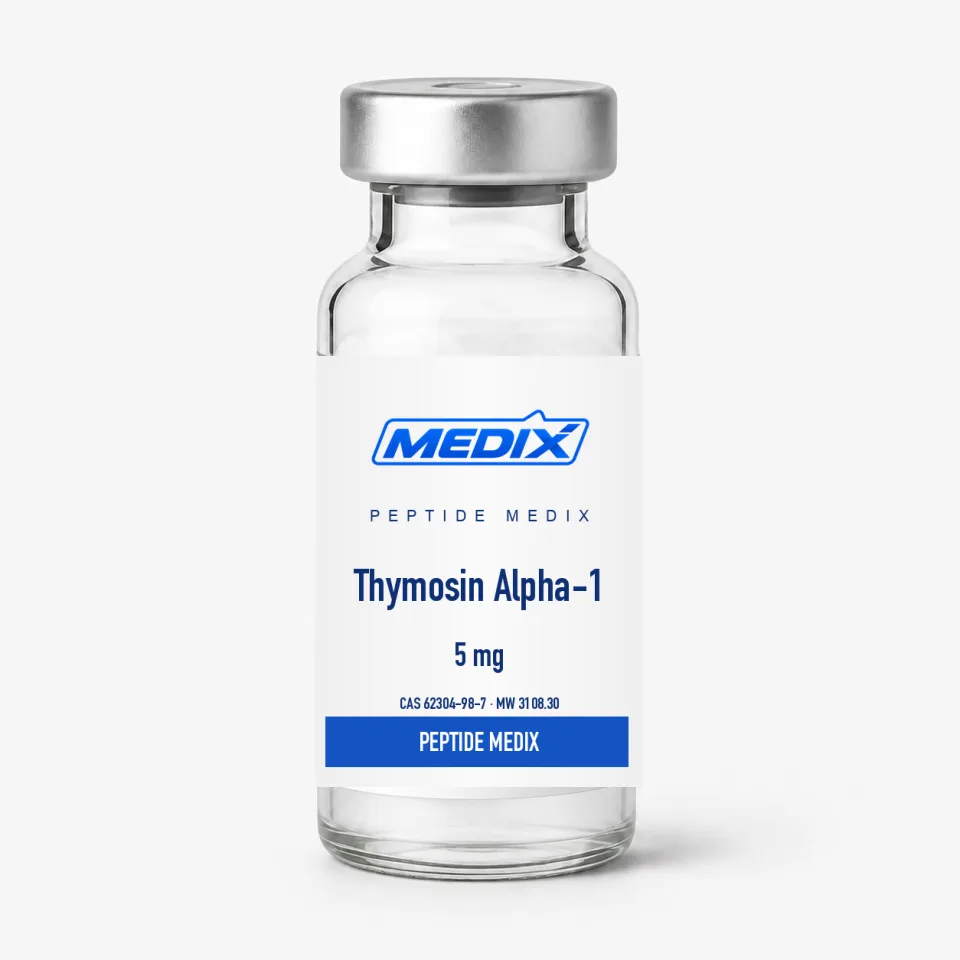
Thymosin Alpha-1

Peptide Medix

Thymosin Alpha-1

thymosin alpha-1

3 options

$72.00 $85.00

View options and product details

15% OFF
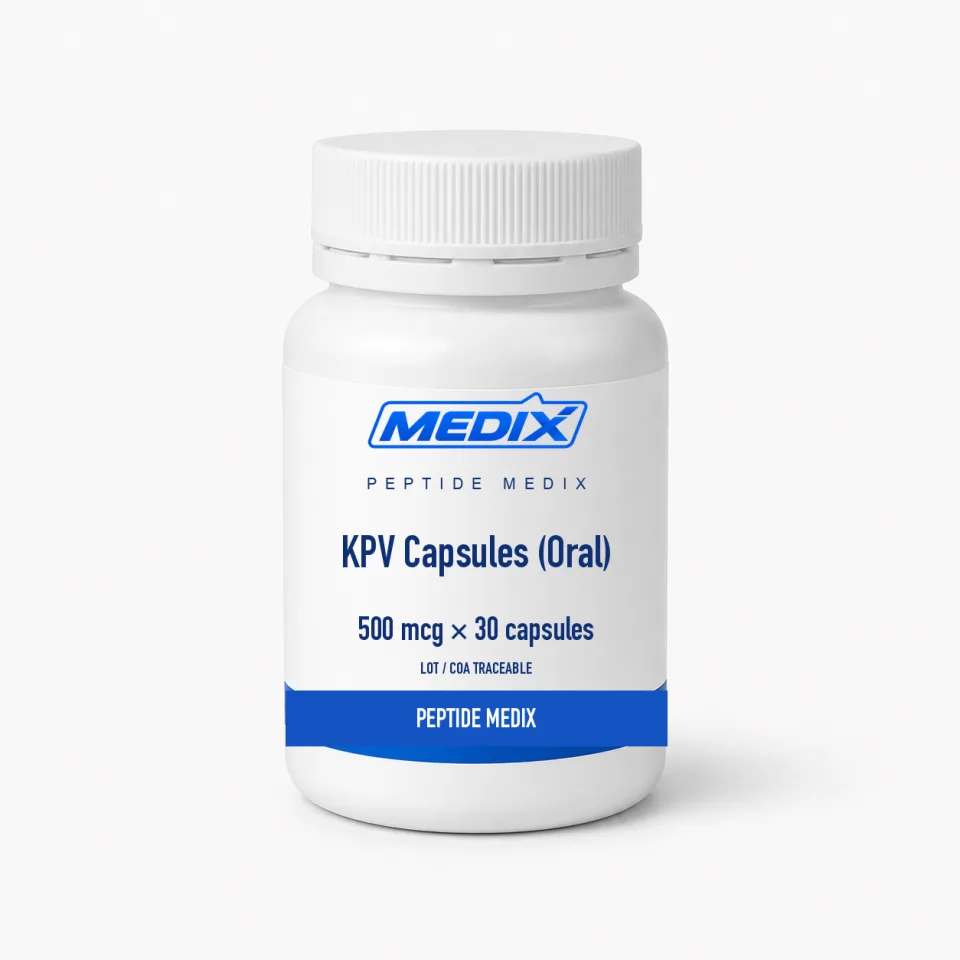
KPV Capsules (Oral)

Peptide Medix

KPV Capsules (Oral)

kpv capsules

2 options

$63.00 $75.00

View options and product details

15% OFF
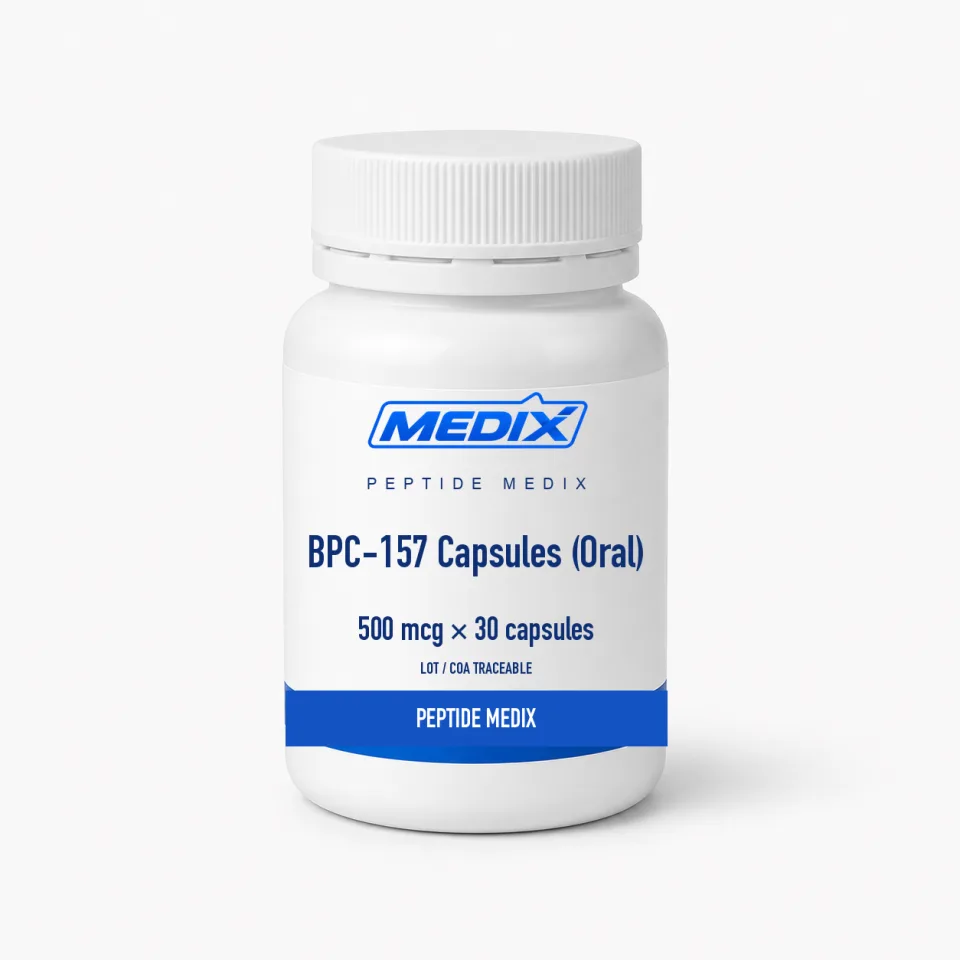
BPC-157 Capsules (Oral)

Peptide Medix

BPC-157 Capsules (Oral)

bpc-157 capsules

2 options

$68.00 $80.00

View options and product details