Research Overview
Origin in thymic extract research
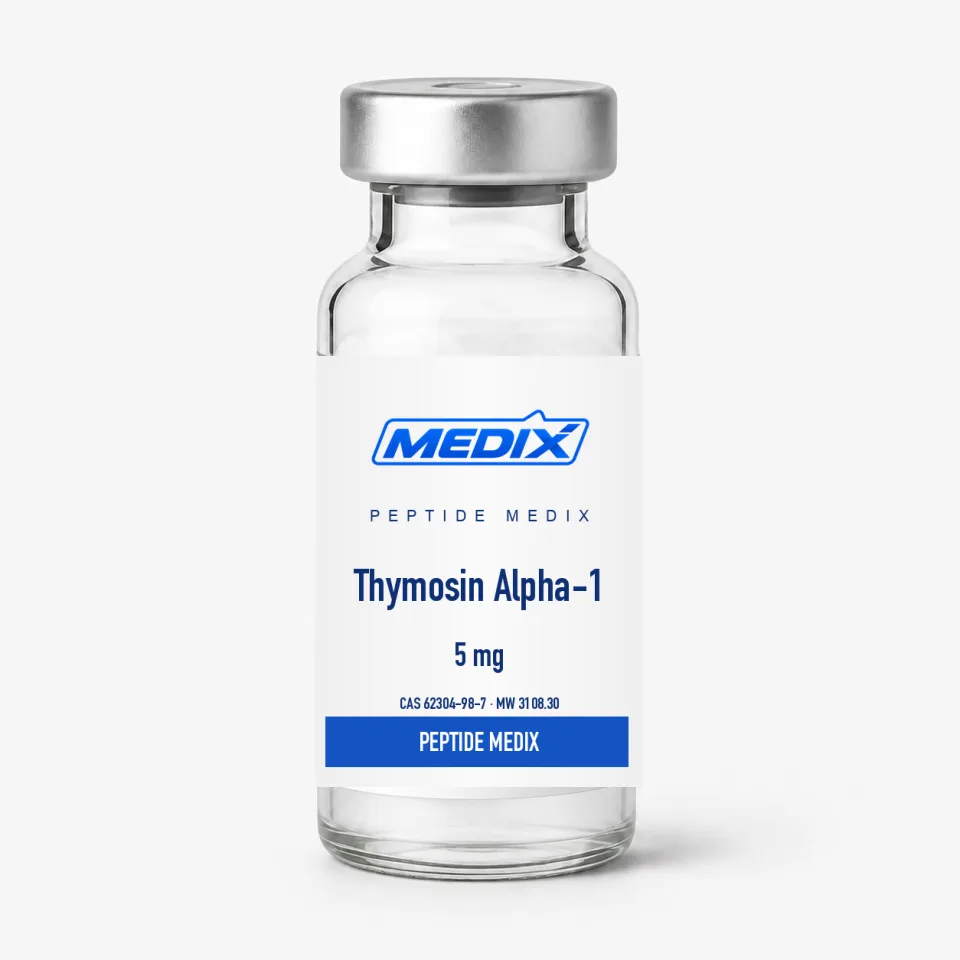
The thymus was known to influence immune maturation long before the responsible molecules were identified. Thymosin fraction 5, a partially purified calf thymus extract, was fractionated through the 1970s, and Thymosin Alpha-1 emerged as its most active identified component. The peptide corresponds to the first twenty-eight residues of prothymosin alpha, a nuclear protein, with an acetylated N-terminus.
Immune signalling research
Mechanistic work reports engagement of Toll-like receptors, particularly TLR2 and TLR9, on dendritic cells and monocytes, with downstream effects on cytokine profiles and antigen presentation. Other studies describe effects on thymocyte differentiation, natural killer cell activity and the balance between T helper subsets. The picture that emerges across papers is of a modulator that shifts responses rather than a straightforward stimulant.
Synthetic Thymosin Alpha-1 has been studied in controlled trials in chronic hepatitis B and C, as an adjuvant to influenza and hepatitis vaccination in older and immunocompromised populations, and in sepsis, where several trials have examined mortality endpoints. Results vary by indication and trial quality, and it holds no United States approval, but the volume of human data is unusual for a peptide sold as a research chemical.
Analytical notes
At twenty-eight residues with a highly acidic composition, the peptide is water-soluble and stable when kept dry and cold. Identity is confirmed by mass spectrometry against the expected mass; laboratories running quantitative work usually determine net peptide content separately from chromatographic purity.