Research Overview
What a peptide bioregulator is
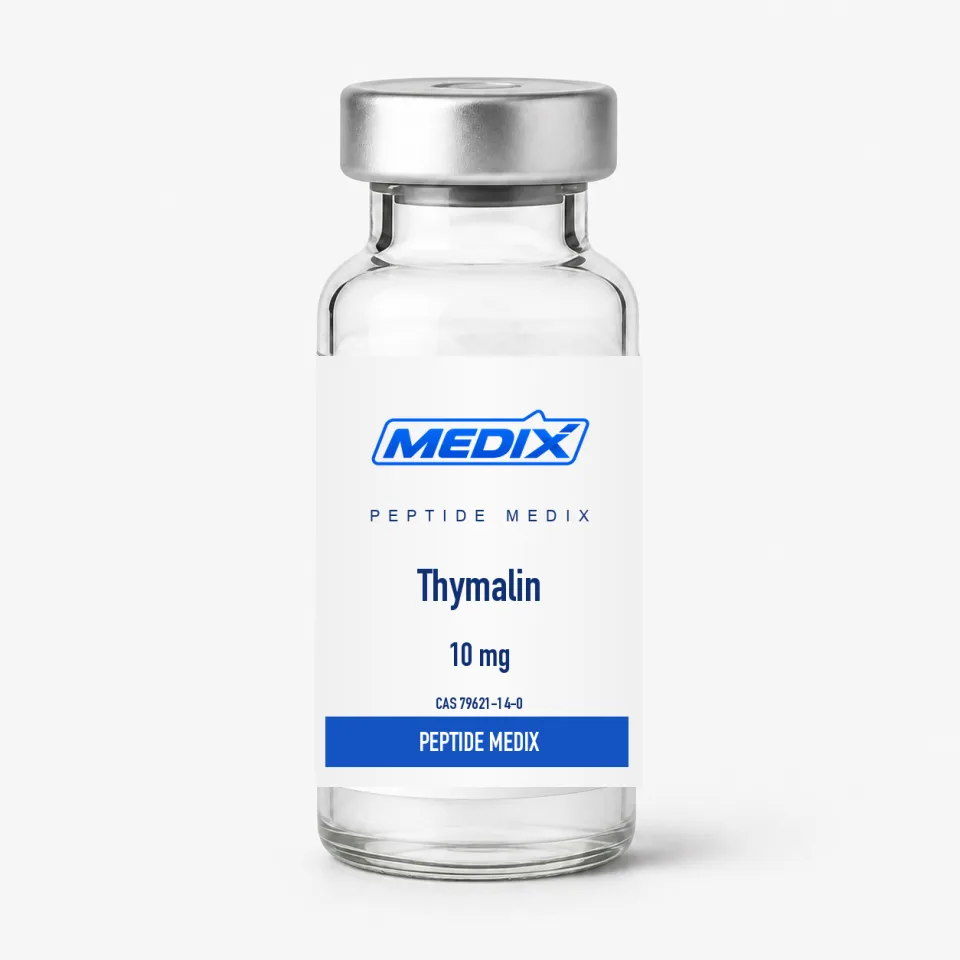
The bioregulator concept, developed in Soviet and later Russian laboratories from the 1970s onward, proposes that short peptide fractions extracted from a given tissue carry regulatory information for that same tissue. Thymalin is the thymic representative of that family. Because the preparations are fractions rather than isolated compounds, they are specified by source, extraction method and analytical profile rather than by a single structure.
Published research
The literature includes rodent studies reporting changes in lymphocyte subsets, immune response markers and, in some reports, lifespan measures in ageing animals. There are also long-duration observational human cohort reports from the originating group. Most of this work was published in Russian-language journals, and independent replication outside the originating programme is limited, which researchers should weigh when interpreting the record.
Relationship to defined thymic peptides
Thymalin should not be confused with Thymosin Alpha-1 or Thymulin, both of which are single molecules with known sequences and masses. All three trace back to thymic extract research, but only the latter two can be characterised by mass spectrometry against an expected mass. A complex is instead assessed against a manufacturing specification.
Analytical implications
Studies using Thymalin cannot report purity in the usual area-percent sense, and lot-to-lot consistency depends on the manufacturing process rather than on a single chromatographic peak. Recording the lot number in a study protocol is therefore more important here than for a defined peptide.