Research Overview
Origin as a bioregulator
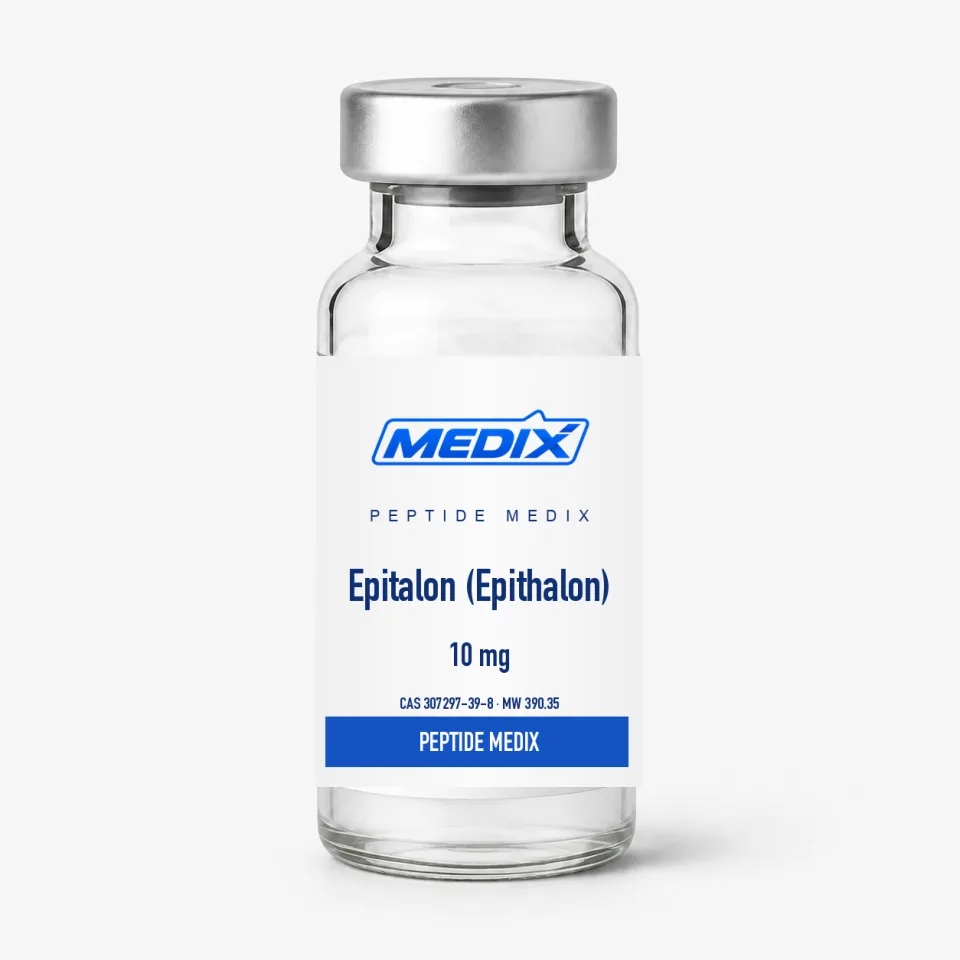
Epithalamin, a polypeptide complex isolated from bovine pineal tissue, was studied in the Soviet Union from the 1970s onward. Epitalon is the short synthetic tetrapeptide distilled from that work, chosen for a sequence that could be produced reproducibly by solid-phase synthesis. It is the most cited member of the short bioregulator family that also includes pinealon, thymalin-derived peptides and vilon.
Telomere and chromatin studies
- Reported induction of telomerase activity and telomere elongation in cultured human somatic cells
- Proposed interaction with short DNA sequences and histone-associated chromatin, described in modelling and binding studies
- Effects on gene expression profiles examined in fibroblast and lymphocyte cultures
Circadian and animal work
Rodent studies have examined melatonin secretion rhythm, cortisol patterns and age-related changes in reproductive and immune parameters after peptide administration. Lifespan experiments in mice, rats and senescence-accelerated strains have been reported with modest effects on median survival. Endpoints, group sizes and reporting standards vary considerably across this literature, which is why replication studies remain an active need.
Chemistry notes
With two acidic residues (Glu, Asp) the peptide is anionic at neutral pH and dissolves rapidly in aqueous media. Its small size means a given milligram amount supplies a large molar quantity relative to longer peptides, a factor worth accounting for when planning concentration series.
Investigators should also note that the very short sequence gives little opportunity for secondary structure, so results are usually interpreted in terms of direct molecular interaction rather than conformational binding. Comparison against a scrambled tetrapeptide control is a common design choice when the reported effects are subtle and the assay window is narrow.