Research Overview
Retro-inverso design
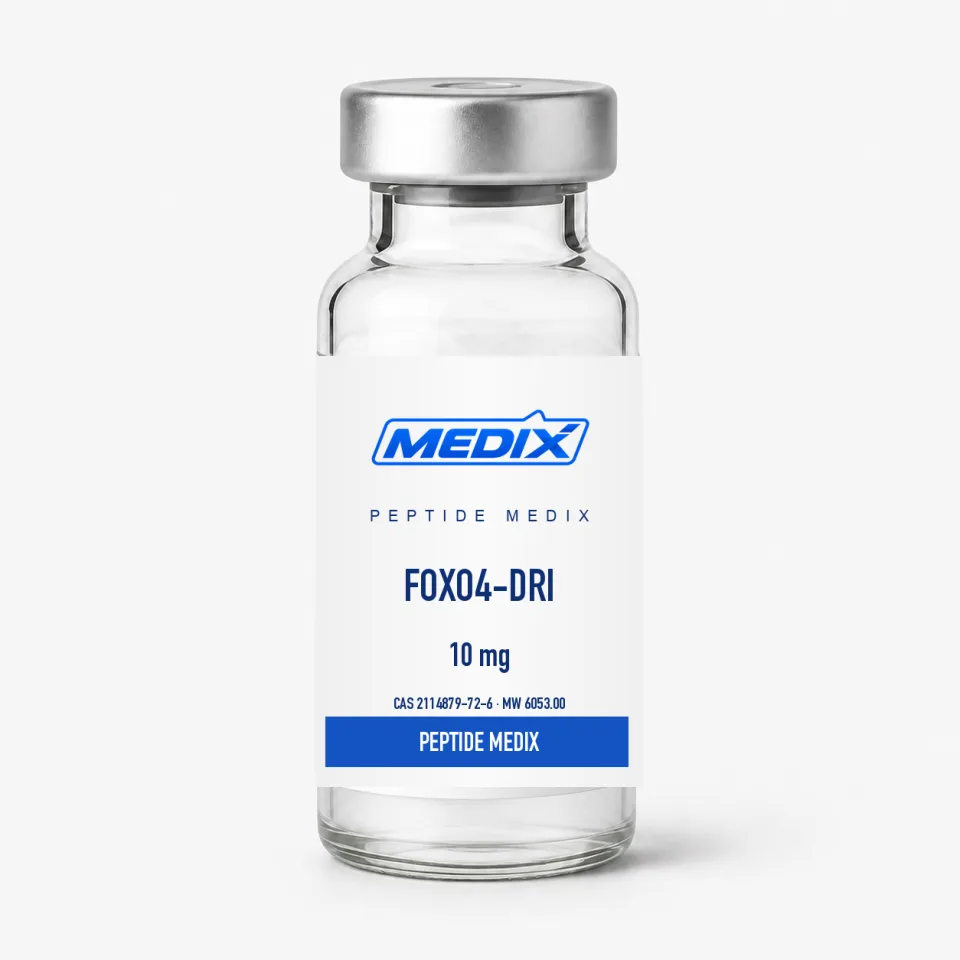
A D-retro-inverso peptide reverses the amino acid order and substitutes D-enantiomers throughout. The result presents a side-chain arrangement similar to the parent L-peptide while the backbone amide orientation is inverted, which most proteases cannot process. For a research tool intended to survive in serum-containing media and in vivo compartments, that stability is the central design advantage.
FOXO4 and p53 in senescent cells
- Senescent cells accumulate FOXO4, which has been reported to sequester p53 in the nucleus
- The peptide is designed to compete with that interaction at the FOXO4 binding interface
- Released p53 has been observed to translocate to the mitochondria, permitting apoptosis in senescent cells
- Proliferating and quiescent cells are reported to show comparatively little response in the same assays
The original 2017 report described reduced markers of senescence and improvements in fur density, renal function markers and chemotherapy-induced toxicity endpoints in mice. Subsequent groups have used the peptide as a reference senolytic when benchmarking newer compounds such as dasatinib-plus-quercetin combinations or navitoclax. Results vary by tissue and model, and delivery remains a practical limitation discussed throughout the literature.
Practical considerations
FOXO4-DRI is large for a synthetic peptide and carries substantial charge, so solubility, adsorption to plastics and lot-to-lot net peptide content all matter. Researchers commonly review the peptide content value on the COA rather than assuming the vial mass is entirely peptide, and prepare fresh dilutions in low-bind tubes.
Delivery efficiency also varies with cell type and with the composition of the culture medium, so many groups run an uptake control such as a fluorescently labelled analogue before drawing conclusions from a negative result. Benchmarking against an established senolytic in the same plate is likewise standard practice in current published work.