Research Overview
Why an oral format is a separate question
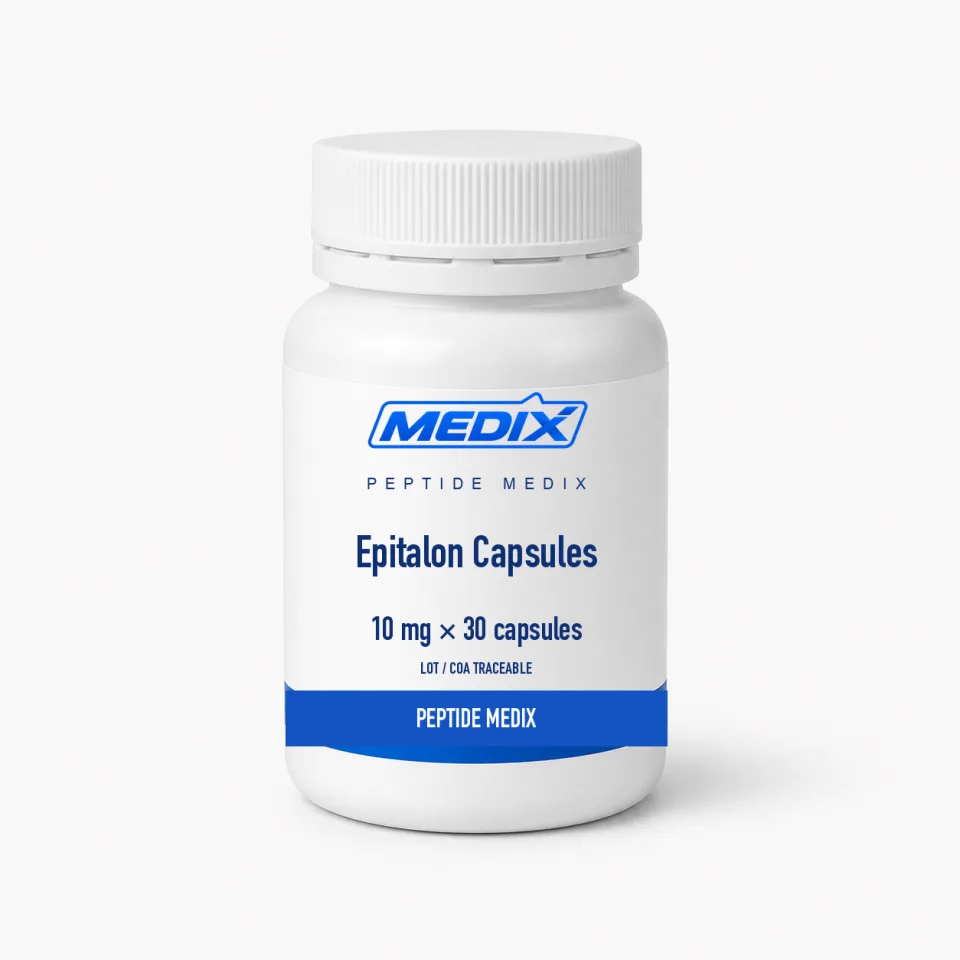
A swallowed peptide meets three successive barriers: gastric acid and pepsin, pancreatic and brush-border peptidases in the small intestine, and hepatic first-pass metabolism after portal absorption. For a small unprotected tetrapeptide, published expectations for intact oral bioavailability are low. The interesting endpoints are therefore not simply whether intact peptide reaches circulation, but how quickly it is cleaved, which fragments appear, and whether those fragments have measurable activity of their own.
Experimental approaches this format supports
- Simulated gastric and intestinal fluid incubations with LC-MS/MS tracking of parent peptide and fragments
- Caco-2 monolayer and everted-gut permeability assays
- Route comparison against the lyophilized vial and the nasal spray using one peptide lot
- Capsule content uniformity and dissolution profiling under standard apparatus
- Comparison with N-acetyl epitalon amidate, whose terminal modifications are intended to slow exopeptidase attack
The underlying Epitalon literature
Reported work includes induction of telomerase reverse transcriptase expression and telomere elongation in cultured human somatic cells, restoration of melatonin rhythm in aged animals, and reduced spontaneous tumour incidence and extended median lifespan in rodent studies. Much of this originates from a single research group and is published in Russian-language or specialist gerontology journals, with small sample sizes and limited independent replication. It is a genuinely interesting body of work and it is also not settled science; both statements are true at once.