Research Overview
GHK-Cu — the copper-binding component
Epitalon — the bioregulator component
Epitalon is the four-residue synthetic peptide derived from Khavinson's work on pineal extracts. Studies report induction of telomerase activity in cultured human somatic cells, along with rodent experiments examining melatonin rhythm and age-related endpoints. The literature is concentrated in a small number of groups and independent replication remains limited.
Why they are combined
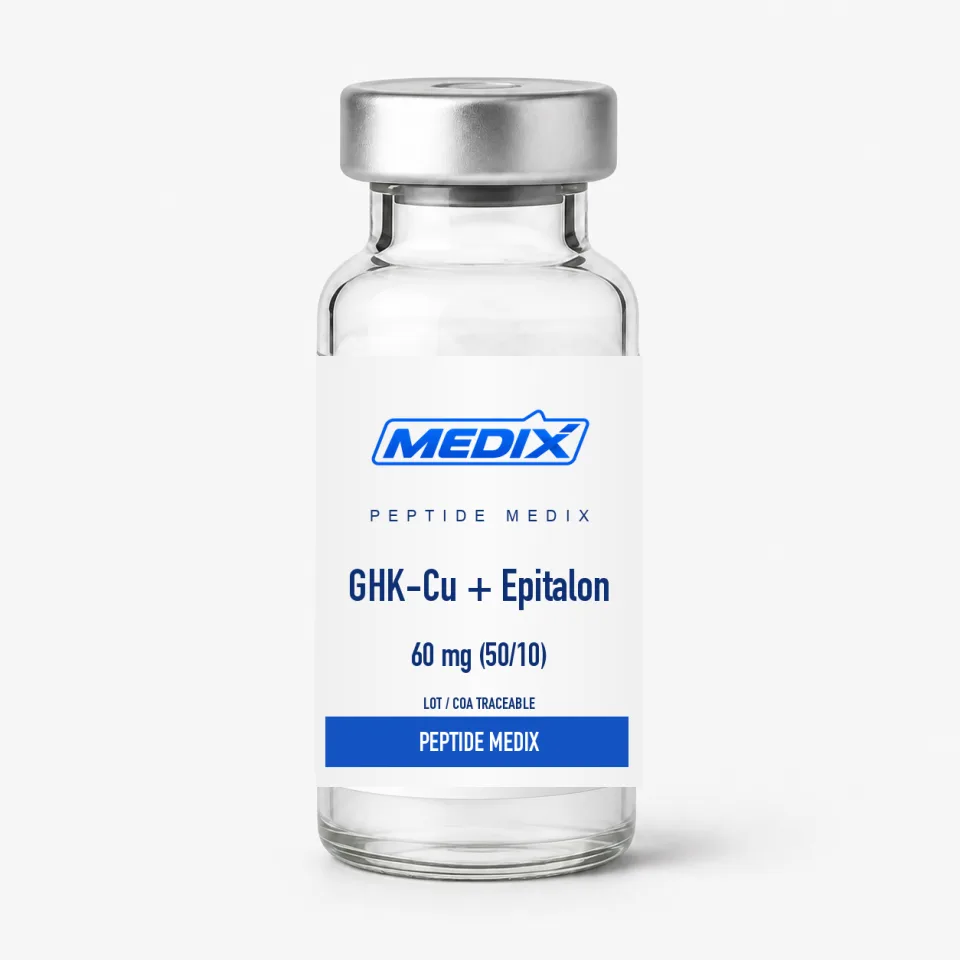
- Different target compartments: matrix and cell-surface signaling versus nuclear and telomere-associated processes
- Complementary read-outs in skin-aging models — structural protein expression alongside senescence markers
- Fixed ratio removes a source of pipetting variance when two stocks would otherwise be combined by hand
Practical notes on a blend
Because both peptides are dissolved from one cake, the concentration of each is set by the vial ratio rather than chosen independently. Studies that need to vary one component alone are better served by separate single-compound vials. The copper complex is light-sensitive and can be reduced by strong reducing agents, so blend solutions should not be mixed with thiol-containing reagents.
Copper content is worth tracking separately from peptide mass on the Certificate of Analysis, since the stoichiometry of the complex determines how much free copper, if any, a preparation can contribute to an assay. Blank and copper-salt controls help distinguish peptide-specific effects from those attributable to the metal alone.