Research Overview
GHK-Cu and the extracellular matrix
L-glutathione
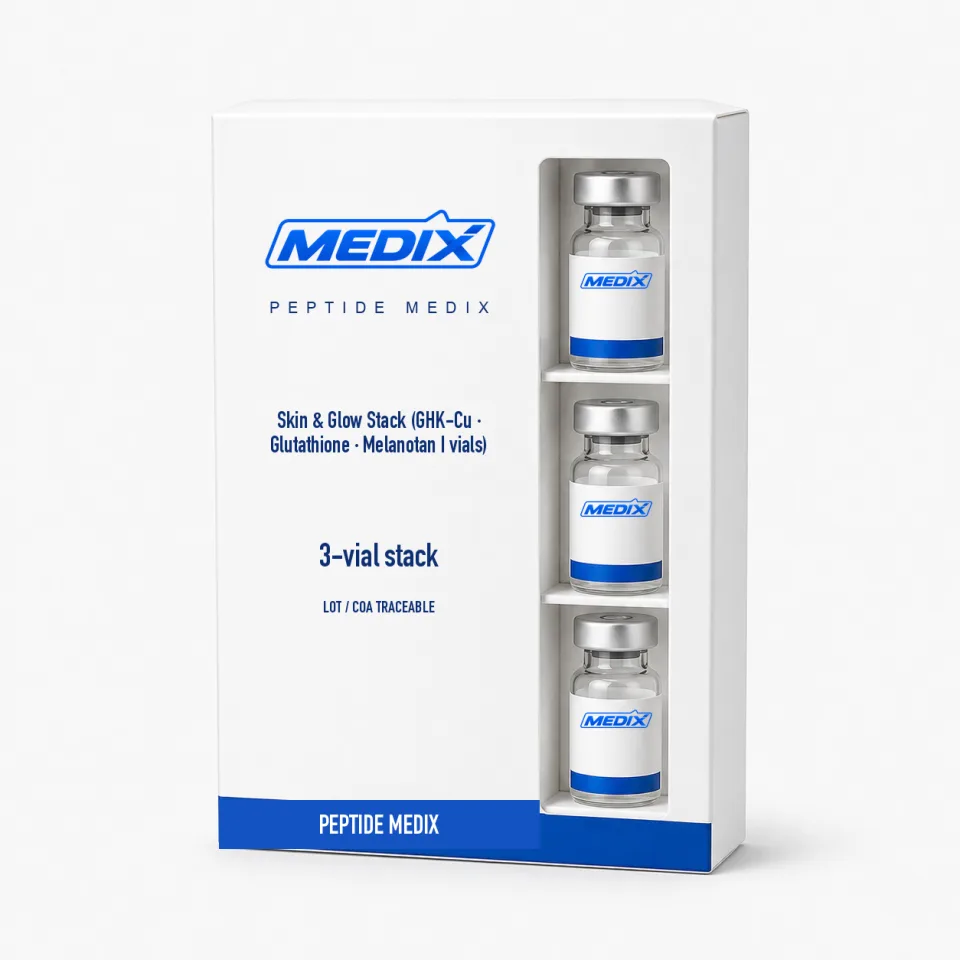
Glutathione is the dominant low-molecular-weight thiol in mammalian cells and the substrate for glutathione peroxidase and glutathione S-transferase enzyme families. Its relevance to pigment research runs through tyrosinase: published work has examined how the reduced thiol interacts with melanin synthesis, including the balance between eumelanin and pheomelanin pathways. The reduced form is chemically fragile in solution and oxidises to the disulfide dimer on standing, which is the key handling consideration for this vial.
Melanotan I
Melanotan I is alpha-MSH with norleucine substituted at position 4 and D-phenylalanine at position 7 — modifications that resist enzymatic cleavage and raise affinity at the melanocortin-1 receptor. MC1R activation on melanocytes drives the eumelanin synthesis pathway, and the peptide's research literature centres on that mechanism. Afamelanotide has been approved as a medicine in some jurisdictions for a specific rare photosensitivity condition; the material here is research grade and unrelated to any such product.
Why not a blend
Glutathione is typically supplied at 600 mg or more per vial while the two peptides are used at tens of milligrams, so any fixed co-formulation would place at least one component far outside its working range. Separate vials avoid that entirely.