Research Overview
Structure and biosynthesis
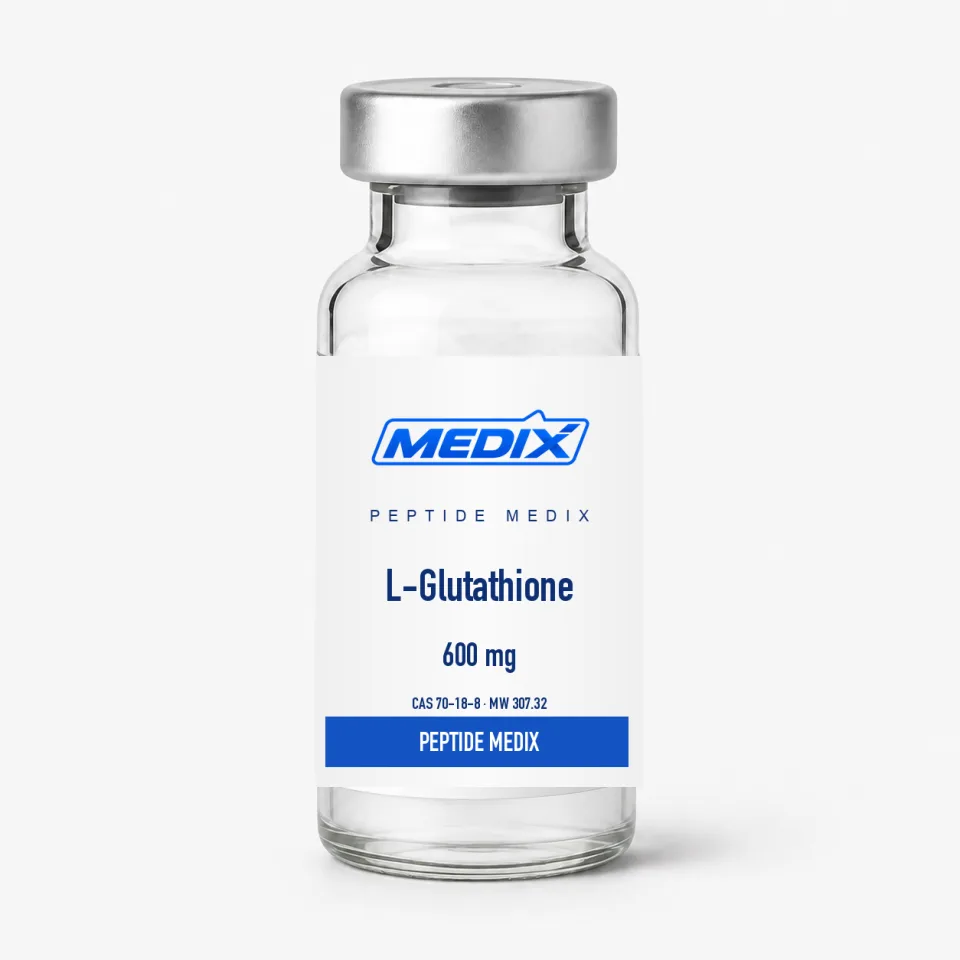
Glutathione is assembled by glutamate-cysteine ligase and glutathione synthetase, with cysteine availability usually the limiting factor. The gamma linkage between glutamate and cysteine means only gamma-glutamyl transpeptidase can cleave it, which is why the tripeptide survives in the extracellular space and in lysosomal compartments where conventional peptides would not.
Redox and enzymatic roles
- Electron donor for glutathione peroxidases reducing hydrogen peroxide and lipid hydroperoxides
- Conjugating partner in glutathione S-transferase reactions that mark xenobiotics for export
- Source of the mixed disulfides formed during protein S-glutathionylation, a reversible signaling modification
- Regenerated from its GSSG dimer by glutathione reductase using NADPH
Experimental use
Laboratories use glutathione as a reagent and reference standard as often as a study subject: it is a substrate in enzyme kinetics, a reducing agent in protein refolding buffers, an eluent for GST-tagged affinity purification, and the analyte in GSH/GSSG ratio assays that report oxidative stress in cells and tissues. Reported tissue glutathione depletion accompanies many stress models, which is why the compound recurs across toxicology and mitochondrial research.
Skin and pigmentation studies
Glutathione has been examined in cell and animal models of melanogenesis, where it has been reported to interact with tyrosinase activity and to shift melanin synthesis toward the lighter pheomelanin pathway. This literature is mostly in-vitro, and outcomes in intact skin remain debated among investigators.