Research Overview
What the film format changes
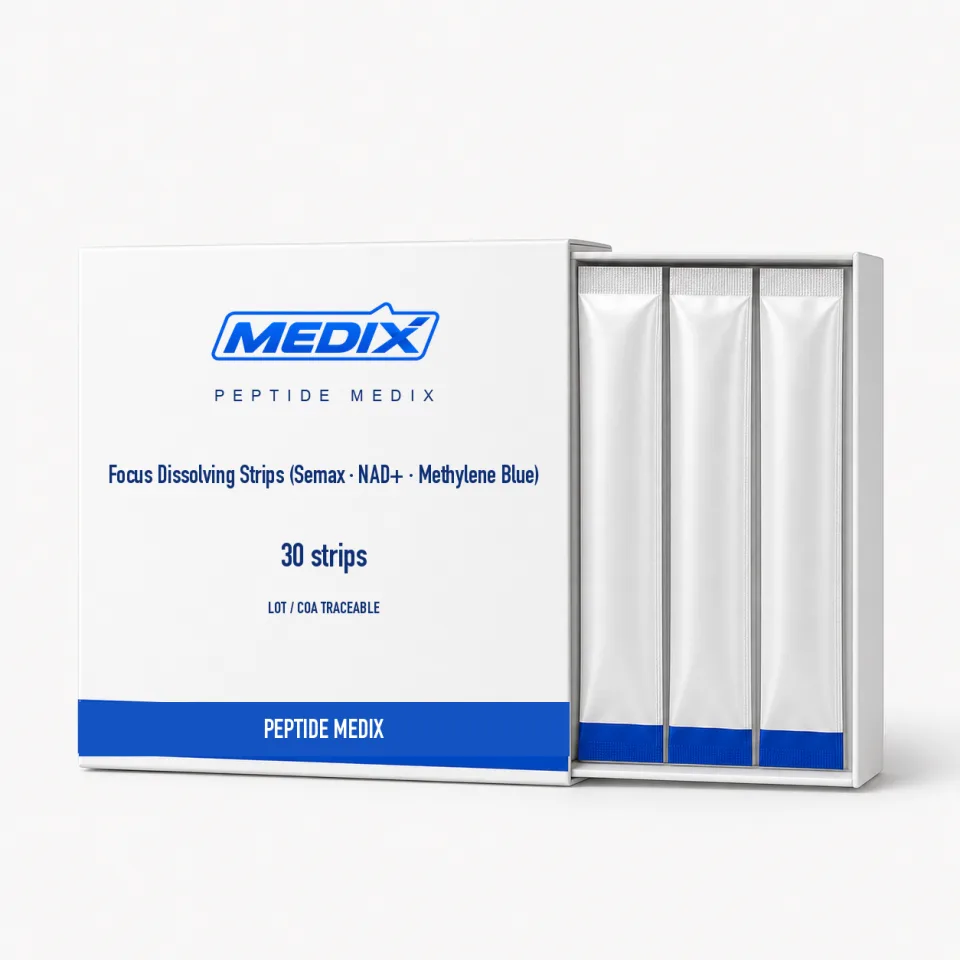
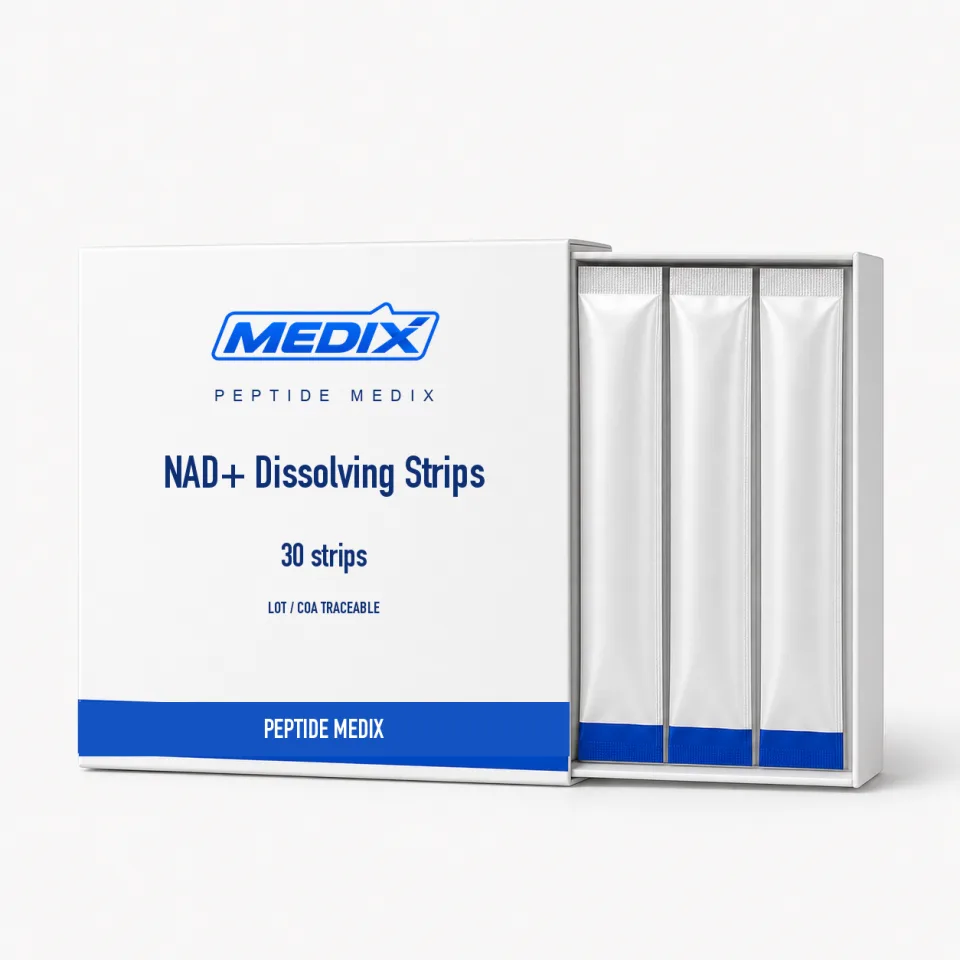
Thin-film delivery has been studied for decades in pharmaceutical technology, mainly for its rapid disintegration and its avoidance of liquid handling. In a research context the relevant properties are different: a cast film gives a fixed unit of compound per strip, so the variance that comes from weighing a hygroscopic powder or pipetting a viscous stock is removed from the workflow.
The compound being delivered
NAD+ is a dinucleotide coenzyme, not a peptide. It carries reducing equivalents in catabolic metabolism and serves as substrate for three enzyme families that consume it outright:
- Sirtuins, the NAD-dependent deacylases
- PARP enzymes active in the DNA damage response
- CD38 and CD157, which generate calcium-signaling messengers
Format comparison studies
Because the same compound is offered here as a powder for reconstitution, as a nasal spray and as a film, groups studying delivery format can compare presentations while holding compound identity and purity constant. Dissolution rate, matrix interference in downstream assays and stability of the loaded film over time are the variables most often examined.
Stability considerations
NAD+ is sensitive to moisture and to alkaline conditions, and a thin film has a large surface-to-mass ratio, so ambient humidity is the main practical threat to the format. Keeping the tin sealed between removals, handling strips with dry forceps and storing away from heat all preserve the loaded coenzyme.
Assay compatibility deserves an early check as well. Because the polymer base enters solution alongside the coenzyme, a blank strip run in parallel establishes whether the matrix contributes background absorbance, viscosity or surfactant effects in the particular read-out being used before any comparative data is collected.