Peptide Medix product catalog

Peptide Medix

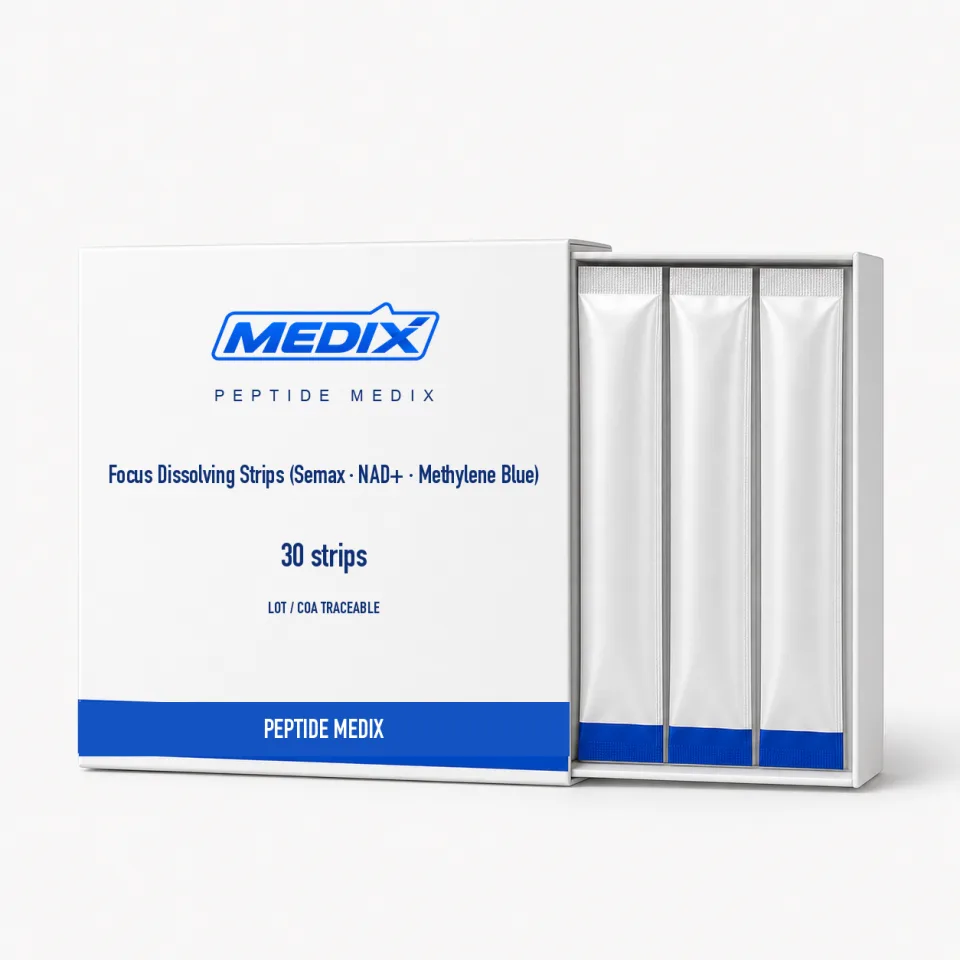
Focus Dissolving Strips (Semax · NAD+ · Methylene Blue)

Three-component thin-film research strips: Semax, NAD+ and methylene blue

Review catalog details Secure payments
Available to order
$42.00 $50.00 15% OFF
1
Categories: semax , nad-plus , methylene blue

Choose your delivery method

Standard Shipping is automatically selected at checkout. Customers can upgrade to a faster delivery option anytime.

Overview

Focus Dissolving Strips place three separately studied compounds into a single pre-measured thin-film matrix: the heptapeptide Semax, the coenzyme NAD+, and the phenothiazinium dye methylene blue. Each pack holds 30 strips. The film is a water-soluble polymer sheet carrying a fixed load per strip, so a study arm can be built by counting strips rather than weighing three separate materials, calculating three dilutions and reconciling them into one vehicle.

The three actives sit at different points of the same broad research question — what limits sustained cognitive performance at the cellular level. Semax (CAS 80714-61-0, Met-Glu-His-Phe-Pro-Gly-Pro) is a synthetic ACTH(4–10) analogue studied through BDNF and NGF expression and attention paradigms. NAD+ (CAS 53-84-9) is the pyridine dinucleotide coenzyme at the centre of mitochondrial redox chemistry and the consumed substrate of sirtuins and PARPs. Methylene blue (CAS 61-73-4) is a redox-cycling dye examined in mitochondrial electron-transport research as an alternative electron carrier at low concentrations.

Combining a neuropeptide, a redox coenzyme and a redox-active dye in one film gives investigators a single article that touches signalling, cofactor availability and electron transport simultaneously — useful as an exploratory arm, though studies isolating any one contribution need the single-compound formats. All raw materials are third-party HPLC tested at ≥99% purity with a lot-matched COA. Supplied for laboratory research use only.

Specifications

Brand Peptide Medix
Category Nootropic Peptides
Form Fast-dissolving thin-film strips in a sealed pack
Pack size 30 individual film strips
Actives Semax, NAD+ (nicotinamide adenine dinucleotide) and methylene blue, pre-loaded per strip
Purity (raw materials) ≥99% by HPLC per component; lot-matched COA available
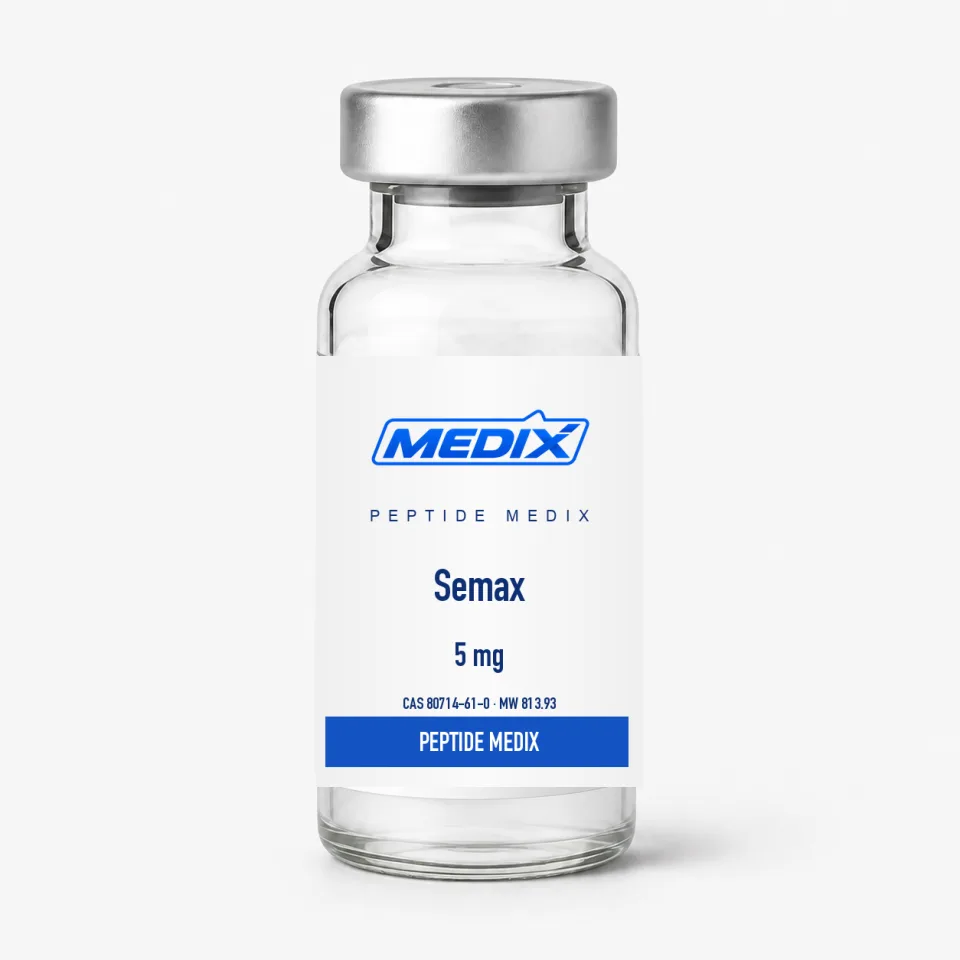
Semax identity CAS 80714-61-0; C37H51N9O10S; 813.93 g/mol; Met-Glu-His-Phe-Pro-Gly-Pro
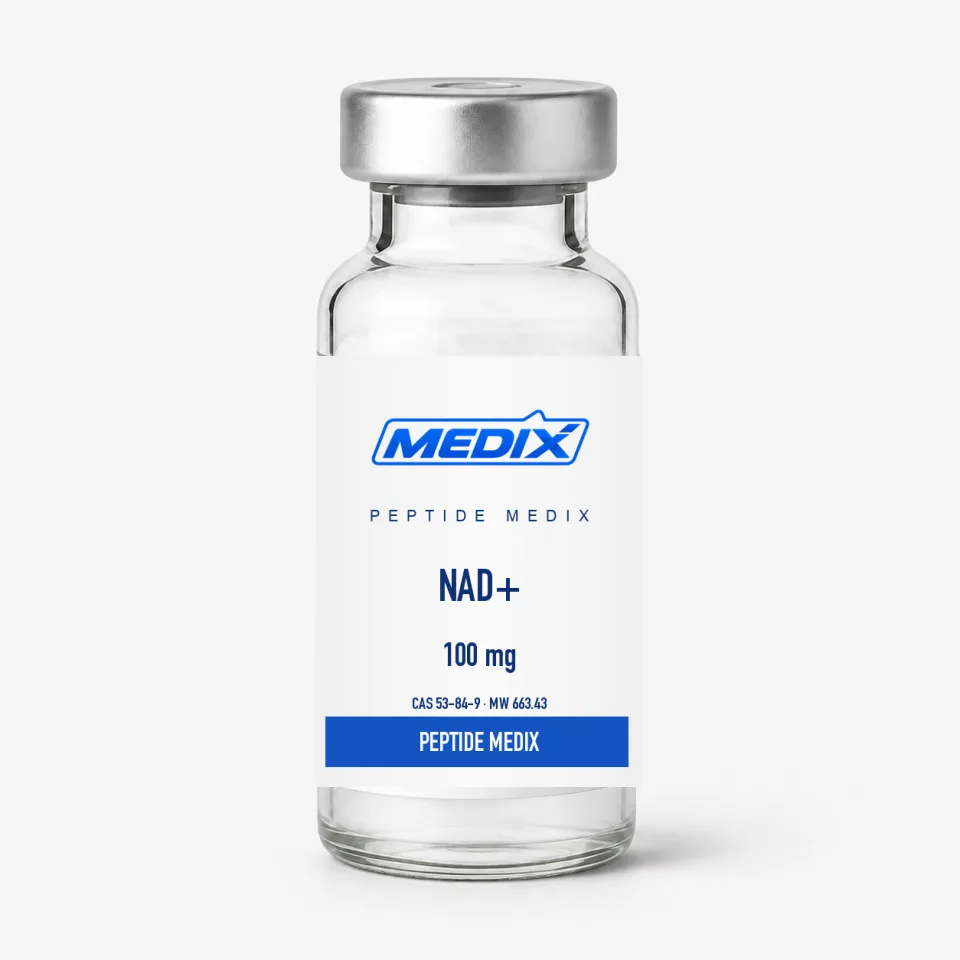
NAD+ identity CAS 53-84-9; C21H27N7O14P2; 663.43 g/mol
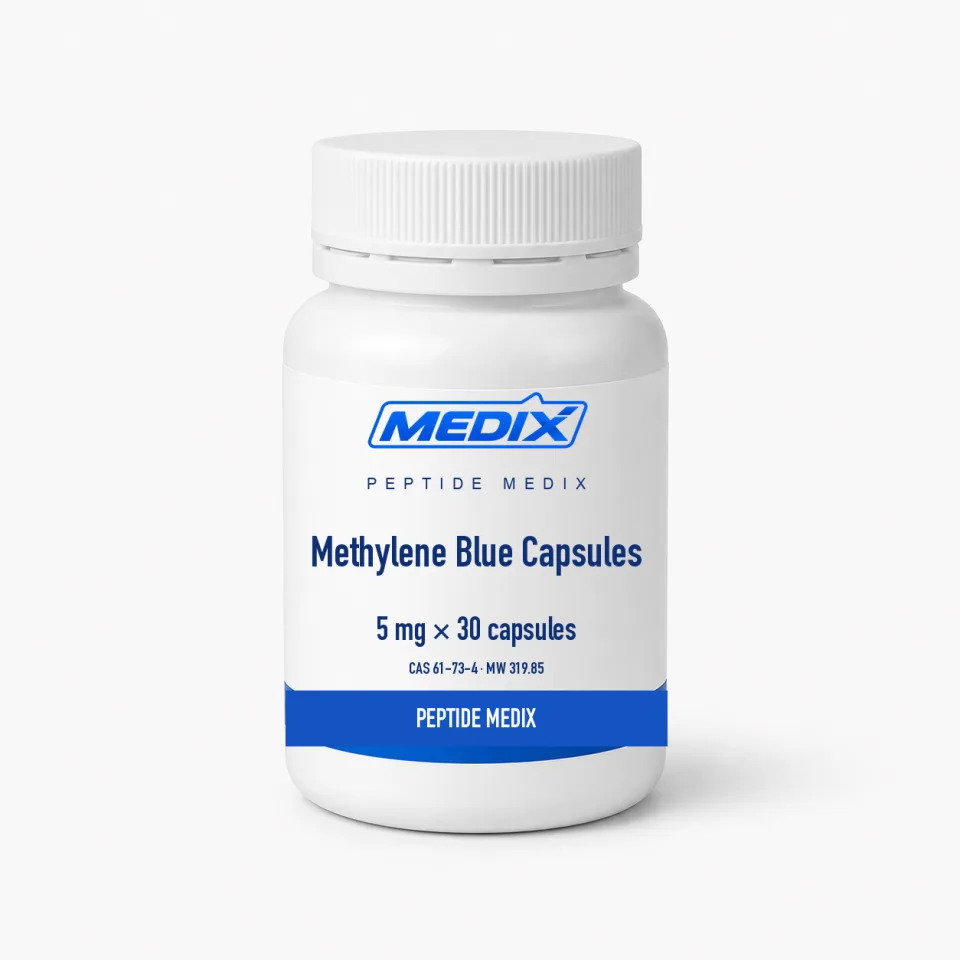
Methylene blue identity CAS 61-73-4; C16H18ClN3S; 319.85 g/mol
Compound classes Synthetic heptapeptide, pyridine dinucleotide coenzyme, phenothiazinium redox dye
Appearance Coloured film — methylene blue imparts a deep blue tint to the matrix
Solubility Film matrix and all three actives disperse in water and bacteriostatic water
Research areas Attention and memory paradigms, BDNF expression, mitochondrial redox and NAD+ metabolism, electron-transport chain models, delivery-format comparison
Storage Sealed, cool and dry, protected from light and moisture
Handling note Methylene blue stains skin, gloves, fabric and bench surfaces — handle with dry gloves over a protected surface
SKU FOCUS-DISSOLVING-STRIPS-30-STRIPS

Highlights

  • 30 pre-measured thin-film strips per pack — no weighing, mixing or reconstitution
  • Three actives in one film: Semax heptapeptide, NAD+ coenzyme and methylene blue
  • Fixed load per strip removes multi-component weighing error between study arms
  • Semax studied in BDNF, TrkB and attention research; NAD+ in mitochondrial redox biology
  • Methylene blue examined as a low-concentration alternative electron carrier in ETC research
  • Raw materials third-party HPLC tested at ≥99% purity with lot-matched COA available
  • Sealed pack, room-temperature storage — no cold chain and no solvent handling

What's Included

  • The product option and count selected above
  • Final item and quantity confirmed in cart
  • Laboratory-research-use labeling

Research Overview

Semax — signalling

Semax is the ACTH(4–10) fragment extended with a C-terminal Pro-Gly-Pro tail, a modification that removes the corticotropic activity of the parent hormone and slows exopeptidase cleavage. Rodent studies have reported increased BDNF and NGF expression in hippocampus and cortex, changes in TrkB receptor signalling and altered monoamine turnover, with behavioural work centred on attention, learning acquisition and memory retention.

NAD+ — cofactor availability

NAD+ carries electrons through glycolysis, the TCA cycle and oxidative phosphorylation, and is consumed stoichiometrically by sirtuins, PARPs and CD38. Because those enzymes turn it over continuously, tissue NAD+ pools are dynamic, and the NAD+/NADH ratio is widely used as an index of metabolic state alongside oxygen-consumption rate and ATP output in mitochondrial studies.

Methylene blue — electron transport

  • At low concentrations it has been studied as an alternative electron carrier that can shuttle electrons within the mitochondrial respiratory chain.
  • Its behaviour is concentration-dependent in published work — reported effects at low concentrations differ from those at higher ones, a hormetic pattern investigators are explicit about.
  • It is also studied as a monoamine oxidase inhibitor and as a classical redox indicator in biochemical assays.
  • Its strong absorbance can interfere with colorimetric readouts, which experimental design has to account for.

Why the three appear together

Each addresses a different layer of the same question: Semax at the level of neurotrophic signalling, NAD+ at cofactor availability, methylene blue at electron flux. A combined film is an exploratory arm rather than a mechanistic one — it cannot attribute an observed change to any single component. Designs that need attribution should run single-compound formats in parallel.
Format and evidence limits

Handling & Storage

Store the pack sealed, cool and dry, out of direct light — thin-film matrices are hygroscopic and will tack or curl once exposed to humidity. Remove one strip at a time with clean dry forceps or dry gloved hands and reseal immediately. Methylene blue stains readily, so work over a protected surface, keep gloves dry and clean spills promptly with water before the dye sets. For dispersion work, drop the strip into the aqueous medium and let it dissolve without aggressive stirring, and remember that the dye's absorbance can interfere with colorimetric or fluorescence readouts. Record the pack lot number against your COA and dispose of unused strips under institutional chemical waste procedure.

Focus Dissolving Strips (Semax · NAD+ · Methylene Blue) FAQ

What is in each strip?
Three actives in one water-soluble film: Semax, a synthetic ACTH(4–10) heptapeptide analogue; NAD+, the pyridine dinucleotide coenzyme; and methylene blue, a phenothiazinium redox dye. The load per strip is fixed at manufacture, so it cannot be varied without moving to single-compound formats.
How many strips come in a pack?
Thirty pre-measured film strips per sealed pack. Because the amount per strip is set, study arms are assembled by counting strips rather than weighing three separate materials and reconciling three dilutions into a single vehicle.
Are the components third-party tested with a COA?
Yes. Each raw material is third-party analysed by HPLC to ≥99% purity with identity confirmation, and a lot-matched Certificate of Analysis is available for the batch you receive. Match the pack lot number to the COA before recording any results.
Why does the film stain?
Methylene blue is a strongly coloured dye, which is what gives the strips their tint. It stains skin, gloves, fabric and bench surfaces on contact with moisture, so handle strips with dry gloves over a protected surface and clean spills with water before the dye sets.
Do the strips require reconstitution?
No. The film dissolves directly in aqueous media, so there is no weighing, solvent addition, mixing or filtration step and no bacteriostatic water to source. The sealed pack also needs no cold chain, unlike lyophilized vials or pre-mixed solutions.
Can this isolate the effect of one component?
No — a fixed three-component film cannot attribute an observed change to any one active. It works as an exploratory arm. Studies needing attribution should run Semax, NAD+ and methylene blue in single-compound formats alongside the combined strips.

This catalog listing is for laboratory research use only. It is not represented as a drug, food, supplement, cosmetic or diagnostic product, and it is not offered for human or veterinary use.

Customer Reviews

0 reviews
5 star
0%
4 star
0%
3 star
0%
2 star
0%
1 star
0%

Leave Your Review

Rating

No reviews yet — be the first!

Leave Your Review

Rating

Keep exploring

Related Products & Shopping Guides

Compare Focus Dissolving Strips (Semax · NAD+ · Methylene Blue) with relevant categories, product topics, and practical shopping information.

Often researched together

Related research peptides, blends and lab supplies frequently ordered with Focus Dissolving Strips (Semax · NAD+ · Methylene Blue).

15% OFF
NAD+ Dissolving Strips

Peptide Medix

NAD+ Dissolving Strips

nad+ strips
$63.00 $75.00

View options and product details

15% OFF
Semax

Peptide Medix

Semax

semax

3 options

$42.00 $50.00

View options and product details

15% OFF
NAD+

Peptide Medix

NAD+

nad+

4 options

$38.00 $45.00

View options and product details

15% OFF
Methylene Blue Capsules

Peptide Medix

Methylene Blue Capsules

methylene blue

3 options

$46.00 $55.00

View options and product details

15% OFF
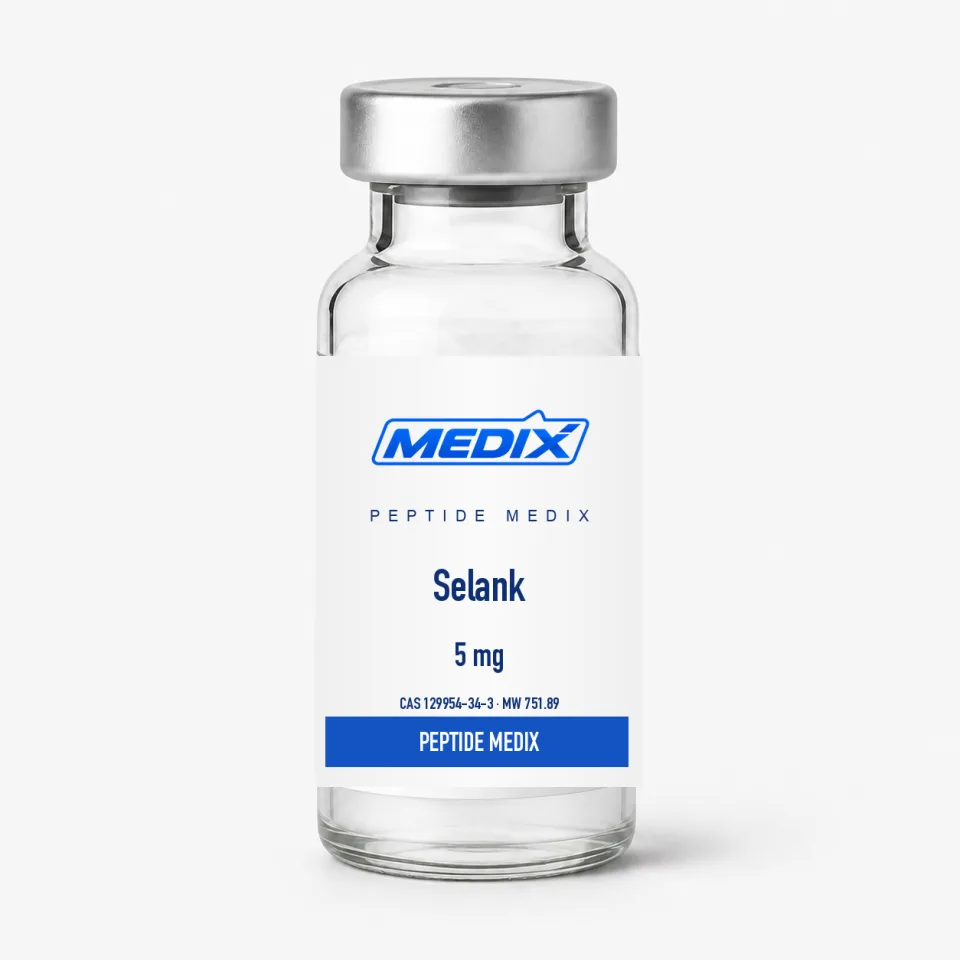
Selank

Peptide Medix

Selank

selank

2 options

$42.00 $50.00

View options and product details