Peptide Medix product catalog

Peptide Medix

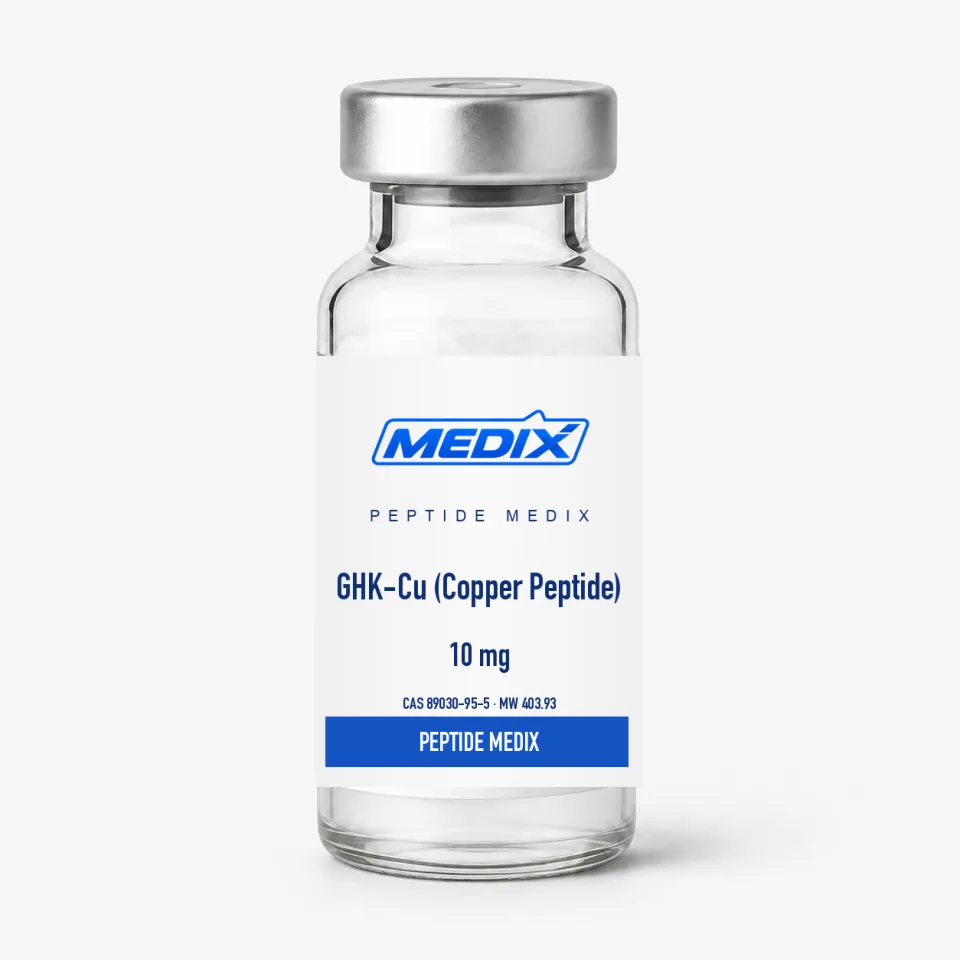
GHK-Cu (Copper Peptide)

Gly-His-Lys copper(II) complex, lyophilized blue research powder

Review catalog details Secure payments
Available to order · 5 of 5 options available
$25.00 $30.00 15% OFF

Choose an option

1
Categories: ghk-cu , copper peptide , gly-his-lys

Choose your delivery method

Standard Shipping is automatically selected at checkout. Customers can upgrade to a faster delivery option anytime.

Overview

GHK-Cu is the copper(II) complex of the tripeptide glycyl-L-histidyl-L-lysine. The peptide was identified in human plasma in the 1970s during work on liver tissue culture, and its defining property is a very high affinity for copper ions: the histidine imidazole, the terminal amine and a backbone nitrogen together form a coordination site that captures Cu(II) tightly and, importantly, in a form that can be exchanged with cellular copper carriers.

That copper-carrying behaviour is why the complexed form rather than the bare tripeptide dominates the literature. The material is a distinctly blue lyophilized powder, the colour coming directly from the coordinated copper, and any vial that is white rather than blue is not a copper complex. Ours is supplied in 50 mg, 100 mg and 200 mg sizes — larger than typical peptide vials because formulation and topical-model work consumes material quickly.

Research interest concentrates on extracellular matrix remodelling, collagen and glycosaminoglycan synthesis in fibroblast culture, hair follicle biology and wound-repair models, alongside a body of gene-expression work. Reported plasma concentrations decline substantially with age, which underpins much of the ageing-related investigation. Supplied for laboratory research only.

Specifications

Brand Peptide Medix
Category Copper Peptides (GHK-Cu)
Form Lyophilized blue powder, sealed glass vial with crimped stopper
Purity ≥99% by HPLC; lot-matched COA available
Available sizes 50 mg, 100 mg, 200 mg
CAS number 89030-95-5
Molecular formula C14H24N6O4·Cu
Molecular weight 403.93 g/mol (copper(II) complex)
Amino acid sequence Gly-His-Lys, complexed with copper(II)
Chain length 3 amino acids (tripeptide) plus one coordinated copper ion
Peptide class Copper-binding matrix tripeptide
Colour Blue in both powder and solution — an indicator of copper coordination
Research areas Collagen and glycosaminoglycan synthesis, matrix remodelling, hair follicle and skin models
Storage (lyophilized) −20 °C, sealed and protected from light and moisture
Storage (reconstituted) 2–8 °C, protected from light, used within the study window
SKU GHK-CU-10-MG

Highlights

  • ≥99% purity by HPLC with lot-matched COA; supplied as the copper(II) complex
  • Three generous sizes — 50 mg, 100 mg and 200 mg — suited to formulation and topical model work
  • Characteristic deep blue lyophilized powder; the colour comes from coordinated Cu(II)
  • Tripeptide Gly-His-Lys with a high-affinity copper coordination site
  • Studied in fibroblast collagen synthesis, matrix remodelling and hair follicle models
  • Native plasma levels are reported to fall markedly with age, driving ageing research interest
  • United States stock with insulated, discreet packaging on every order

What's Included

  • The vial option and size selected above
  • Final item and quantity confirmed in cart
  • Laboratory-research-use labeling

Research Overview

Copper coordination chemistry

The behaviour of GHK is inseparable from its chemistry. Glycine's free amino terminus, the deprotonated amide nitrogen and the histidine imidazole form a square-planar coordination environment for Cu(II) with an affinity high enough to compete for copper in biological media but low enough to permit exchange with albumin and cellular copper handling proteins. This dual property — tight but exchangeable binding — is the basis of the description of GHK as a copper carrier rather than a chelator that simply sequesters the metal.

Matrix and fibroblast research

The best-established in-vitro literature involves dermal fibroblasts, where GHK-Cu has been associated with increased synthesis of collagen, elastin, decorin and glycosaminoglycans, and with modulation of metalloproteinases and their tissue inhibitors. Because both synthesis and controlled breakdown are affected, papers usually frame the observation as matrix remodelling rather than simple stimulation.

Wound and hair follicle models

Animal work has examined wound closure and granulation tissue quality in rodents, pigs and rabbits. A separate line of research examines hair follicle explants and the dermal papilla, where reported effects include changes in follicle size and in the duration of the growth phase in culture and rodent studies.

Gene expression work

Practical and regulatory notes

Copper complexes are light-sensitive and pH-dependent; loss of blue colour indicates disruption of the complex. All statements summarise published research, and the material is supplied only as a laboratory reagent.
Handling & Storage

Keep sealed vials at −20 °C, dry and protected from light, and warm them to room temperature before opening. Reconstitute with sterile or bacteriostatic water run gently down the vial wall; the powder dissolves quickly to a clear blue solution, and that colour is the simplest visual check that the copper complex is intact. Avoid strongly acidic or strongly chelating buffers, which can strip copper from the peptide, and avoid prolonged light exposure. Store reconstituted solution at 2–8 °C in an amber or foil-wrapped container and aliquot before freezing.

GHK-Cu (Copper Peptide) FAQ

What is GHK-Cu?
GHK-Cu is the copper(II) complex of the tripeptide glycyl-histidyl-lysine, a sequence identified in human plasma in the 1970s. It is supplied as a lyophilized blue research powder and is studied in extracellular matrix, wound-repair and hair follicle models.
Why is the powder blue?
The colour comes from the coordinated copper ion. A genuine GHK-Cu preparation is blue in both powder and solution; material that appears white is the uncomplexed peptide rather than the copper complex. Loss of colour in a stored solution suggests the complex has been disrupted.
How is GHK-Cu different from plain GHK?
GHK is the bare tripeptide; GHK-Cu is that tripeptide with a copper(II) ion bound at its coordination site. Most of the published literature uses the copper complex, since the copper-carrying behaviour is central to the proposed mechanisms being studied.
Why are the vial sizes so large?
GHK-Cu is used at higher masses than most research peptides, particularly in topical formulation studies and in matrix or follicle work, where a single experiment can consume tens of milligrams. Vials of 50 mg, 100 mg and 200 mg keep the cost per experiment reasonable.
Is purity documented?
Yes. Each lot is analysed by reversed-phase HPLC to at least 99% purity, and a certificate of analysis matched to the lot number printed on your vial is available on request before or after ordering, alongside confirmation of the expected molecular mass.
Are there handling conditions specific to copper peptides?
Yes. The complex is light-sensitive and pH-dependent, and strongly chelating buffers can pull copper away from the peptide. Laboratories keep solutions cold, shield them from light in amber or foil-wrapped containers, and use the blue colour as a quick integrity check.
Can GHK-Cu be applied to skin or taken by a person?
No. This vial is a research chemical sold for in-vitro and laboratory investigation by qualified personnel only. It is not a cosmetic, drug or supplement, and it ships without any use, formulation or dosing instructions for people.

This catalog listing is for laboratory research use only. It is not represented as a drug, food, supplement, cosmetic or diagnostic product, and it is not offered for human or veterinary use.

Customer Reviews

0 reviews
5 star
0%
4 star
0%
3 star
0%
2 star
0%
1 star
0%

Leave Your Review

Rating

No reviews yet — be the first!

Leave Your Review

Rating

Keep exploring

Related Products & Shopping Guides

Compare GHK-Cu (Copper Peptide) with relevant categories, product topics, and practical shopping information.

Often researched together

Related research peptides, blends and lab supplies frequently ordered with GHK-Cu (Copper Peptide).

15% OFF
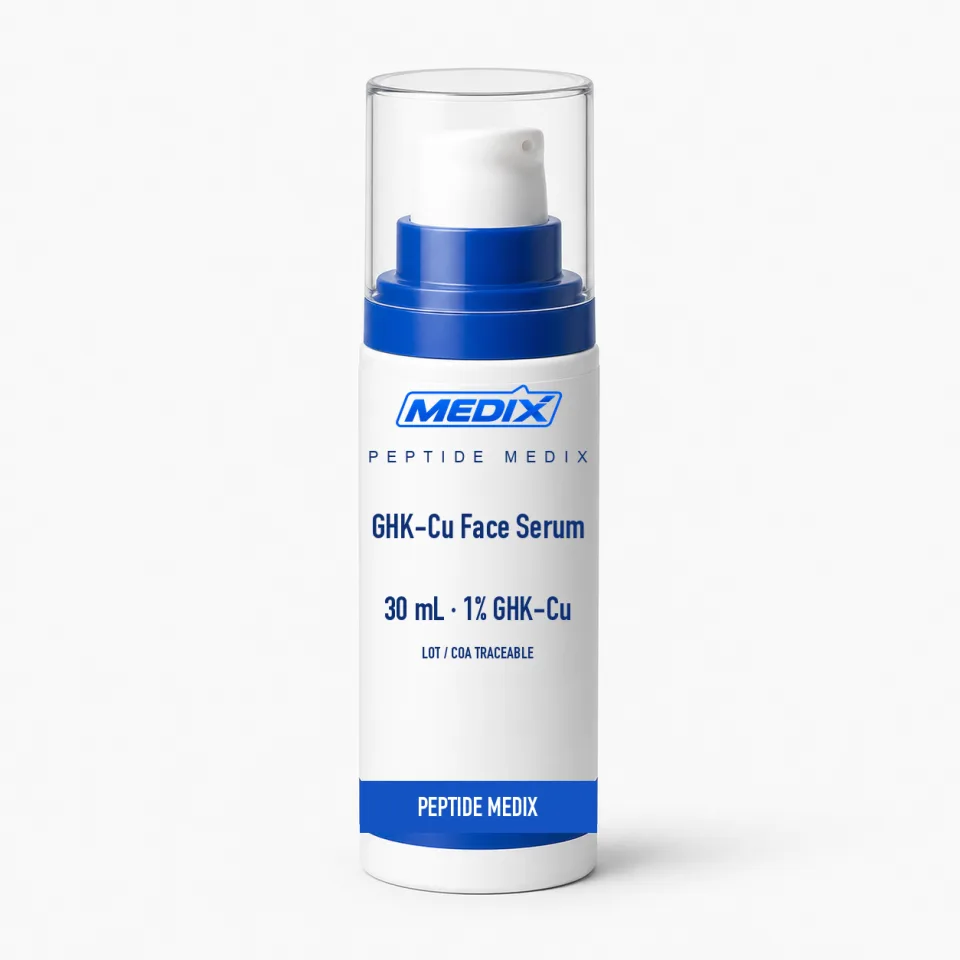
GHK-Cu Face Serum

Peptide Medix

GHK-Cu Face Serum

ghk-cu serum

2 options

$68.00 $80.00

View options and product details

15% OFF
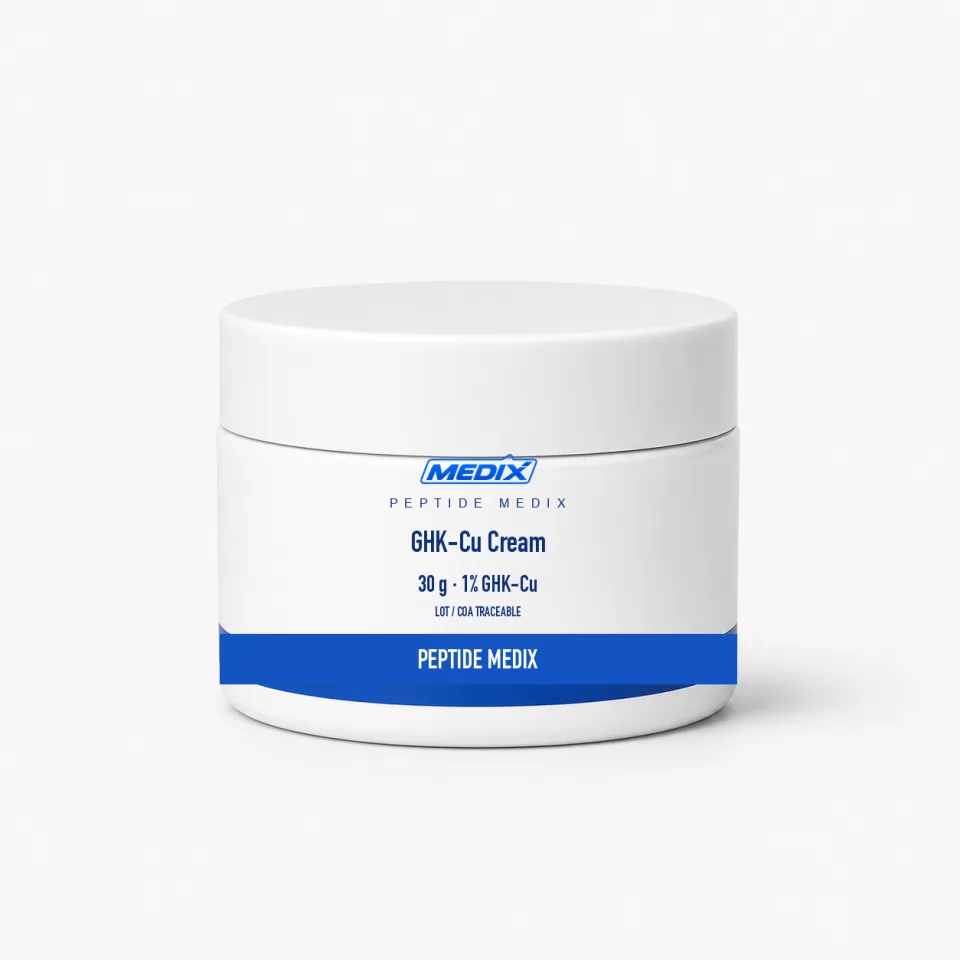
GHK-Cu Cream

Peptide Medix

GHK-Cu Cream

ghk-cu cream

2 options

$63.00 $75.00

View options and product details

15% OFF
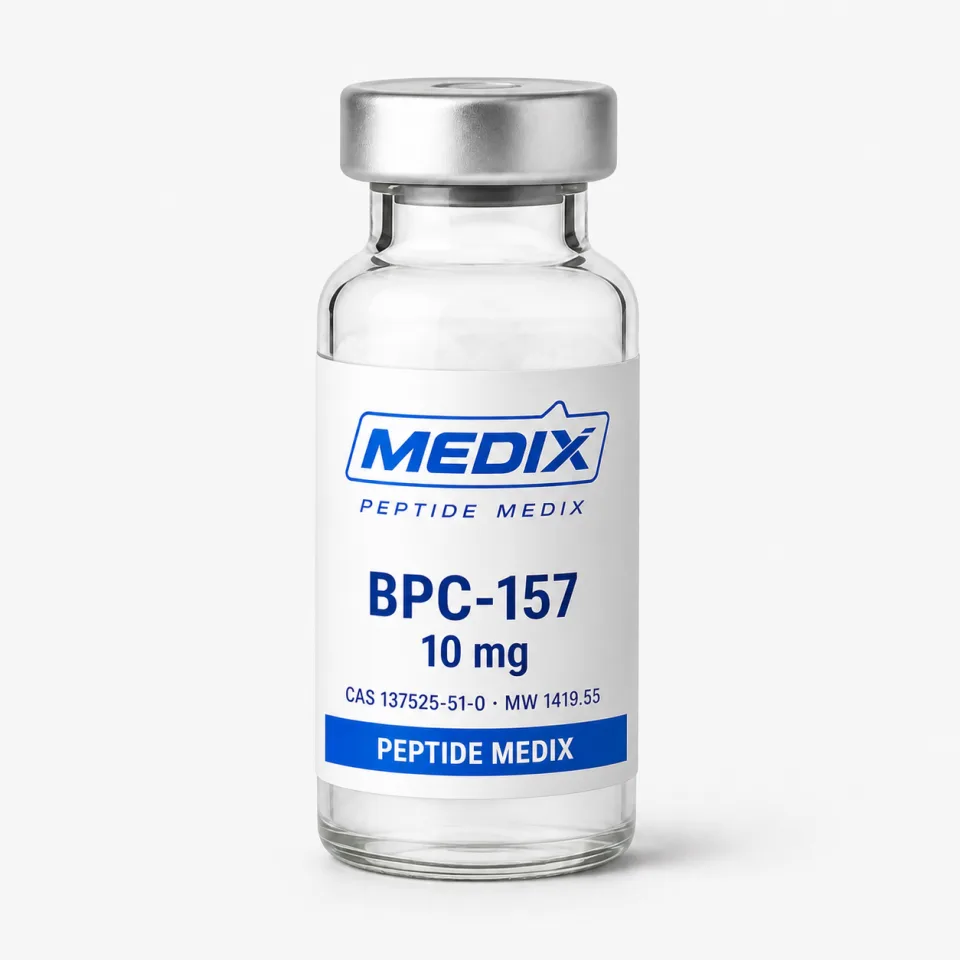
BPC-157

Peptide Medix

BPC-157

bpc-157

7 options

$34.00 $40.00

View options and product details

15% OFF
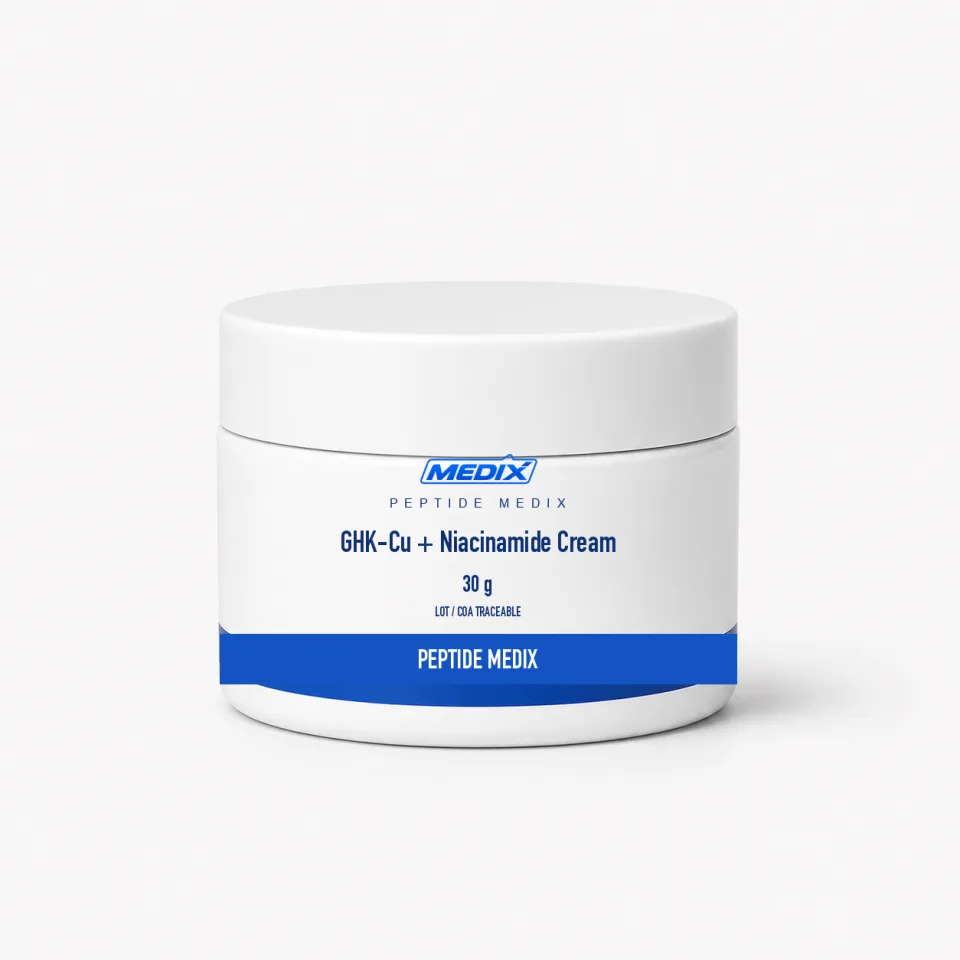
GHK-Cu + Niacinamide Cream

Peptide Medix

GHK-Cu + Niacinamide Cream

ghk-cu niacinamide cream

2 options

$46.00 $55.00

View options and product details