Research Overview
The GHK-Cu complex
GHK binds copper(II) with high affinity through the imidazole nitrogen of histidine and the peptide backbone, forming a square-planar complex that is stable across a useful pH range. That coordination chemistry is central to the research literature: much of what is attributed to GHK-Cu depends on the copper being carried and exchanged, not on the tripeptide alone, and the blue colour is a convenient visual indicator that the complex is intact.
What the literature examines
Published work with GHK-Cu covers fibroblast behaviour, collagen and glycosaminoglycan output, metalloproteinase and TIMP balance, angiogenic markers and antioxidant chemistry. Studies are mostly in cell culture, skin explants and animal wound models, with gene-expression profiling adding a large body of descriptive data. Findings are context-dependent and reported as laboratory measurements.
Why concentration and vehicle matter
Stability considerations
Copper complexes are sensitive to competing ligands and to reducing conditions. Chelators, high concentrations of ascorbic acid and extreme pH can all disturb the coordination sphere. Colour change from blue toward green or a loss of colour is the first practical signal that the complex has been compromised, and analytical confirmation is preferable to visual assessment alone.
Relationship to the raw peptide
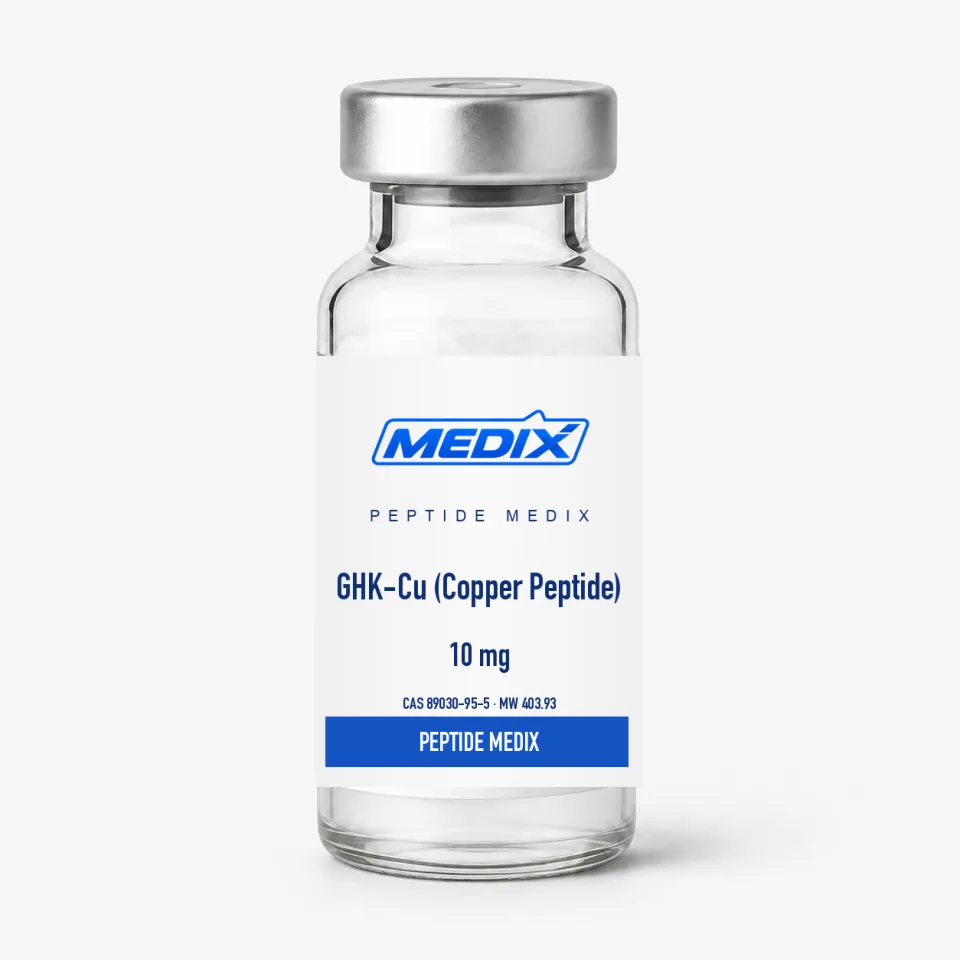
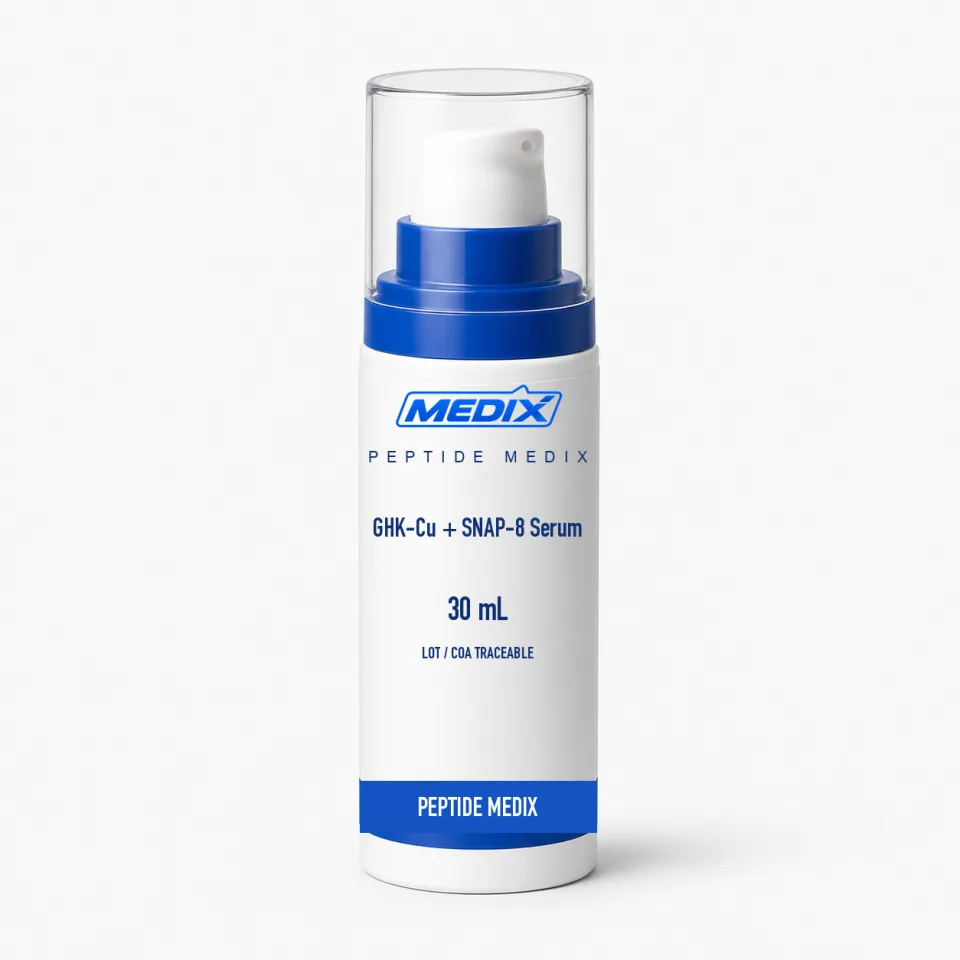
Laboratories that need to build their own vehicles usually order lyophilized GHK-Cu powder instead. This serum is the ready-made counterpart for teams whose question is about the formulation, the concentration or the model rather than about preparing the complex from scratch.