Peptide Medix product catalog

Peptide Medix

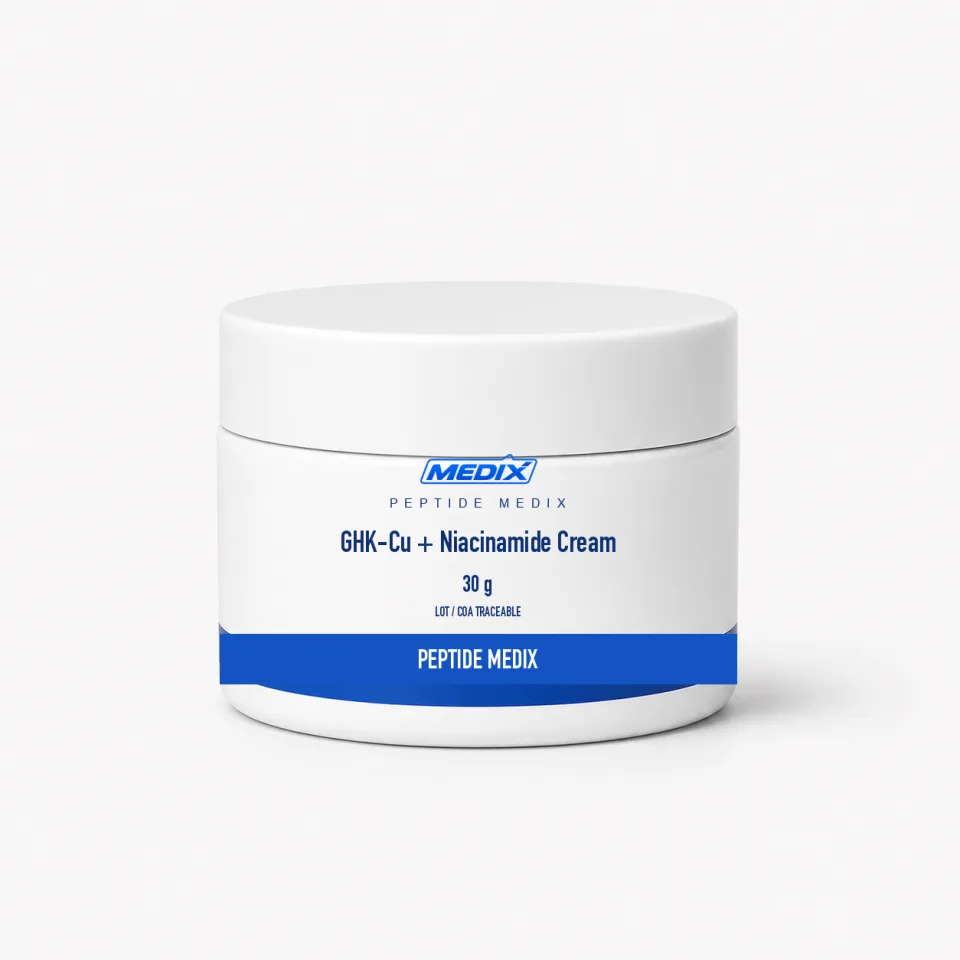
GHK-Cu + Niacinamide Cream

Copper tripeptide-1 with niacinamide in an emollient cream — 30 g and 50 g

Review catalog details Secure payments
Available to order · 2 of 2 options available
$46.00 $55.00 15% OFF

Choose an option

1
Categories: ghk-cu niacinamide cream , copper peptides , niacinamide

Choose your delivery method

Standard Shipping is automatically selected at checkout. Customers can upgrade to a faster delivery option anytime.

Overview

This cream pairs GHK-Cu — the copper(II) complex of glycyl-L-histidyl-L-lysine — with niacinamide, the amide form of vitamin B3, in an emollient base supplied in 30 g and 50 g jars. The two ingredients come from different research traditions. GHK-Cu is a matrix-side active studied for fibroblast behaviour, collagen and glycosaminoglycan output and copper-dependent chemistry. Niacinamide is a small, highly water-soluble vitamin studied for barrier-lipid synthesis, keratinocyte differentiation, pigment-transfer endpoints and its role as a precursor in NAD biosynthesis.

Putting them together makes the formulation itself worth studying. Niacinamide is used at relatively high percentages compared with peptide actives, it can hydrolyse to nicotinic acid at unfavourable pH, and the pH window that keeps it stable is not automatically the window that best preserves a copper complex. Combination creams of this kind are therefore examined for stability of each active, interaction with the emulsion phases and any effect on delivery of the other component.

Peptide input is third-party tested to ≥99% by HPLC with a lot-matched certificate of analysis. Jars are lot-numbered, filled and shipped from the United States for laboratory research only.

Specifications

Brand Peptide Medix
Category Copper Peptides (GHK-Cu)
Form Blue-tinted emollient cream in a screw-top jar
Available sizes 30 g, 50 g
Active 1 GHK-Cu — copper(II) complex of glycyl-L-histidyl-L-lysine (INCI copper tripeptide-1)
Active 1 identifiers CAS 89030-95-5 · C14H24N6O4·Cu · 403.93 g/mol
Active 2 Niacinamide (nicotinamide, vitamin B3)
Active 2 identifiers CAS 98-92-0 · C6H6N2O · 122.12 g/mol
Concentrations Printed on the lot label for each active
Peptide purity input ≥99% by HPLC; lot-matched COA available
Vehicle Emollient oil-in-water cream base, no added fragrance
Research areas Barrier-lipid and keratinocyte models, ECM endpoints, combination-formulation stability
Storage Cool and dark, ideally 2–8 °C; keep the jar closed
Compatibility note Niacinamide can hydrolyse to nicotinic acid at unfavourable pH; reducing agents disturb copper coordination
SKU GHK-CU-NIACINAMIDE-CREAM-30-G

Highlights

  • Two complementary actives: GHK-Cu copper tripeptide plus niacinamide (vitamin B3)
  • Emollient cream base in 30 g and 50 g jars
  • Copper tripeptide-1 — CAS 89030-95-5, the Cu(II) complex of Gly-His-Lys
  • Niacinamide — CAS 98-92-0, a small water-soluble NAD precursor
  • Peptide input released at ≥99% purity by HPLC with a lot-matched COA
  • Concentrations for each active printed on the lot label
  • Useful for combination-stability and barrier-model study designs
  • Research use only — not a licensed cosmetic or drug product

What's Included

  • The product option and size selected above
  • Final item and quantity confirmed in cart
  • Review the current ingredient listing before purchase

Research Overview

What each active brings

GHK-Cu carries the matrix-side literature: fibroblast responses, collagen and glycosaminoglycan production, metalloproteinase and TIMP balance, and antioxidant chemistry that depends on the coordinated copper. Niacinamide carries a keratinocyte and barrier-side literature: ceramide and barrier-lipid synthesis, differentiation markers, sebum and pigment-transfer endpoints, and its position upstream of NAD in cellular metabolism.

Why the pairing is studied

Combination designs test whether dermal and epidermal endpoints move together, whether niacinamide alters barrier properties in a way that changes delivery of the peptide complex, and whether either active is compromised by the presence of the other. The answers are formulation-specific, which is why single-active control arms in the same base are essential to any meaningful comparison.

Formulation chemistry to watch

Niacinamide is typically included at percentages an order of magnitude above peptide actives and is sensitive to pH: under acidic or hot conditions it hydrolyses to nicotinic acid. Copper complexes have their own pH and ligand sensitivities. Finding a window that keeps both intact is a real formulation constraint, and stability programmes should assay each active separately rather than inferring one from the other.

Typical endpoints

Reconstructed epidermis and skin explant models supply barrier-function readouts such as transepidermal water loss analogues and lipid profiling for the niacinamide component, while matrix markers and fibroblast assays address the GHK-Cu component. Diffusion-cell work measures each active independently to check for co-penetration effects.

Matched comparators

Our GHK-Cu cream uses the same peptide specification in a comparable emollient base, which makes it the natural single-active control for isolating what the niacinamide addition contributes.
Handling & Storage

Keep the jar closed, cool and out of direct light, with refrigeration preferred for longer holds. Sample with a clean spatula each time rather than returning used applicators, since repeated contact contaminates the bulk. Weigh out quantities when a study calls for a defined amount per unit area, and record the jar lot number, fill size and date first opened. Colour gives a quick check on the copper complex — fading or a shift away from blue means the jar should not be used for quantitative work. Avoid exposing the cream to heat, which accelerates niacinamide hydrolysis.

GHK-Cu + Niacinamide Cream FAQ

What does this cream contain?
Two actives in an emollient base: GHK-Cu, the copper(II) complex of glycyl-histidyl-lysine, and niacinamide, the amide form of vitamin B3. Concentrations for each are printed on the lot label. It is offered in 30 g and 50 g jars that differ only in fill weight.
Why pair a copper peptide with niacinamide?
They address different layers of the published literature. GHK-Cu is studied for dermal matrix endpoints, niacinamide for keratinocyte and barrier-lipid endpoints. Combination formulations let a study ask whether both move together and whether either affects delivery of the other.
Is the peptide in this formulation tested, and is a COA available?
Yes. The peptide input is released against a ≥99% HPLC purity specification with mass-spectrometric identity confirmation, and the lot-matched certificate of analysis is available on request. Each finished container is labelled with its own lot number so bench records can be tied back to the raw-material certificate.
Are the two actives stable together?
That is one of the questions this format is used to study. Niacinamide hydrolyses to nicotinic acid at unfavourable pH or under heat, and copper coordination is sensitive to competing ligands and pH. Stability work should assay each active separately rather than assume the pair behaves like either alone.
What is the right control for a combination experiment?
A single-active preparation in a comparable base. Our GHK-Cu cream uses the same peptide specification in a similar emollient vehicle, so running it alongside this jar isolates the contribution of the niacinamide component rather than confounding it with vehicle differences.
How should the jars be stored?
Closed, cool and dark, ideally at 2–8 °C, and away from heat sources. Sample with clean tools, log the lot number and opening date, and stop using a jar for quantitative work if the blue colour fades or shifts, which indicates the copper complex has been disturbed.
What does research use only mean for a topical formulation?
This preparation is supplied as a laboratory research material for bench and model work such as ex vivo skin, reconstructed epidermis or stability testing. It is not a licensed cosmetic, drug or medical device, has not been reviewed by the FDA, and is not intended for human or veterinary application.

This catalog listing is for laboratory research use only. It is not represented as a drug, food, supplement, cosmetic or diagnostic product, and it is not offered for human or veterinary use.

Customer Reviews

0 reviews
5 star
0%
4 star
0%
3 star
0%
2 star
0%
1 star
0%

Leave Your Review

Rating

No reviews yet — be the first!

Leave Your Review

Rating

Keep exploring

Related Products & Shopping Guides

Compare GHK-Cu + Niacinamide Cream with relevant categories, product topics, and practical shopping information.

Often researched together

Related research peptides, blends and lab supplies frequently ordered with GHK-Cu + Niacinamide Cream.

15% OFF
GHK-Cu Cream

Peptide Medix

GHK-Cu Cream

ghk-cu cream

2 options

$63.00 $75.00

View options and product details

15% OFF
GHK-Cu Face Serum

Peptide Medix

GHK-Cu Face Serum

ghk-cu serum

2 options

$68.00 $80.00

View options and product details

15% OFF
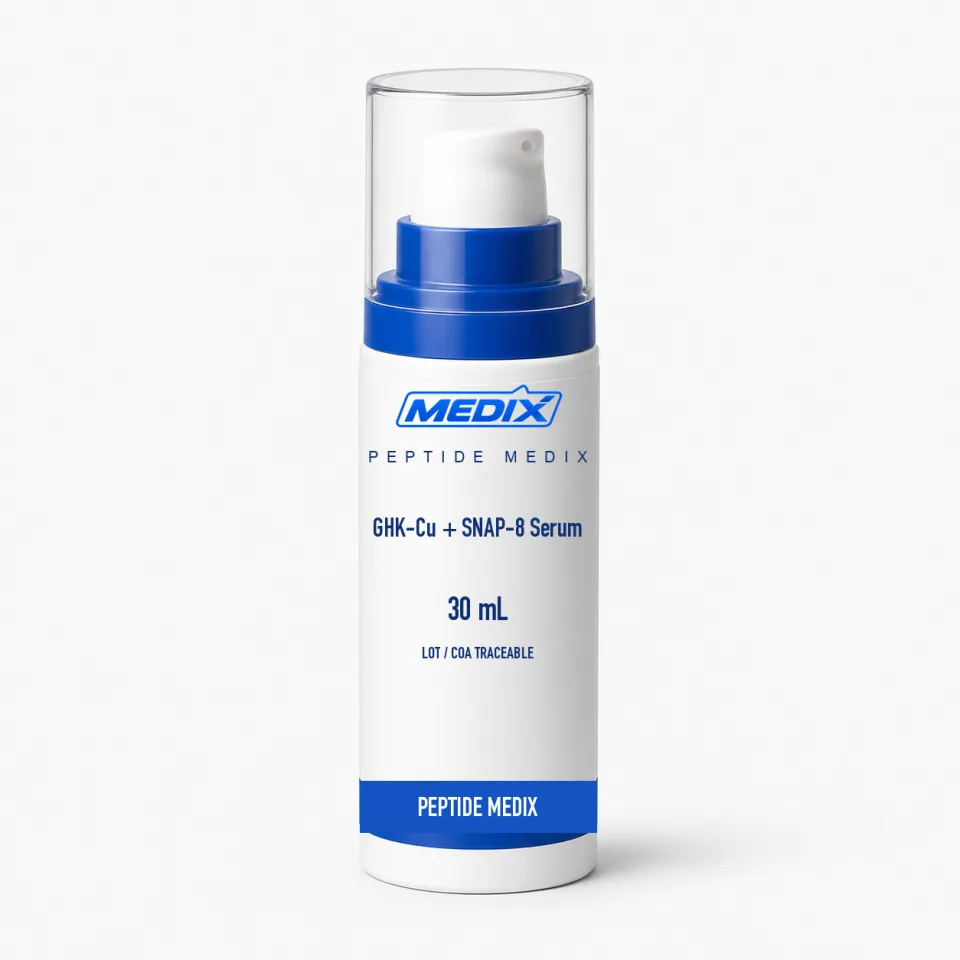
GHK-Cu + SNAP-8 Serum

Peptide Medix

GHK-Cu + SNAP-8 Serum

ghk-cu snap-8 serum
$123.00 $145.00

View options and product details

15% OFF
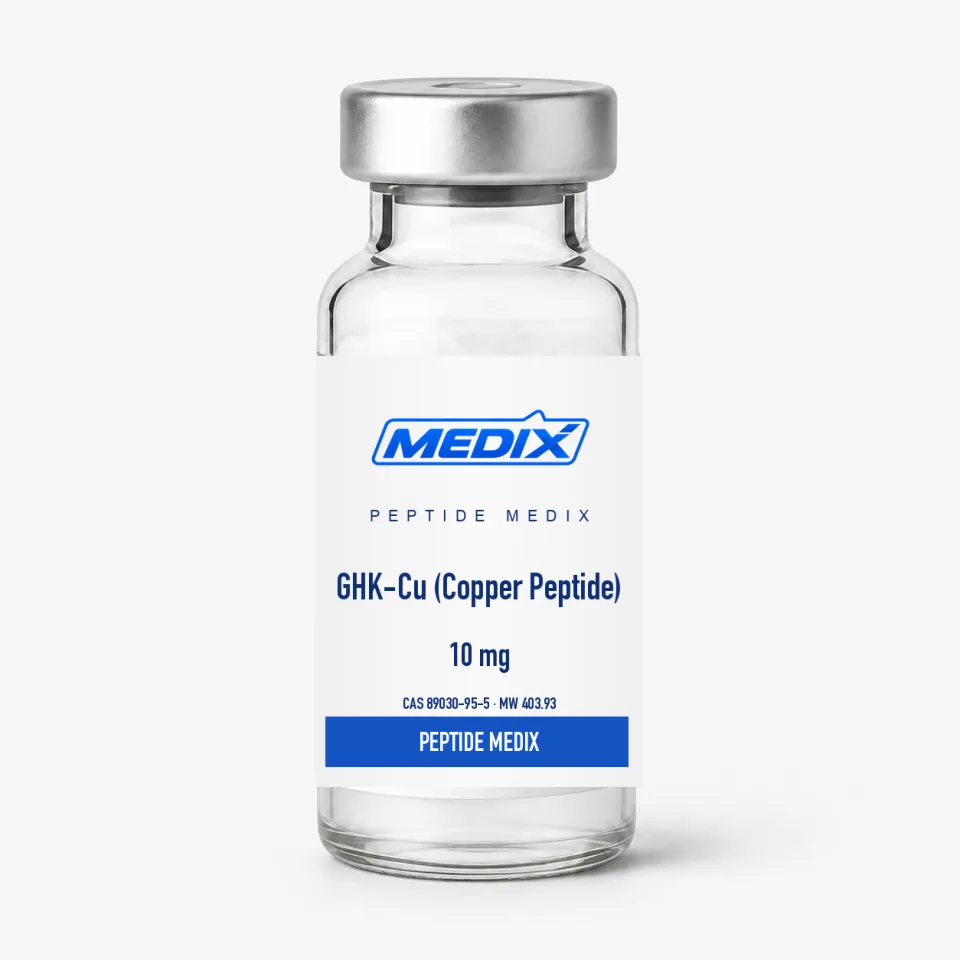
GHK-Cu (Copper Peptide)

Peptide Medix

GHK-Cu (Copper Peptide)

ghk-cu

5 options

$25.00 $30.00

View options and product details

15% OFF
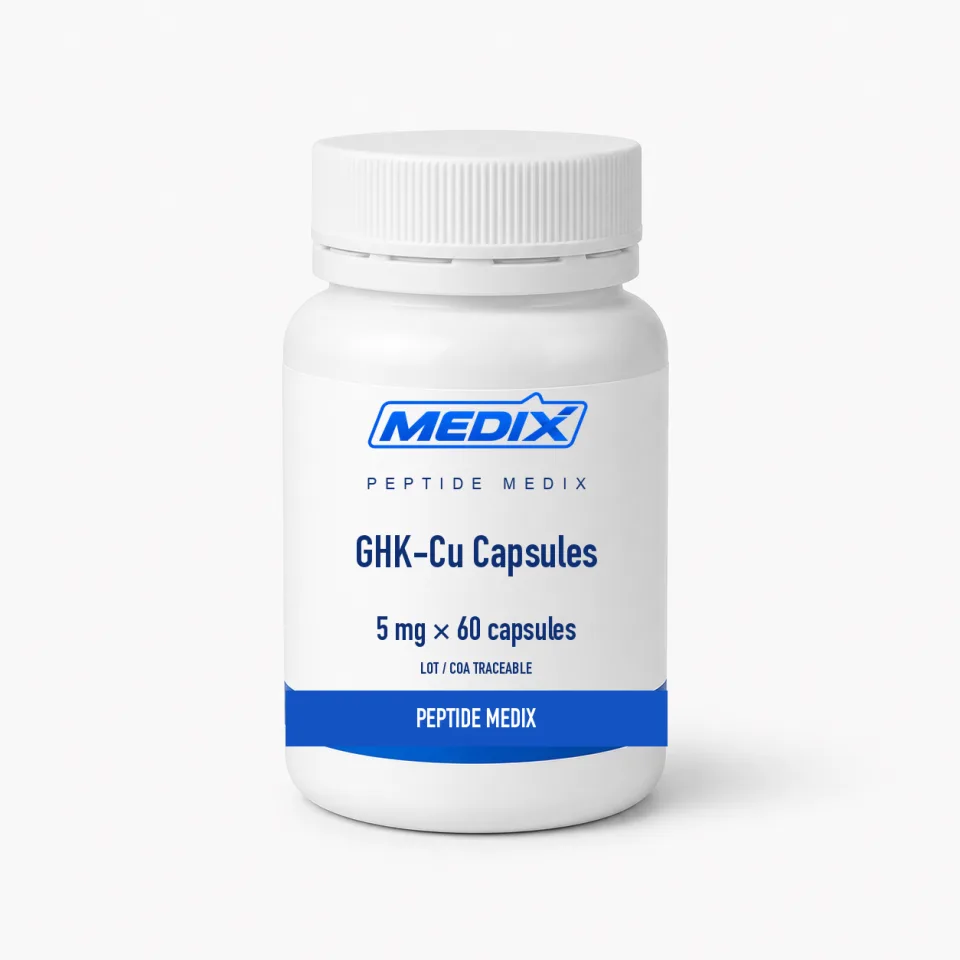
GHK-Cu Capsules

Peptide Medix

GHK-Cu Capsules

ghk-cu
$55.00 $65.00

View options and product details