Research Overview
Cream versus serum as a research variable
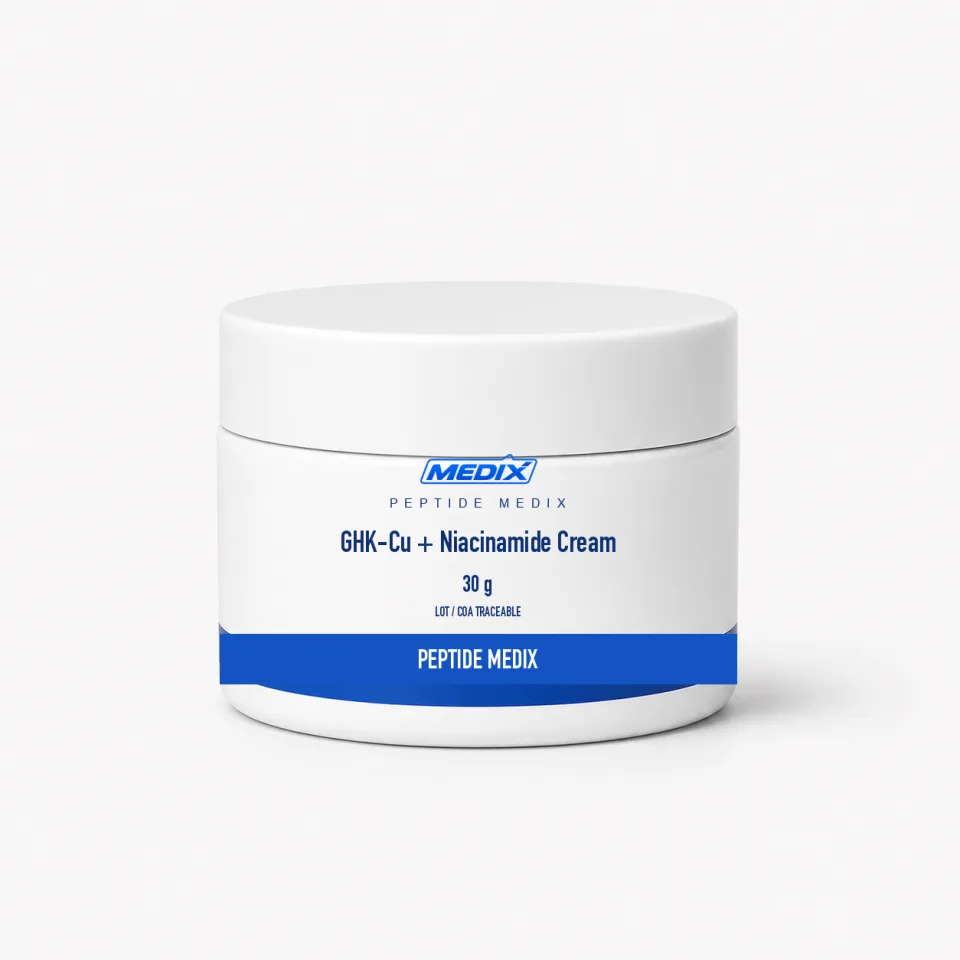
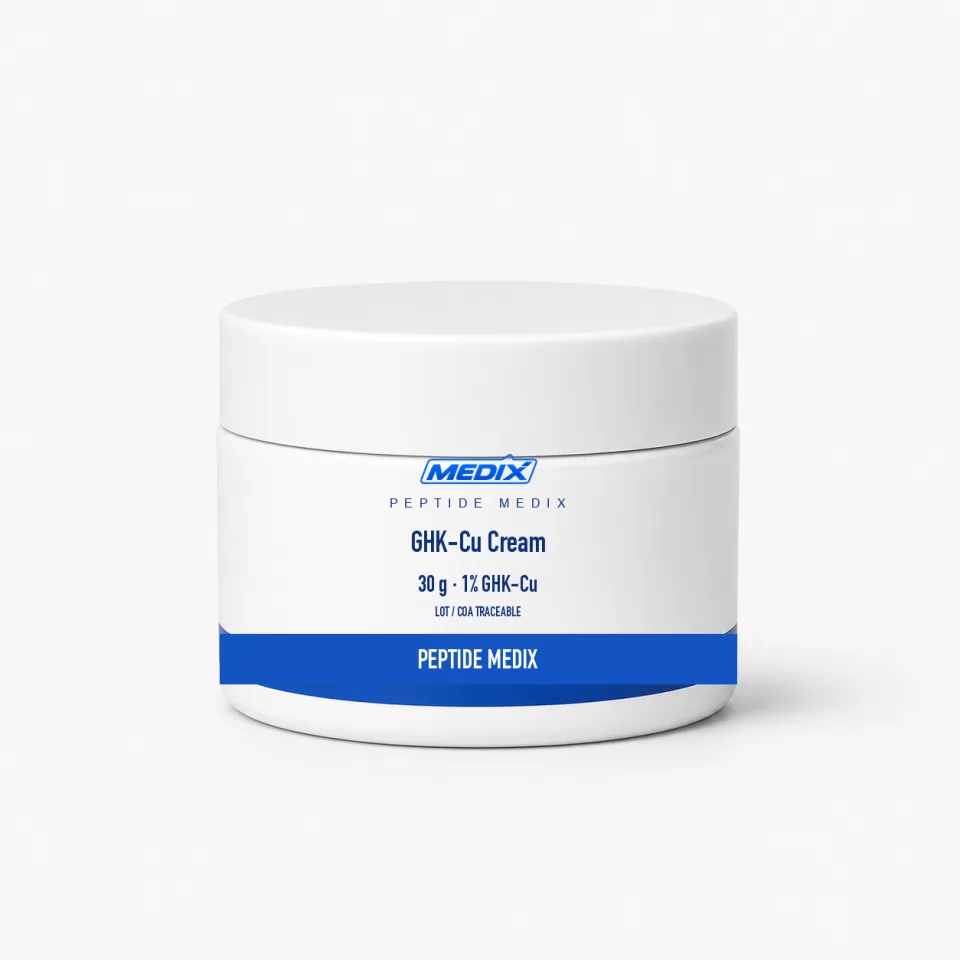
Vehicle is one of the largest determinants of outcome in topical peptide work. An emollient cream hydrates and occludes, raising stratum-corneum water content and prolonging contact, whereas a thin aqueous serum dries quickly and delivers a smaller, shorter-lived reservoir. Running the same active at the same concentration in both formats isolates that variable, which is the main reason laboratories hold both formats.
GHK-Cu chemistry
The tripeptide coordinates copper(II) through histidine and backbone donors to form a stable, intensely blue complex. Copper carriage is central to the published rationale for GHK-Cu activity, and the copper–peptide equilibrium is sensitive to competing ligands, so formulation excipients matter more here than they would for an uncomplexed peptide.
Reported research endpoints
Stability in an emulsion
Emulsions bring their own questions for a metal complex: partitioning between phases, interaction with emulsifiers and surfactants, and the effect of storage temperature on both the emulsion and the complex. Colour is the immediate qualitative indicator — a shift away from blue signals disturbed coordination — but analytical confirmation is preferable when stability is the endpoint.
Working with matched materials
For designs that need identical actives across formats, this cream, the GHK-Cu serum, the scalp solution and lyophilized GHK-Cu powder all draw on the same peptide specification, which keeps raw-material variation out of a vehicle comparison.