Research Overview
Origin and structure
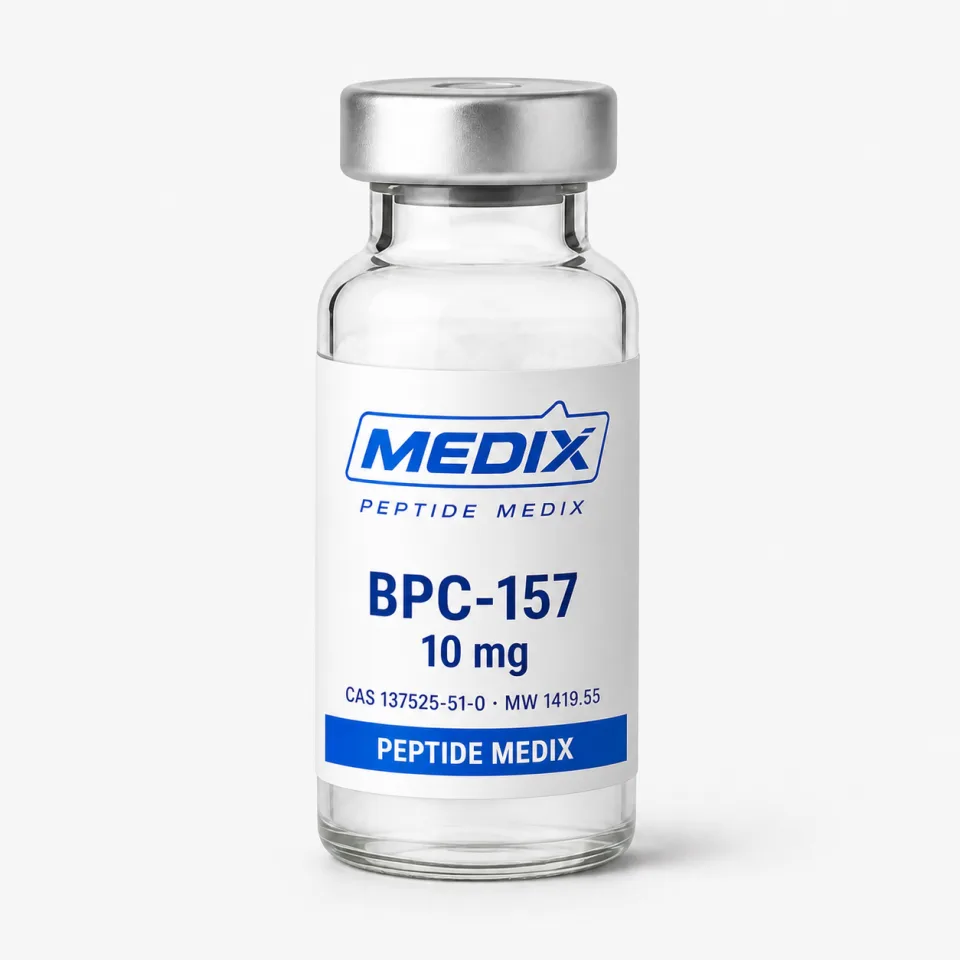
BPC-157 corresponds to residues 14–28 of body protection compound, a protein characterised in human gastric juice. The sequence contains no cysteine and no classic protease-labile motif, and stability studies report that it survives simulated gastric conditions far longer than most peptides of comparable size. That property explains why oral and intragastric routes appear alongside parenteral ones throughout the animal literature.
Tissue-repair models
Gastrointestinal and vascular work
Analytical characterisation
Identity is normally confirmed by mass spectrometry against the expected monoisotopic mass, with purity determined by reversed-phase HPLC and reported as an area-percent value. Laboratories running quantitative assays typically verify net peptide content separately, since lyophilized material carries residual counter-ion and water that are not captured by a chromatographic purity figure.