Research Overview
Biology of the human cathelicidin
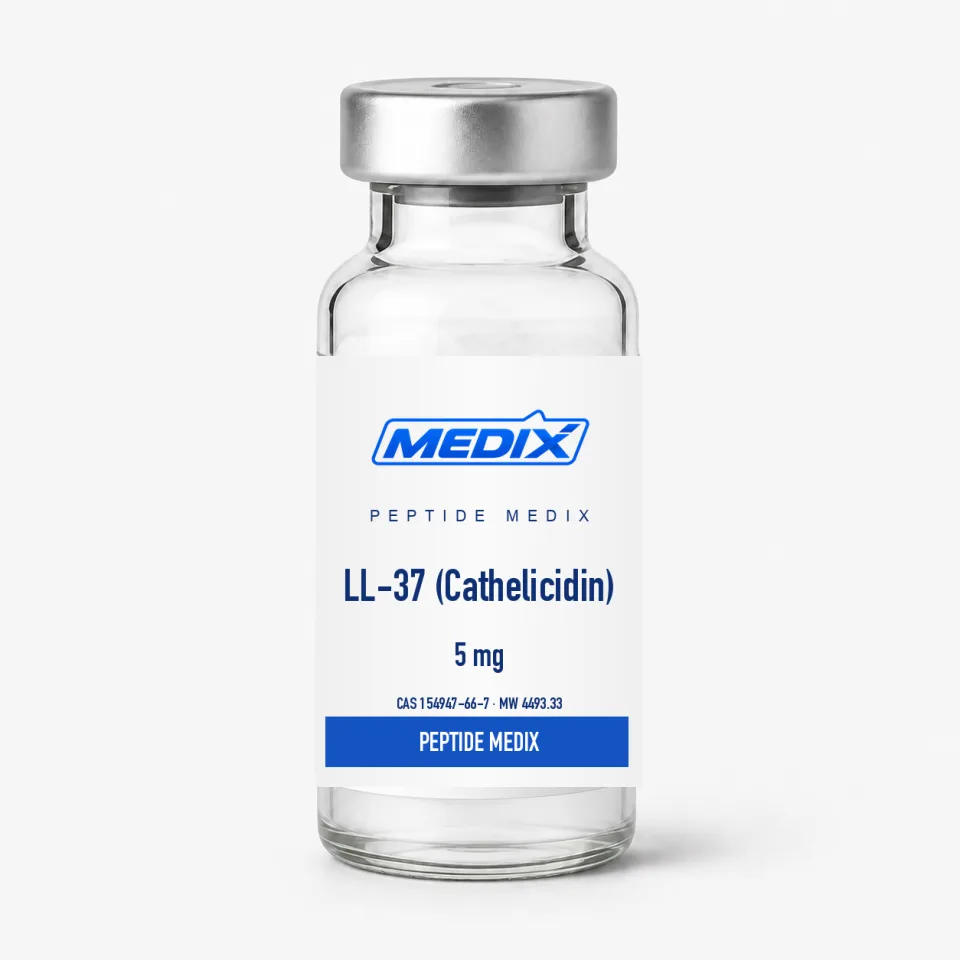
Cathelicidins are a conserved family of host-defence peptides, and humans express exactly one: the hCAP18 precursor, whose C-terminal domain is cleaved to release LL-37. Expression is documented in neutrophil granules, skin keratinocytes, airway epithelium and the gastrointestinal lining, and several papers link expression levels to vitamin D receptor signalling, a connection studied extensively in barrier immunity.
Membrane-directed antimicrobial work
The classical in-vitro literature examines activity against Gram-positive and Gram-negative bacteria, fungi and enveloped viruses. The proposed mechanism is electrostatic attraction of the cationic helix to anionic membrane surfaces followed by insertion and permeabilisation. Because that mechanism is physical rather than target-specific, papers frequently note that resistance develops less readily than with conventional antibiotics, though activity is markedly reduced at physiological salt concentrations.
Biofilm and wound models
Immunomodulatory research
LL-37 also binds bacterial lipopolysaccharide and nucleic acids, and papers describe modulation of dendritic cell and monocyte responses. This is a double-edged literature: the same complex-forming behaviour has been implicated in autoimmune conditions such as psoriasis, which is why the peptide is studied as a driver of inflammation as well as a defence against infection.
Handling considerations and scope
Its amphipathic character makes it prone to adsorption on plastic and to aggregation, so laboratories often use low-binding tubes and carrier proteins in dilute assays. All statements above summarise published research; the peptide is supplied as a laboratory reagent only.