Research Overview
Discovery and family
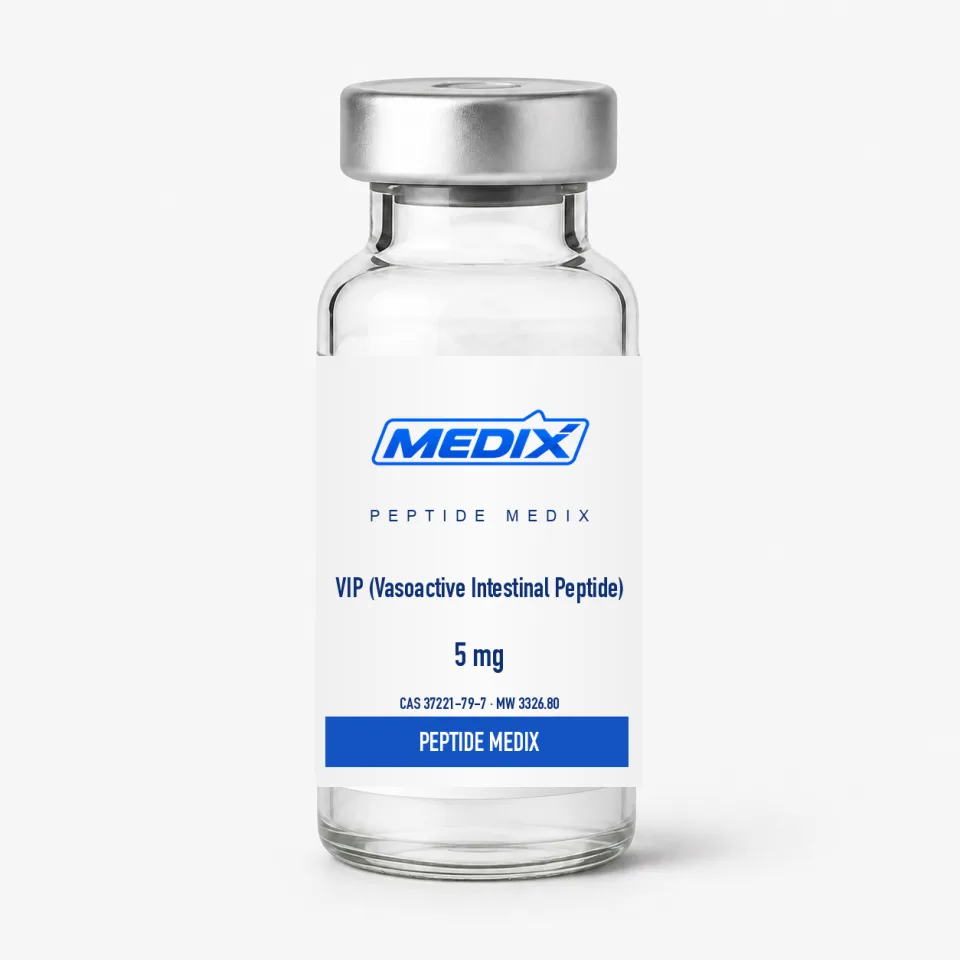
VIP was isolated from porcine duodenum in the early 1970s during a search for vasodilatory factors in gut extracts, which is where its name comes from. It was later recognised as a neuropeptide rather than a purely gut hormone, and as a member of the secretin-glucagon superfamily alongside PACAP, with which it shares receptor overlap. The C-terminal amide is a post-translational feature reproduced in synthetic material.
Receptor pharmacology
Binding at VPAC1 and VPAC2 activates adenylate cyclase and raises intracellular cyclic AMP, with downstream protein kinase A signalling. Receptor distribution differs by tissue, and much of the pharmacological literature concerns selective analogues designed to separate VPAC1 from VPAC2 effects, since the native peptide engages both.
Physiological research areas
Reported activities in animal and tissue preparations include relaxation of vascular and non-vascular smooth muscle, effects on airway calibre and mucus secretion, regulation of intestinal motility and secretion, and a well-characterised role in the suprachiasmatic nucleus where VIP signalling is central to synchronising the circadian clock across neuron populations.
Immunological work
A substantial literature describes VIP as an endogenous modulator of inflammatory responses, with reported effects on macrophage cytokine output, T helper cell balance and regulatory T cell populations in rodent models of autoimmunity. This has driven interest in VPAC-targeted compounds, none of which has become an established therapy.
Stability and evidence scope
Native VIP has a short circulating half-life owing to peptidase cleavage, and much analogue development has aimed at extending it. Nothing described here constitutes a claim about effects in people; this vial is a laboratory reagent supplied without protocol or dosing guidance.