Research Overview
The zonulin pathway
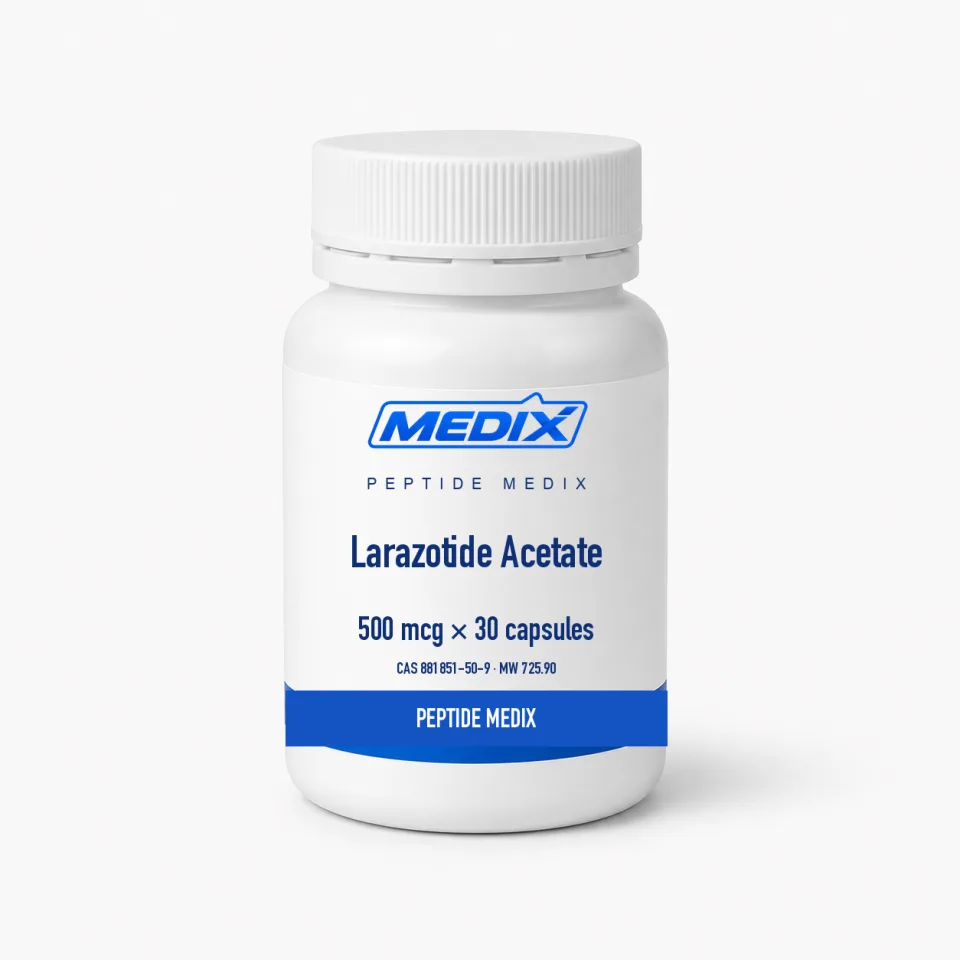
Epithelial cells in the intestine are joined by tight junctions built from claudins, occludin and zonula occludens proteins. Zonulin, identified as a pre-haptoglobin 2 fragment, signals through pathways that reversibly loosen those junctions and increase paracellular permeability. Larazotide was designed as a structural antagonist of that process, and this defined target distinguishes it from peptides whose mechanisms are described only in broad terms.
Celiac disease research
Larazotide has the most developed human trial record of any peptide in this category. Phase 2 studies examined it during controlled gluten challenge, and a phase 2b programme in patients with persistent symptoms despite a gluten-free diet reported mixed results: the primary endpoint was not met, while several secondary and symptom-score endpoints reached significance. The compound has no marketing approval, and the evidence remains specific to celiac contexts.
Barrier permeability models
In-vitro work uses cultured epithelial monolayers with transepithelial electrical resistance and tracer flux as readouts, examining whether the peptide limits permeability increases induced by inflammatory cytokines or gliadin fragments. Related animal studies use similar permeability endpoints alongside histology.
Local action by design
Minimal systemic absorption is intentional. Because the target sits at the apical epithelial surface, the pharmacological aim is luminal residence rather than circulating concentration, which shapes how studies are designed and which endpoints are considered meaningful.
Scope of the evidence
Published data outside celiac disease are limited, and the compound is not approved anywhere. Nothing here is a claim about outcomes in people; these capsules are supplied as laboratory research material with no dosing or protocol guidance.