Research Overview
The peptide behind the format
Why the mucosal route is studied
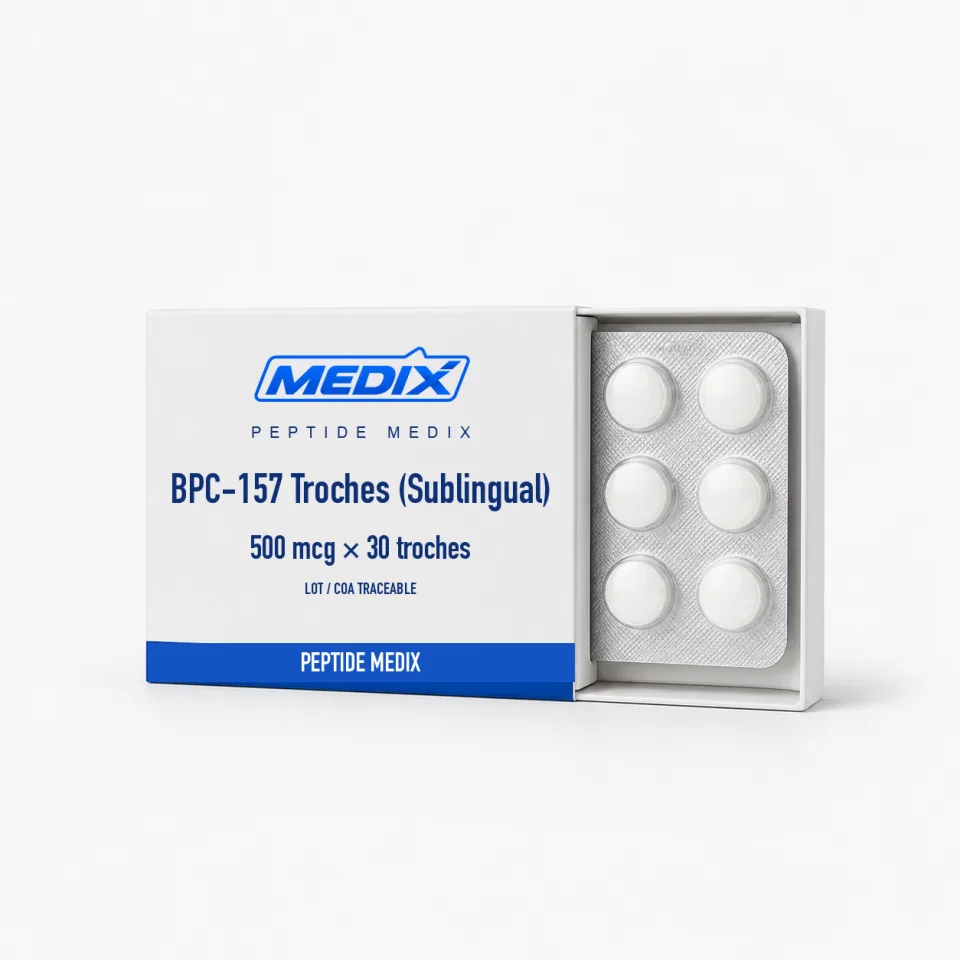
Sublingual and buccal epithelium is thinner and more permeable than gastrointestinal mucosa and drains into the systemic circulation without passing through the liver first. For peptides, which face proteolysis and poor paracellular transport wherever they go, that anatomical advantage is worth quantifying. The counterweight is a small absorptive surface area and limited residence time, which is why troche base composition and dissolution profile are experimental variables in their own right.
Typical formulation endpoints
- Dissolution time and release profile of the troche base under standardised conditions
- Permeation across excised mucosal tissue in Franz-cell or Ussing-chamber systems
- Comparative exposure against capsule and parenteral routes in matched animal models
- Content uniformity across units within a compounded batch
Stability in a compounded matrix
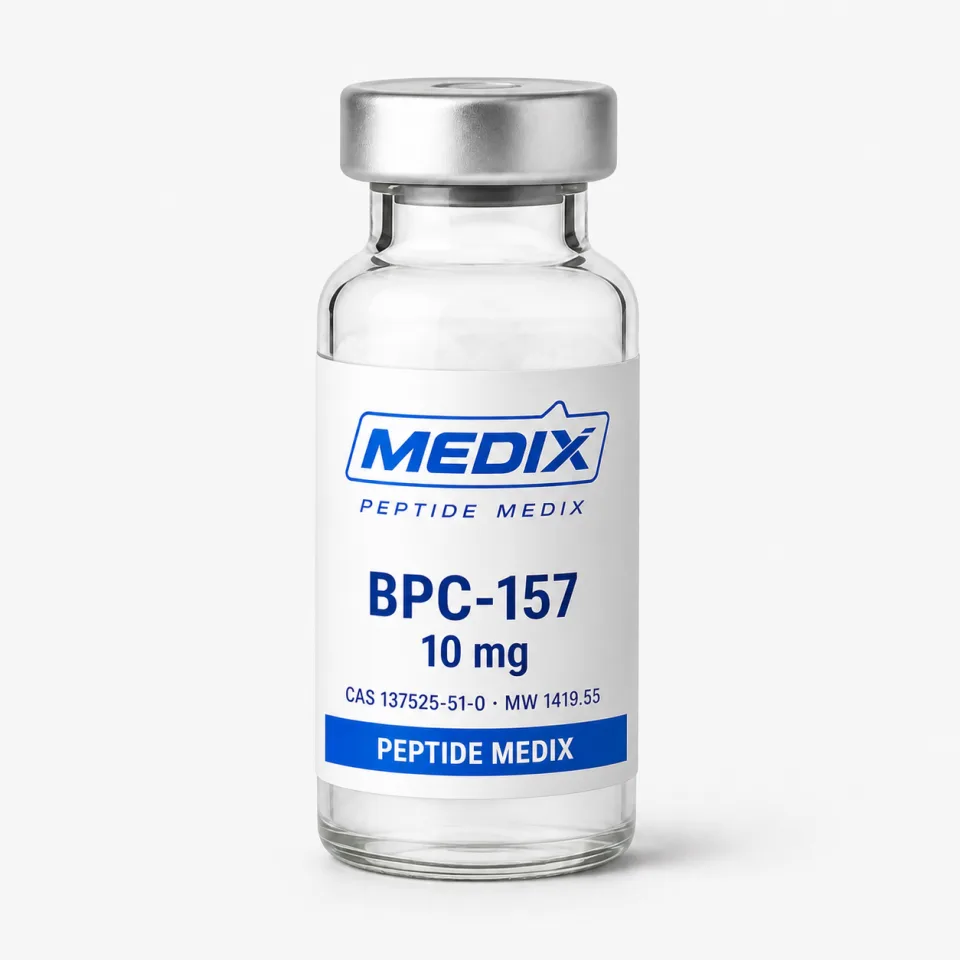
A sealed lyophilized vial protects a peptide from moisture, oxygen and excipient contact. A troche does not: the peptide sits in a hygroscopic base at ambient temperature for the life of the pack. BPC-157 is more robust than most peptides of comparable length, but robustness is not immunity, and periodic content verification by reversed-phase HPLC over the intended storage window is a normal part of formulation research rather than an optional extra.
Designing the comparison
Because the same peptide is available as a vial, a capsule and a troche, the delivery variable can be isolated cleanly. A matched-compound, matched-lot design in which only the format changes is the only way to attribute an observed difference to the route rather than to the material.