Research Overview
Structure and receptor profile
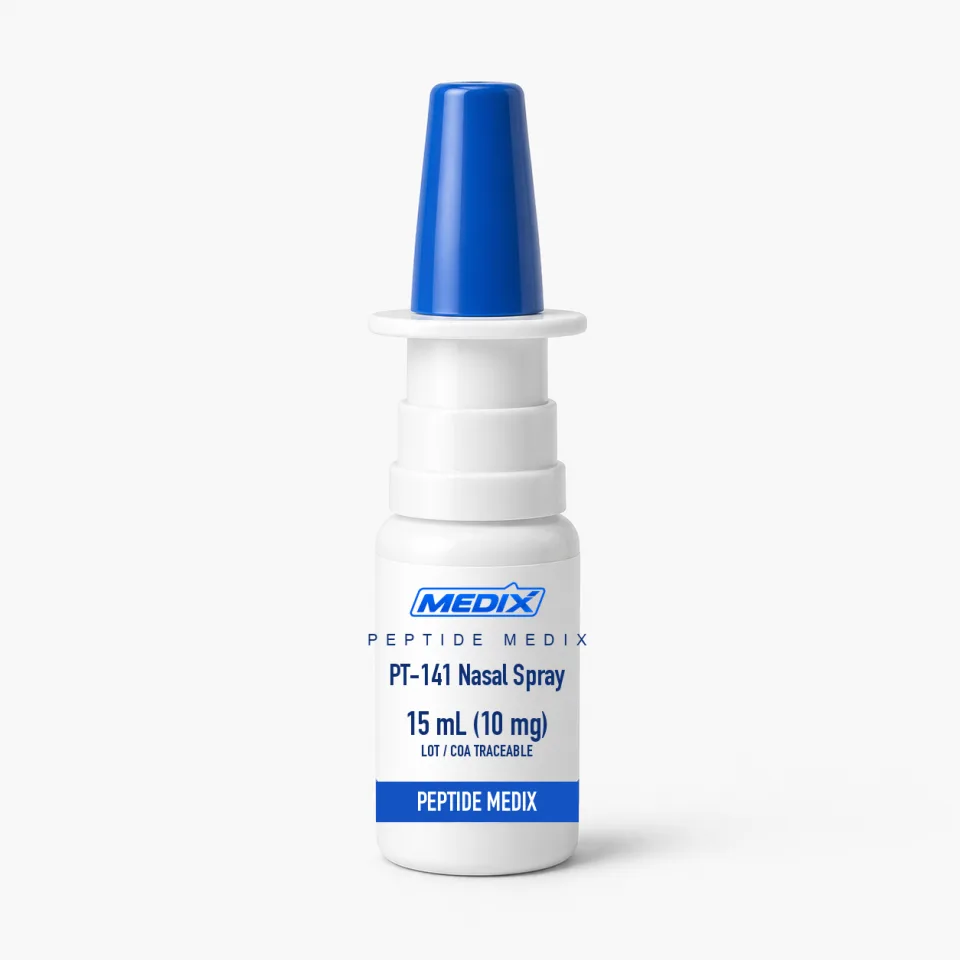
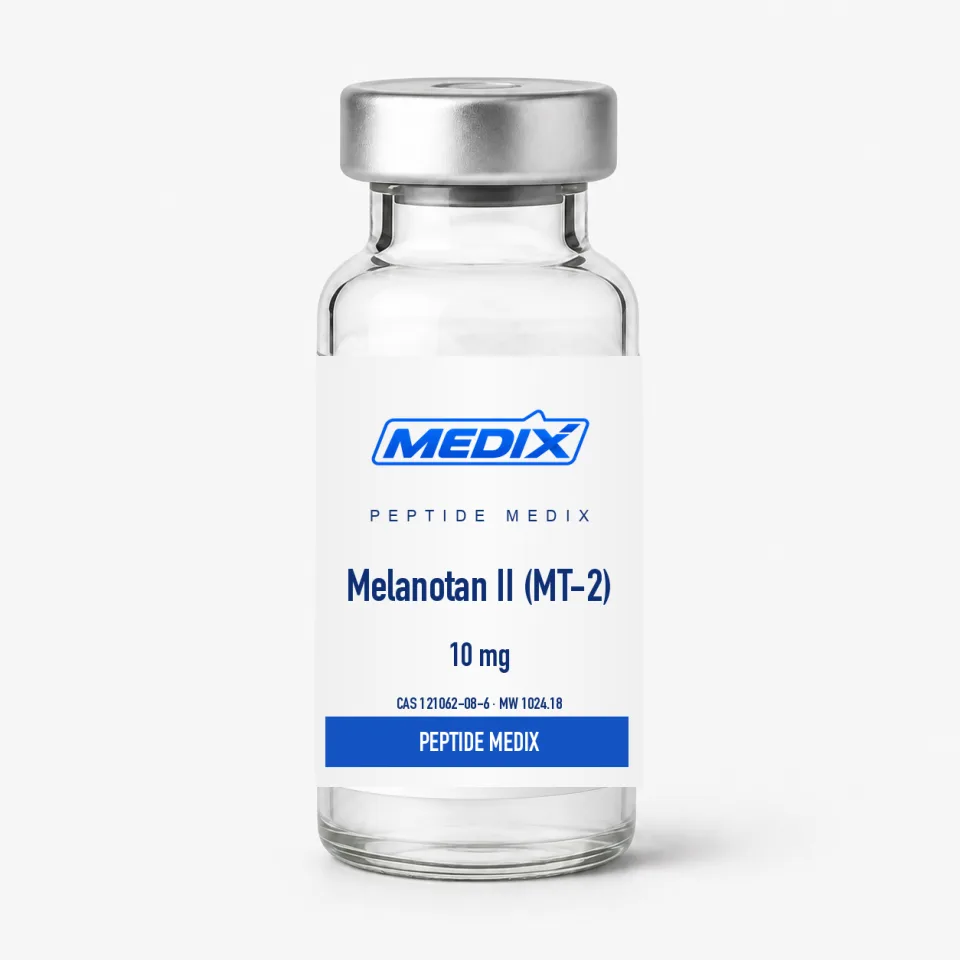
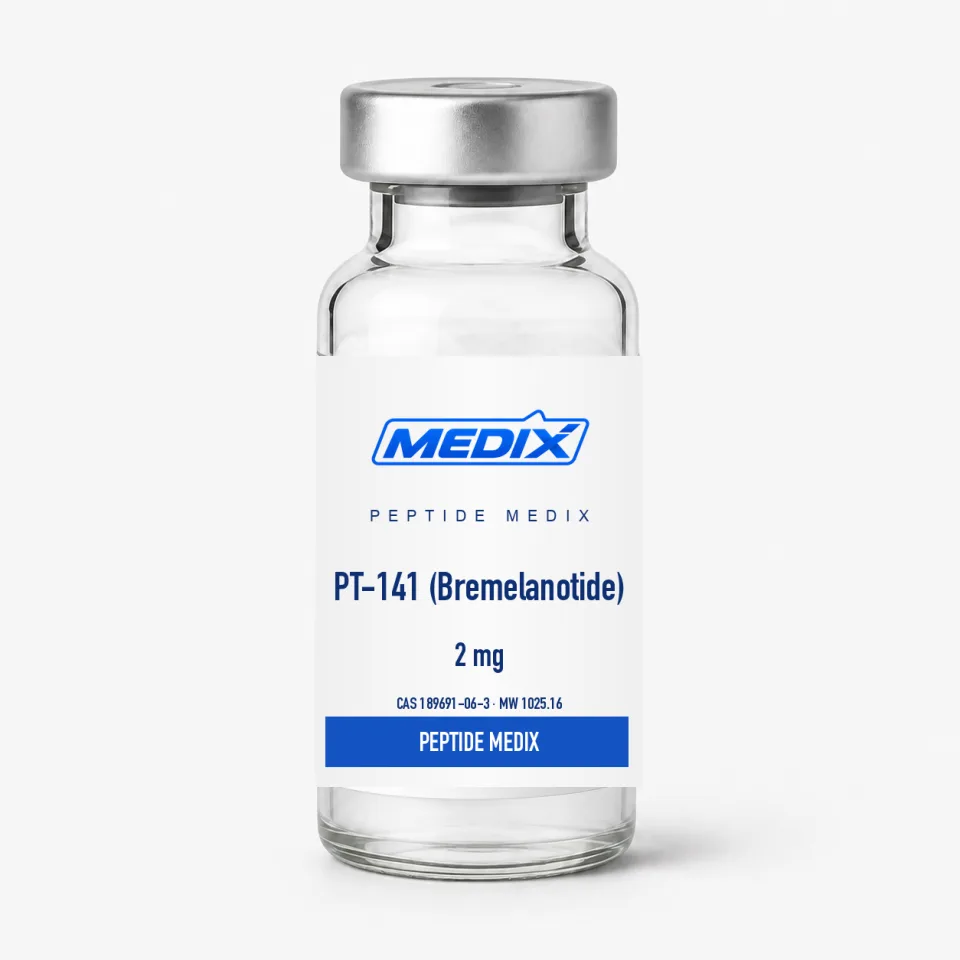
PT-141 is the deaminated, C-terminal free-acid metabolite of Melanotan II. Removing the terminal amide markedly lowers potency at MC1R — the receptor most associated with melanogenesis — while retaining activity at MC3R and MC4R. Radioligand and cell-based reporter assays are the usual way researchers characterise this selectivity shift, and PT-141 is frequently used as the reference agonist when melanocortin subtype selectivity is being profiled.
Central pathway models
- Central versus peripheral mechanism comparisons
- Melanocortin receptor subtype selectivity assays
- Neuroendocrine signalling downstream of MC4R activation
Other melanocortin research lines
Because the melanocortin system also regulates feeding behaviour, energy expenditure and inflammatory tone, PT-141 appears in metabolic and cardiovascular literature. Investigators have reported effects on blood pressure and on resuscitation endpoints in animal models of haemorrhagic shock, which is one reason melanocortin analogues remain of interest in critical-care pharmacology.
Analytical handling
The cyclic constraint makes PT-141 comparatively robust in solution relative to linear peptides, but it is still sensitive to repeated freeze–thaw cycling, oxidation of the tryptophan residue and adsorption onto plastic surfaces at low concentrations. Researchers typically confirm identity by mass spectrometry and purity by reverse-phase HPLC against the supplied COA before use.