Peptide Medix product catalog

Peptide Medix

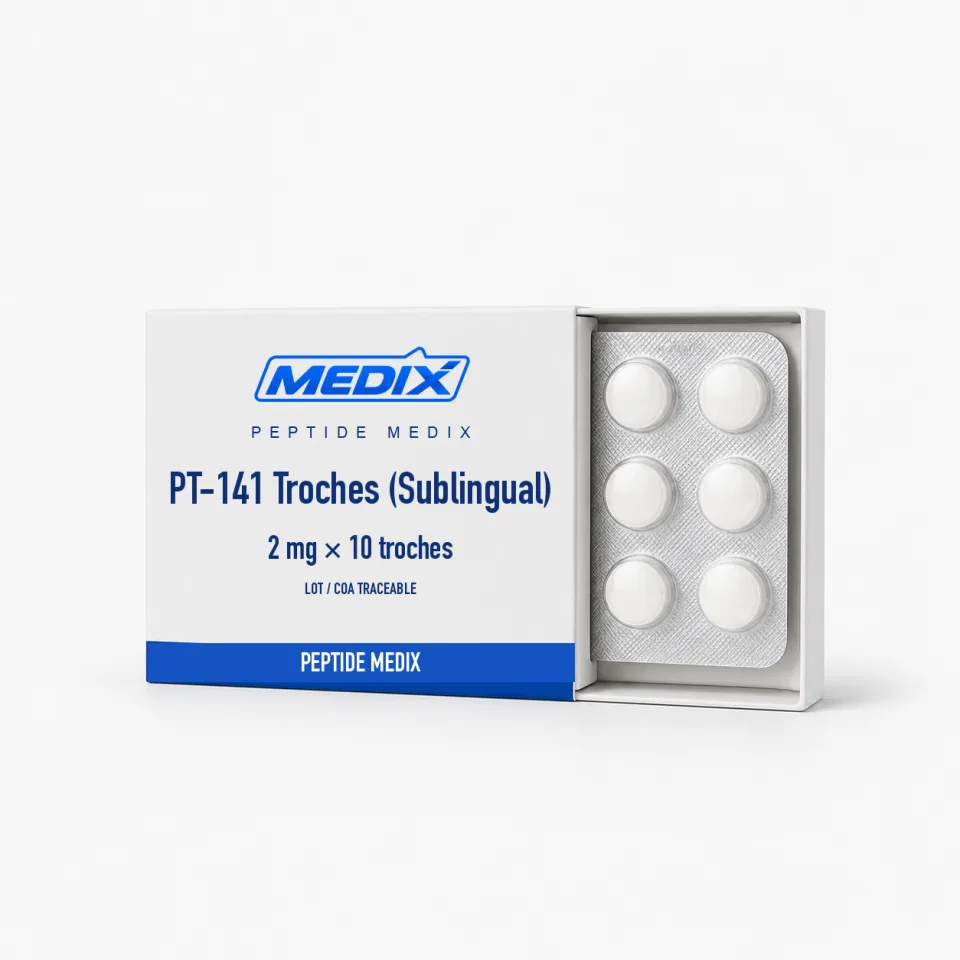
PT-141 Troches (Sublingual)

Sublingual bremelanotide lozenges, 2 mg per troche, 10 per pack

Review catalog details Secure payments
Available to order
$72.00 $85.00 15% OFF
1
Categories: pt-141 troches , bremelanotide , sublingual peptides

Choose your delivery method

Standard Shipping is automatically selected at checkout. Customers can upgrade to a faster delivery option anytime.

Overview

PT-141 troches are compressed sublingual lozenges containing 2 mg of bremelanotide each, supplied ten to a pack for 20 mg of peptide in total. The active is the same cyclic heptapeptide we supply as lyophilized powder and as a nasal solution: Ac-Nle-cyclo[Asp-His-D-Phe-Arg-Trp-Lys]-OH, closed by a side-chain lactam bridge between the aspartate and lysine residues, CAS 189691-06-3, molecular weight about 1025.2 g/mol.

Bremelanotide is a melanocortin receptor agonist derived from the alpha-MSH scaffold, acting principally at MC3R and MC4R with markedly less MC1R activity than its structural predecessor Melanotan II. What makes it distinctive in the literature is that its target pathway sits in the central nervous system rather than in vascular tissue, which is why it is discussed separately from PDE5 inhibitors in reviews of sexual-response pharmacology.

Specifications

Brand Peptide Medix
Category Libido & Sexual Function
Form Compressed sublingual troche (lozenge), slowly dissolving base
Available size 2 mg × 10 troches per pack (20 mg total peptide)
Peptide per unit 2 mg bremelanotide
Active component PT-141 (bremelanotide), ≥99% by HPLC with lot-matched COA
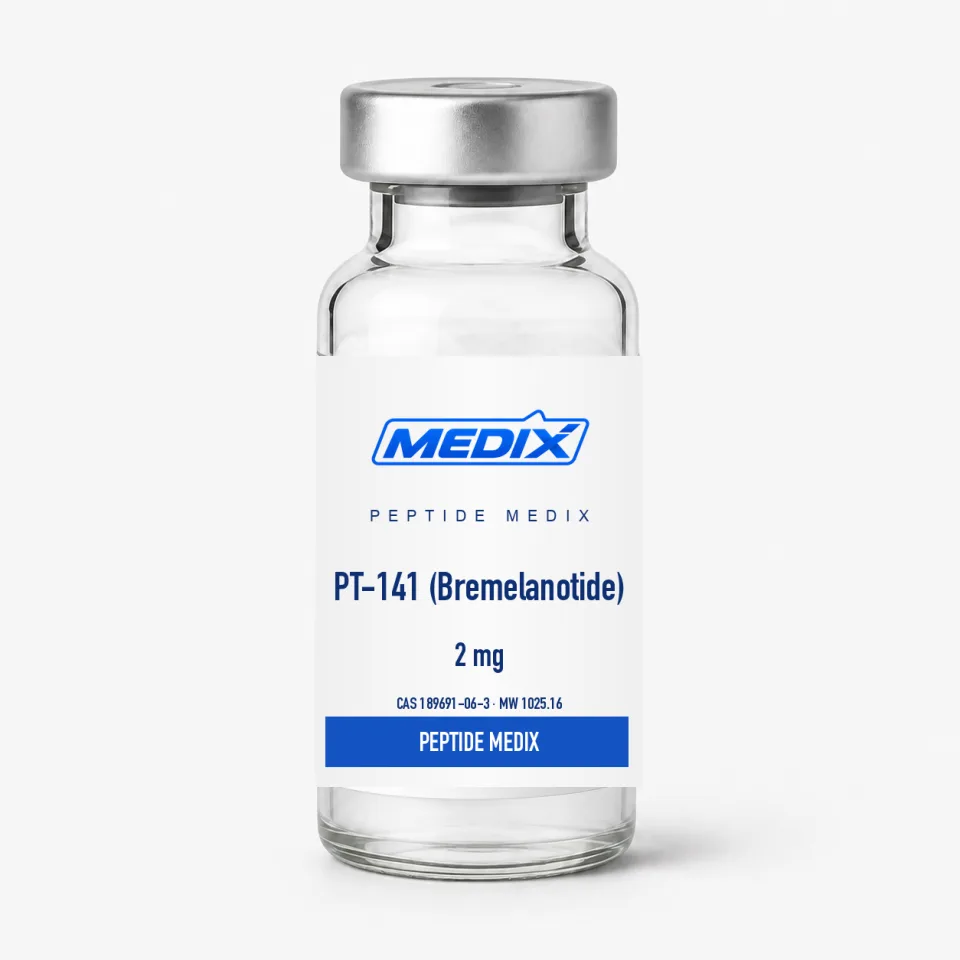
CAS number (active) 189691-06-3
Molecular formula (active) C50H68N14O10
Molecular weight (active) 1025.16 g/mol
Amino acid sequence (active) Ac-Nle-cyclo[Asp-His-D-Phe-Arg-Trp-Lys]-OH (side-chain lactam bridge between Asp and Lys)
Peptide class Cyclic heptapeptide; α-MSH analogue and melanocortin receptor agonist
Receptor targets MC3R and MC4R principally; weaker MC1R activity than Melanotan II
Delivery route studied Sublingual / buccal mucosal absorption
Storage Cool, dry and dark; humidity is the principal degradation driver for solid peptide forms
Preparation required None — fixed unit content, no reconstitution step
SKU PT-141-TROCHES-2-MG-10-TROCHES

Highlights

  • 2 mg of bremelanotide per troche, 10 troches per pack (20 mg total peptide)
  • Compressed sublingual lozenge in a slowly eroding base
  • Built from ≥99% HPLC-purity PT-141 with a lot-matched certificate of analysis
  • Same cyclic heptapeptide and lactam-bridged structure as our vial and nasal formats
  • Melanocortin receptor agonist acting principally at MC3R and MC4R
  • Suits dissolution profiling, content-uniformity and route-comparison research
  • Research use only — not a medicine, supplement or confectionery product

What's Included

  • The product option and count selected above
  • Final item and quantity confirmed in cart
  • Laboratory-research-use labeling

Research Overview

Melanocortin pharmacology

The melanocortin system comprises five G-protein-coupled receptors with distinct distributions: MC1R in melanocytes, MC2R responding to ACTH in the adrenal cortex, MC3R and MC4R largely in the central nervous system, and MC5R in exocrine tissue. Bremelanotide is used in research as an agonist weighted toward MC3R and MC4R, and the comparison against Melanotan II — which retains far more MC1R activity and the pigmentation effects that follow — is a recurring theme in structure-activity work on this scaffold.

Why the sublingual route is studied

  • Buccal and sublingual mucosa are thin, richly vascularised and bypass first-pass hepatic metabolism
  • Peptides above roughly a kilodalton face a steep permeability penalty across mucosal epithelium, making PT-141 an informative test case at 1025 g/mol
  • Residence time is short — saliva clearance competes directly with absorption, which is what a slowly eroding base is meant to counter
  • Permeation enhancers, mucoadhesive polymers and pH modifiers are the usual formulation levers, and each can be isolated experimentally

A troche is not a neutral container. Compression force, base composition, hardness, disintegration behaviour and residual moisture all influence release kinetics, and content uniformity across a pack is an empirical question rather than an assumption. Standard dissolution apparatus adapted for buccal simulation, paired with HPLC quantification of released peptide, is the usual approach; sampling across the pack rather than from one region is what makes uniformity data meaningful.

Stability considerations for a cyclic peptide in a solid base

The lactam bridge that constrains this peptide's conformation also confers useful resistance to exopeptidase attack relative to linear analogues, but solid-state stability depends on excipient compatibility and moisture. Forced-degradation and accelerated-stability studies on the finished troche address a different question from stability of the lyophilized powder, and results from one do not transfer to the other.
PT-141 Troches (Sublingual) FAQ

How much PT-141 is in each troche?
Each troche contains 2 mg of bremelanotide, and a pack holds ten, giving 20 mg of peptide in total. The peptide used in manufacture is analysed to ≥99% purity by HPLC and the value is stated on the lot-matched certificate of analysis.
How does this differ from the PT-141 vial or nasal spray?
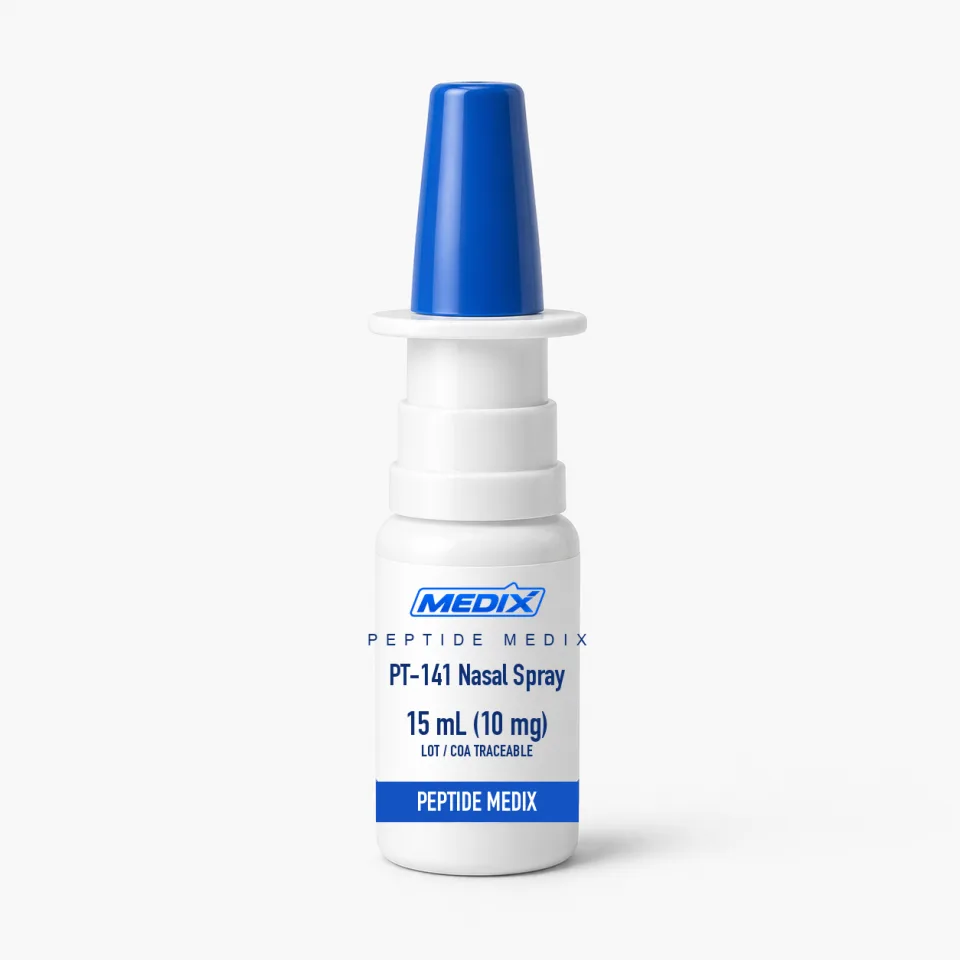
The molecule is identical; the presentation is not. The vial is lyophilized powder requiring reconstitution, the nasal spray is a metered aqueous solution, and the troche is a fixed-content solid. Having all three lets a study compare mucosal routes using one peptide lot.
Why study sublingual delivery for a peptide?
Because the sublingual mucosa drains into systemic circulation without first-pass hepatic metabolism, which destroys most swallowed peptides. The trade-off is a permeability barrier that penalises molecules above about a kilodalton, so PT-141 sits right where the interesting formulation questions are.
Is a certificate of analysis available?
Yes. The PT-141 used in each troche lot is analysed by reverse-phase HPLC for purity of ≥99% and confirmed by mass spectrometry. A lot-matched COA is available on request — quote the batch code printed on the pack.
Do troches need refrigeration?
Not strictly. Cool, dry, dark storage is sufficient and humidity control matters more than temperature. Refrigeration extends shelf life, but the pack should be equilibrated to room temperature before opening so moisture does not condense onto the troches.

This catalog listing is for laboratory research use only. It is not represented as a drug, food, supplement, cosmetic or diagnostic product, and it is not offered for human or veterinary use.

Customer Reviews

0 reviews
5 star
0%
4 star
0%
3 star
0%
2 star
0%
1 star
0%

Leave Your Review

Rating

No reviews yet — be the first!

Leave Your Review

Rating

Keep exploring

Related Products & Shopping Guides

Compare PT-141 Troches (Sublingual) with relevant categories, product topics, and practical shopping information.

Often researched together

Related research peptides, blends and lab supplies frequently ordered with PT-141 Troches (Sublingual).

15% OFF
PT-141 (Bremelanotide)

Peptide Medix

PT-141 (Bremelanotide)

pt-141

5 options

$25.00 $30.00

View options and product details

15% OFF
PT-141 Nasal Spray

Peptide Medix

PT-141 Nasal Spray

pt-141 nasal spray

2 options

$102.00 $120.00

View options and product details

15% OFF
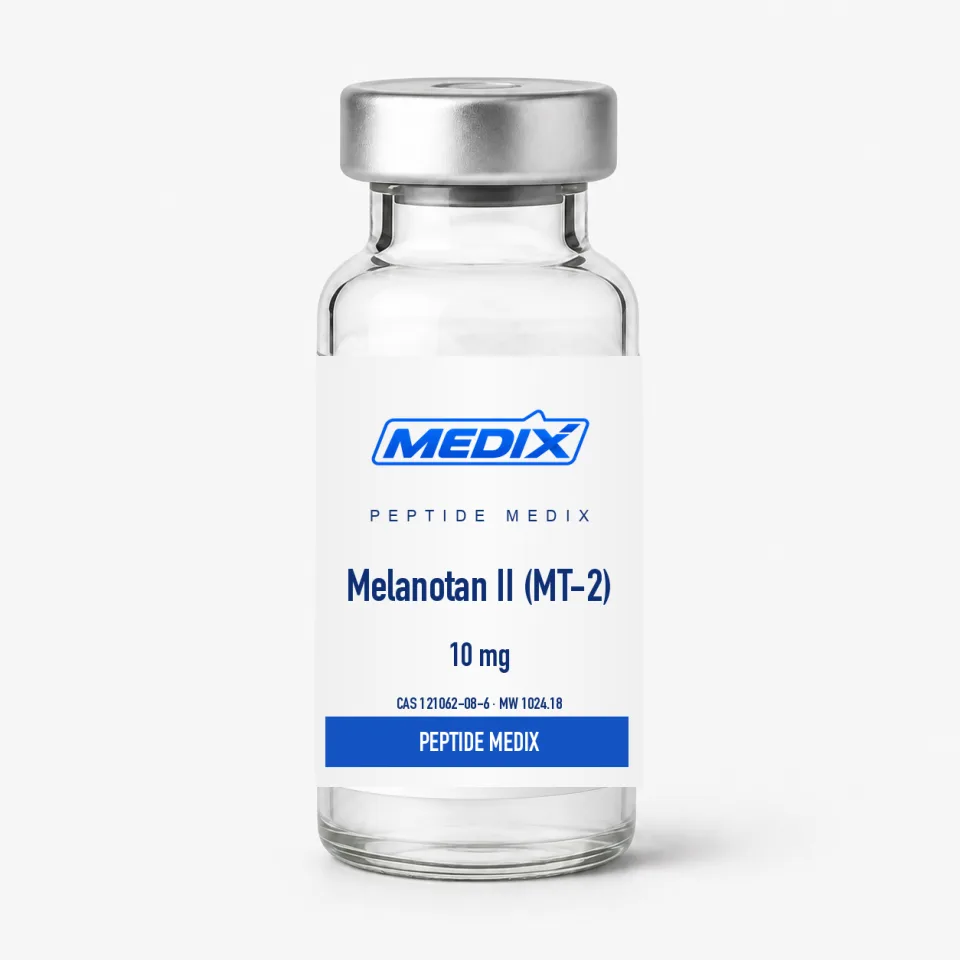
Melanotan II (MT-2)

Peptide Medix

Melanotan II (MT-2)

melanotan-2

2 options

$55.00 $65.00

View options and product details

15% OFF
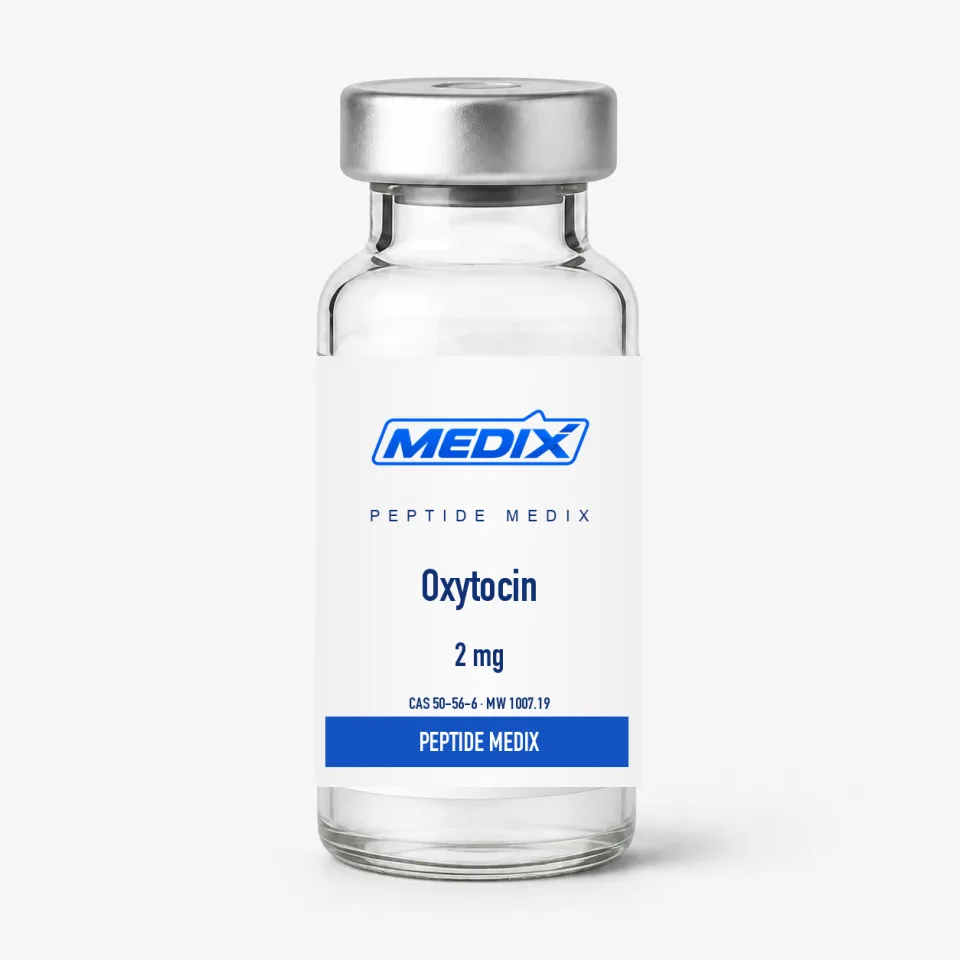
Oxytocin

Peptide Medix

Oxytocin

oxytocin

3 options

$38.00 $45.00

View options and product details

15% OFF
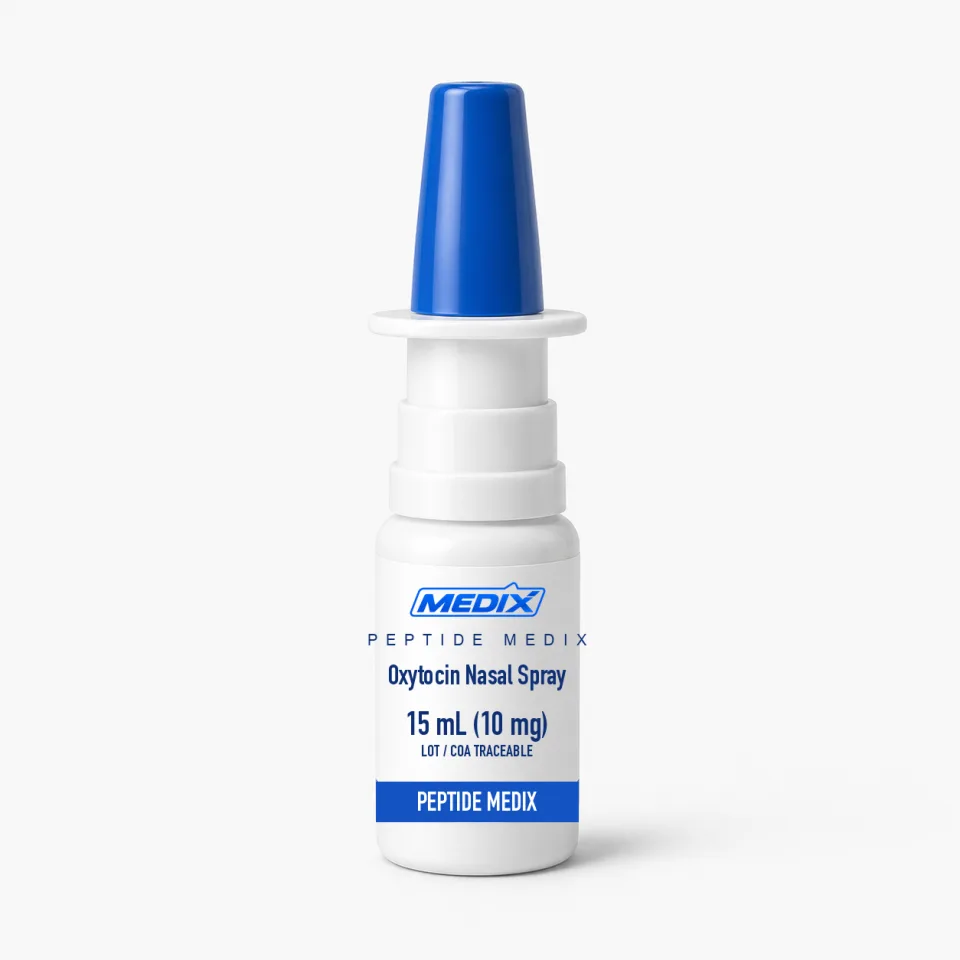
Oxytocin Nasal Spray

Peptide Medix

Oxytocin Nasal Spray

oxytocin nasal spray

2 options

$68.00 $80.00

View options and product details