Research Overview
Why an intranasal presentation
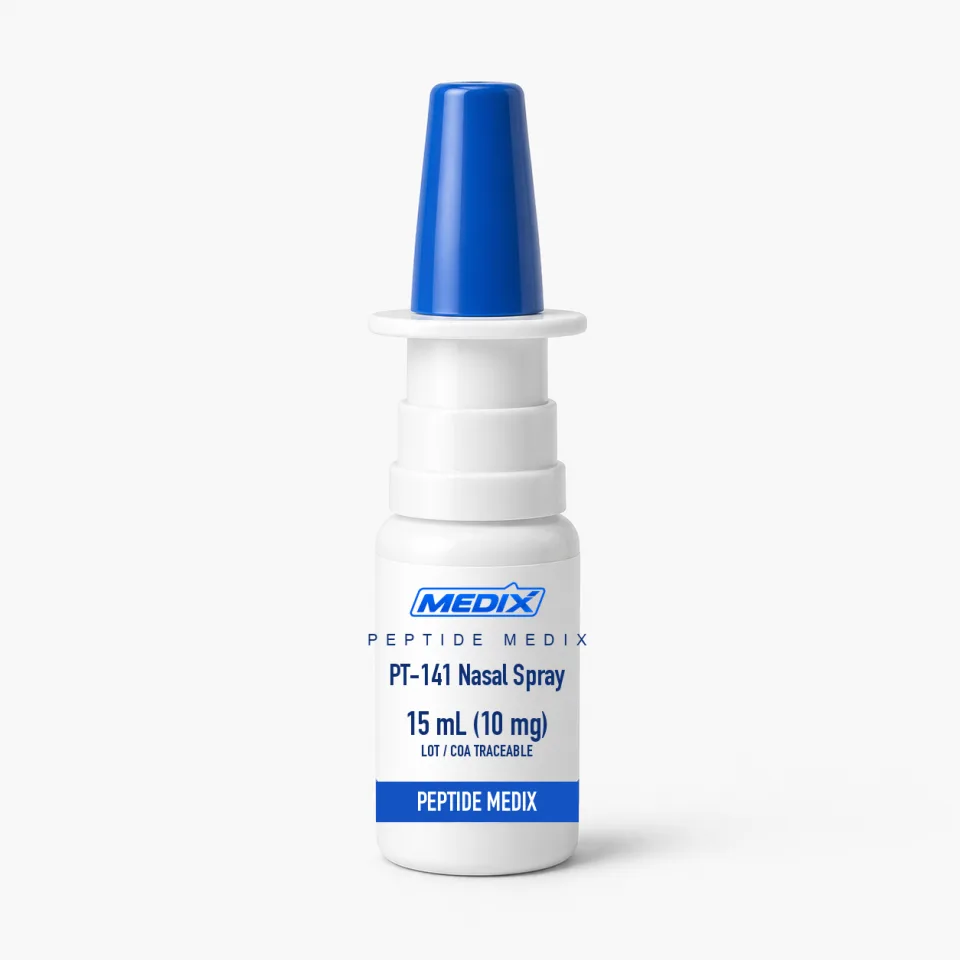
Peptides are poorly absorbed orally because gastric acid and intestinal proteases degrade them and hepatic first-pass metabolism removes much of what survives. The nasal route sidesteps part of that problem: the respiratory epithelium is only a few cell layers thick and sits on a dense capillary bed. Published work on intranasal peptide delivery consistently reports faster appearance in circulation than oral dosing, but also substantial inter-subject variability driven by mucociliary clearance and deposition pattern.
Formulation variables under study
- Metered spray volume and the resulting droplet size distribution
- Solution pH and tonicity relative to nasal fluid
- Viscosity and any mucoadhesive or permeation-enhancing excipient
- Preservative system and its effect on peptide stability over the in-use period
Melanocortin context
Stability considerations
Solutions are inherently less stable than lyophilized powder. Aqueous PT-141 is subject to oxidation at the tryptophan residue and to slow hydrolytic degradation, both accelerated by warmth and light. Cold, dark, upright storage and a documented in-use period are the standard controls; investigators running long timelines usually re-verify concentration analytically rather than assuming label value throughout.