Research Overview
A landmark of peptide chemistry
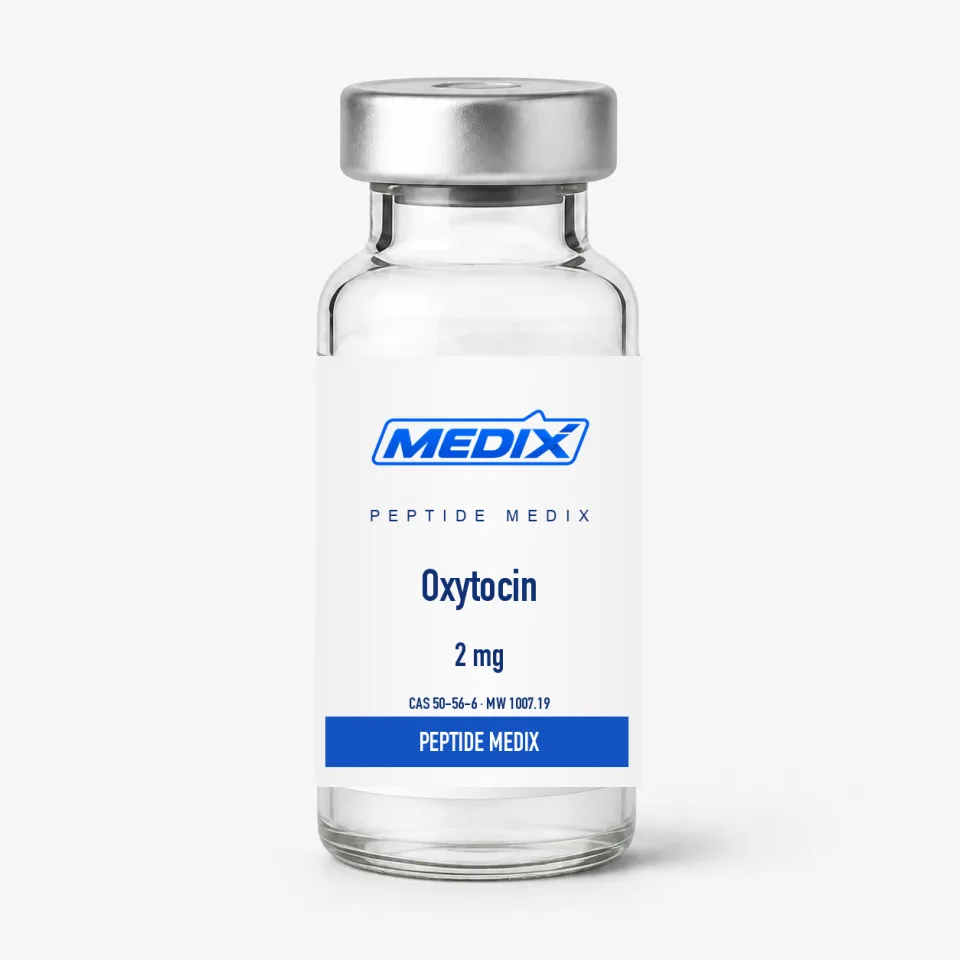
Oxytocin holds a specific place in the history of the field: it was the first polypeptide hormone to be sequenced and then chemically synthesised, and that synthesis established the template for solution- and solid-phase peptide chemistry that followed. Its small size, defined disulfide bridge and well-mapped receptor make it a common positive control and reference standard in assay development.
Central neuropeptide research
Beyond the pituitary, oxytocinergic neurons project widely into the amygdala, nucleus accumbens, hippocampus and brainstem. Animal work — prairie vole pair-bonding studies in particular — has examined how OXTR density in reward-related regions correlates with affiliative behaviour. Rodent and non-human primate literature has also investigated social recognition, maternal behaviour and modulation of fear responses. Human intranasal studies exist but are methodologically contested, largely because central penetration after peripheral delivery is difficult to quantify.
- Social recognition and affiliative behaviour models
- Stress-axis and anxiety-related paradigms
- OXTR distribution and receptor autoradiography
- Selectivity work distinguishing OXTR from V1a/V1b/V2 signalling
Peripheral physiology
OXTR activation on uterine myometrium and mammary myoepithelium triggers Gq-coupled phospholipase C signalling and calcium mobilisation, producing contraction. This is the best-characterised oxytocin pathway and it underpins standard bioassays. Receptor expression is strongly regulated by hormonal state, which is why tissue source and reproductive stage are controlled variables in this type of experiment.
Stability and analysis
The disulfide bridge is the main stability liability: reducing conditions, alkaline pH and trace metals can open the ring and inactivate the peptide, while the tyrosine residue is susceptible to oxidation. Deamidation at the asparagine and glutamine residues is a slow additional degradation route in solution. Researchers typically prepare fresh working solutions, keep pH mildly acidic, use low-binding plasticware, and re-confirm purity against the COA if stock has been held in solution.