Research Overview
The nose-to-brain question
Why the literature disagrees
- Volume and concentration trade-offs against limited nasal cavity capacity
- Formulation pH, tonicity and viscosity affecting residence time before mucociliary clearance
- Peripheral versus central contributions to any observed effect
- Statistical power, since effect sizes in social paradigms are typically small
Peptide chemistry considerations
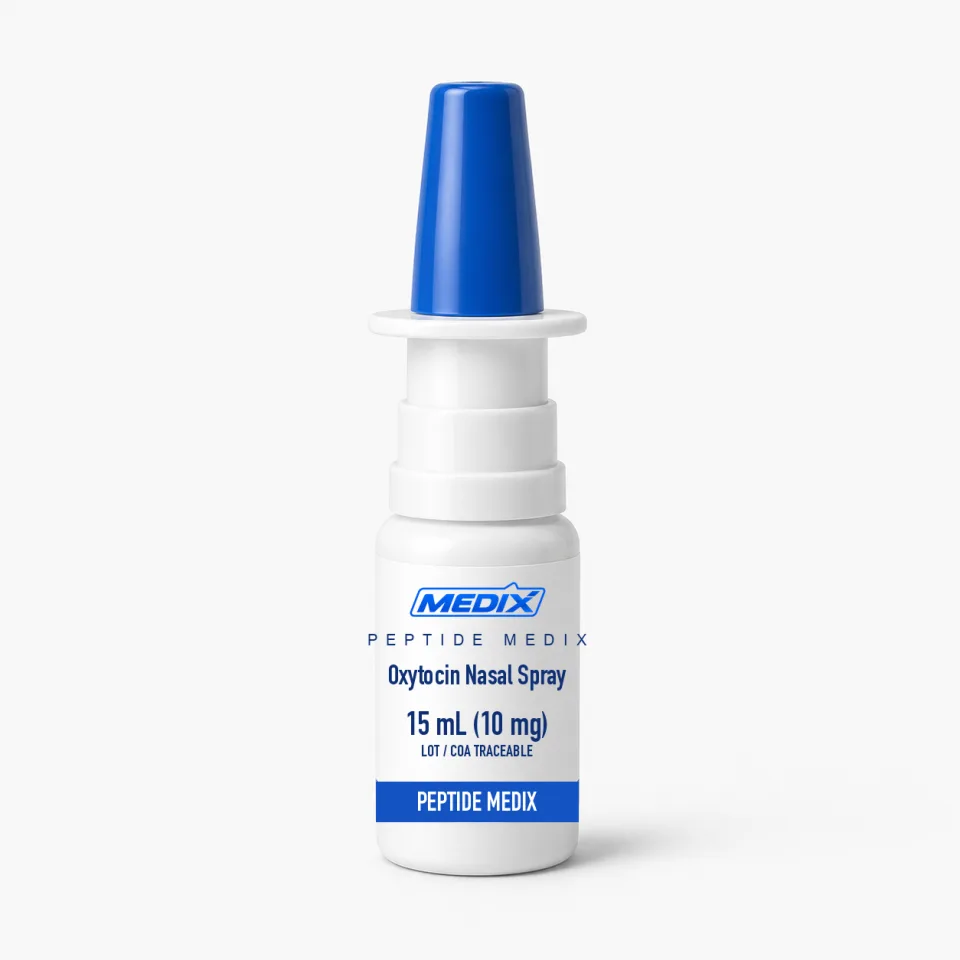
Oxytocin in aqueous solution is less stable than the lyophilized form. The disulfide bridge can be reduced or scrambled, asparagine and glutamine residues deamidate slowly, and the tyrosine is oxidation-prone. Trace metal contamination and alkaline pH accelerate all of these. Preserved, mildly acidic, refrigerated formulations are the standard mitigation, and analytical verification of concentration is advisable for studies running over weeks.
Comparative route design
Because the same peptide is available here as lyophilized powder, nasal solution and sublingual troches, researchers can hold the molecule constant and vary only the delivery article. That design isolates formulation and route effects from compound effects, which is otherwise a persistent confound in the delivery literature.