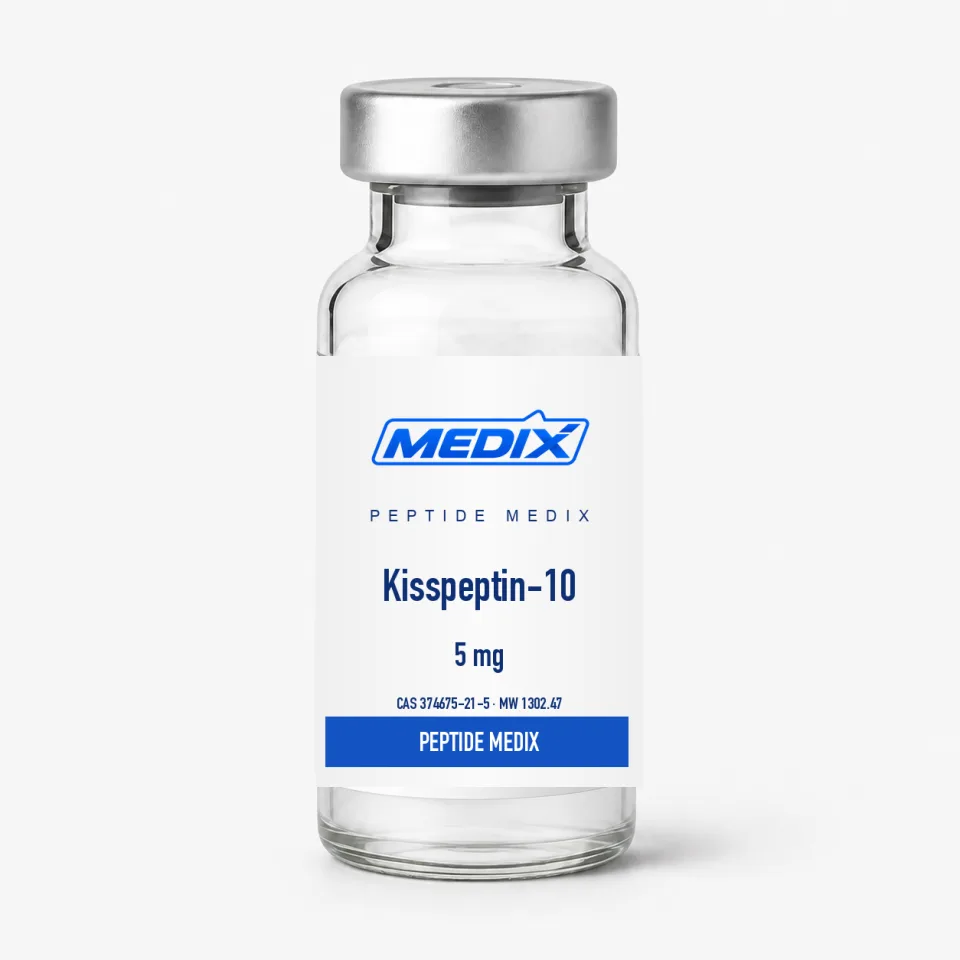
Peptide Medix product catalog

Peptide Medix

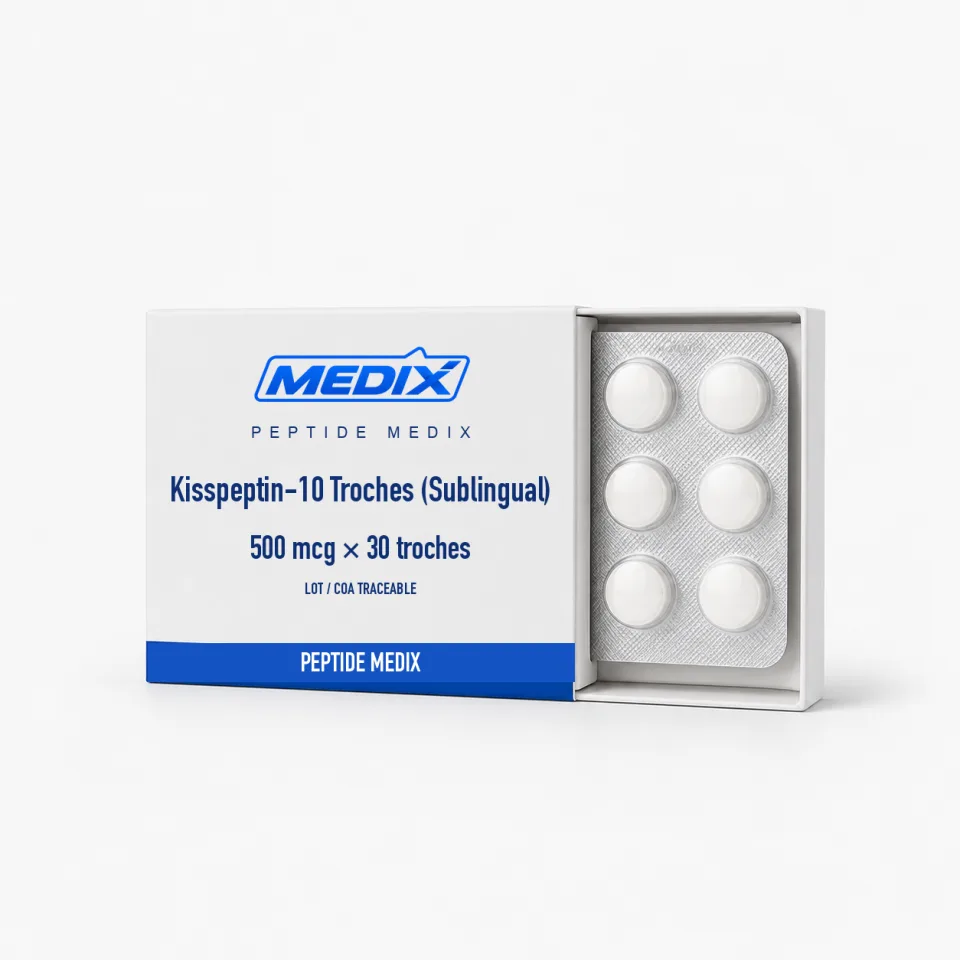
Kisspeptin-10

KISS1 decapeptide fragment and KISS1R (GPR54) receptor agonist

Review catalog details Secure payments
Available to order · 2 of 2 options available
$42.00 $50.00 15% OFF

Choose an option

1
Categories: kisspeptin-10 , kiss1r , gpr54

Choose your delivery method

Standard Shipping is automatically selected at checkout. Customers can upgrade to a faster delivery option anytime.

Overview

Kisspeptin-10 is the ten-residue C-terminal fragment of kisspeptin-54, the product of the KISS1 gene. It is the minimum sequence that retains full activity at KISS1R — the G-protein-coupled receptor originally catalogued as GPR54 — and the C-terminal amide and terminal Arg-Phe motif are both essential to that binding. The parent gene was first identified in cancer research as a metastasis suppressor, which is why the family carries the name metastin, before its role in reproductive neuroendocrinology became apparent.

Specifications

Brand Peptide Medix
Category Hormonal & Fertility Peptides
Form Lyophilized white to off-white powder, sealed glass vial
Purity ≥99% by HPLC; lot-matched COA
Available sizes 5 mg, 10 mg
CAS number 374675-21-5
Molecular formula C63H83N17O14
Molecular weight 1302.47 g/mol
Amino acid sequence Tyr-Asn-Trp-Asn-Ser-Phe-Gly-Leu-Arg-Phe-NH2
Peptide class Linear amidated decapeptide; RFamide-related peptide
Receptor target KISS1R (GPR54), a Gq/11-coupled class A GPCR
Research areas GnRH pulse generation, HPG-axis regulation, puberty onset models, metastasis suppression
Solubility Soluble in water and bacteriostatic water; dilute acetic acid or DMSO aids stubborn lots
Storage (lyophilized) −20 °C, desiccated and protected from light
Storage (reconstituted) 2–8 °C for immediate use; aliquot at −20 °C or below for longer holds
SKU KISSPEPTIN-10-5-MG

Highlights

  • ≥99% purity by HPLC with mass-spec identity confirmation and lot-matched COA
  • Two sizes: 5 mg and 10 mg lyophilized vials
  • Minimum active C-terminal fragment of kisspeptin-54 (metastin)
  • Potent agonist at KISS1R / GPR54, upstream of GnRH neurons
  • Central tool compound in reproductive neuroendocrinology research
  • Also studied in the original metastasis-suppression literature
  • Sealed, desiccated vials; US-sourced and US-shipped
  • For laboratory research use only — not a drug or supplement

What's Included

  • The vial option and size selected above
  • Final item and quantity confirmed in cart
  • Laboratory-research-use labeling

Research Overview

Two origins, one peptide

KISS1 was first characterised as a metastasis-suppressor gene in melanoma cell lines, and its product was named metastin for that reason. Its reproductive function surfaced independently when investigators found that inactivating mutations in the orphan receptor GPR54 caused failure of pubertal development. Both literatures remain active, and Kisspeptin-10 serves as the standard tool compound in each.

Position in the HPG axis

Kisspeptin neurons form two distinct populations. Those in the arcuate nucleus co-express neurokinin B and dynorphin — the so-called KNDy neurons — and are implicated in generating the pulsatile rhythm that drives GnRH release. Those in the anteroventral periventricular nucleus mediate positive oestrogen feedback in models of the preovulatory surge. Because GnRH neurons themselves express KISS1R densely, kisspeptin sits directly upstream of the entire cascade to LH, FSH and gonadal steroid output.

  • Pulsatile versus continuous stimulation and downstream receptor behaviour
  • Steroid feedback integration in arcuate and AVPV populations
  • Puberty-onset timing in animal models
  • Comparisons with GnRH agonists such as gonadorelin and triptorelin, which act one step lower in the axis

Structural requirements

Structure–activity work shows that the C-terminal decapeptide carries essentially all of the receptor activity present in the 54-residue parent, and that the terminal amide is indispensable — the free acid loses potency dramatically. The RFamide motif that gives the family its name is the key recognition element. Kisspeptin-10 has a short circulating half-life relative to kisspeptin-54, a difference that itself is a common experimental variable.
Handling characteristics

Handling & Storage

Equilibrate the vial to room temperature before opening so that no moisture condenses on the lyophilized cake. Reconstitute with sterile or bacteriostatic water added slowly down the vial wall, swirling gently until clear; a small amount of dilute acetic acid can help if a lot dissolves reluctantly. Keep reconstituted material at 2–8 °C for immediate work and store single-use aliquots at −20 °C or below for longer periods, since repeated freeze–thaw degrades linear peptides quickly. Use low-binding plasticware for dilute working solutions to limit surface adsorption, and label every aliquot with concentration, solvent, date and lot number.

Kisspeptin-10 FAQ

What is the relationship between Kisspeptin-10 and kisspeptin-54?
Kisspeptin-10 is the C-terminal ten residues of kisspeptin-54, the full-length KISS1 gene product. It retains essentially all activity at KISS1R, making it the practical tool compound, though it clears faster than the longer parent peptide — a difference researchers often exploit deliberately.
Which receptor does it act on?
KISS1R, previously catalogued as the orphan receptor GPR54. It is a Gq/11-coupled class A GPCR expressed densely on GnRH neurons, which places kisspeptin signalling directly upstream of the hypothalamic–pituitary–gonadal axis in the models where it is studied.
Is the purity independently verified?
Yes. Every lot is analysed by reverse-phase HPLC showing ≥99% purity and confirmed by mass spectrometry, with a lot-matched certificate of analysis available on request. The vial's batch number matches the COA so measurements can be traced to a specific analysis.
How does it differ from gonadorelin or triptorelin?
Kisspeptin-10 acts one level higher in the axis. It stimulates GnRH neurons themselves, whereas gonadorelin is GnRH and triptorelin is a GnRH analogue, both acting directly on pituitary GnRH receptors. That hierarchy is why the three are often compared within a single study design.
What sizes are stocked and how should they be stored?
Kisspeptin-10 is available in 5 mg and 10 mg lyophilized vials. Store sealed vials at −20 °C, desiccated and protected from light. After reconstitution, hold at 2–8 °C for short-term use or aliquot and freeze, avoiding repeated freeze–thaw cycles.
Why is a metastasis-suppressor gene involved in reproduction?
The KISS1 gene was named for its cancer biology role before its receptor's reproductive function was identified through human genetics. Both roles are genuine; the same peptide-receptor pair participates in distinct tissue contexts, and both literatures use Kisspeptin-10 as the reference agonist.

This catalog listing is for laboratory research use only. It is not represented as a drug, food, supplement, cosmetic or diagnostic product, and it is not offered for human or veterinary use.

Customer Reviews

0 reviews
5 star
0%
4 star
0%
3 star
0%
2 star
0%
1 star
0%

Leave Your Review

Rating

No reviews yet — be the first!

Leave Your Review

Rating

Keep exploring

Related Products & Shopping Guides

Compare Kisspeptin-10 with relevant categories, product topics, and practical shopping information.

Often researched together

Related research peptides, blends and lab supplies frequently ordered with Kisspeptin-10.

15% OFF
Gonadorelin

Peptide Medix

Gonadorelin

gonadorelin

3 options

$38.00 $45.00

View options and product details

15% OFF
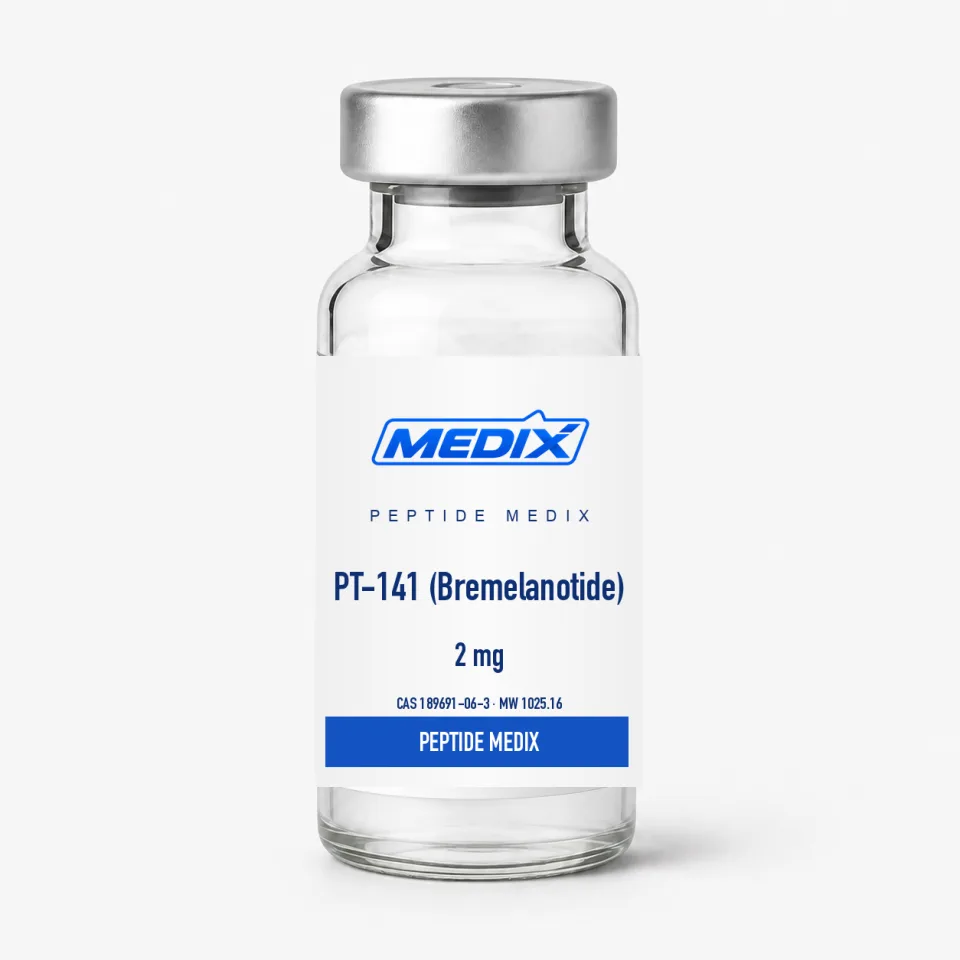
PT-141 (Bremelanotide)

Peptide Medix

PT-141 (Bremelanotide)

pt-141

5 options

$25.00 $30.00

View options and product details

15% OFF
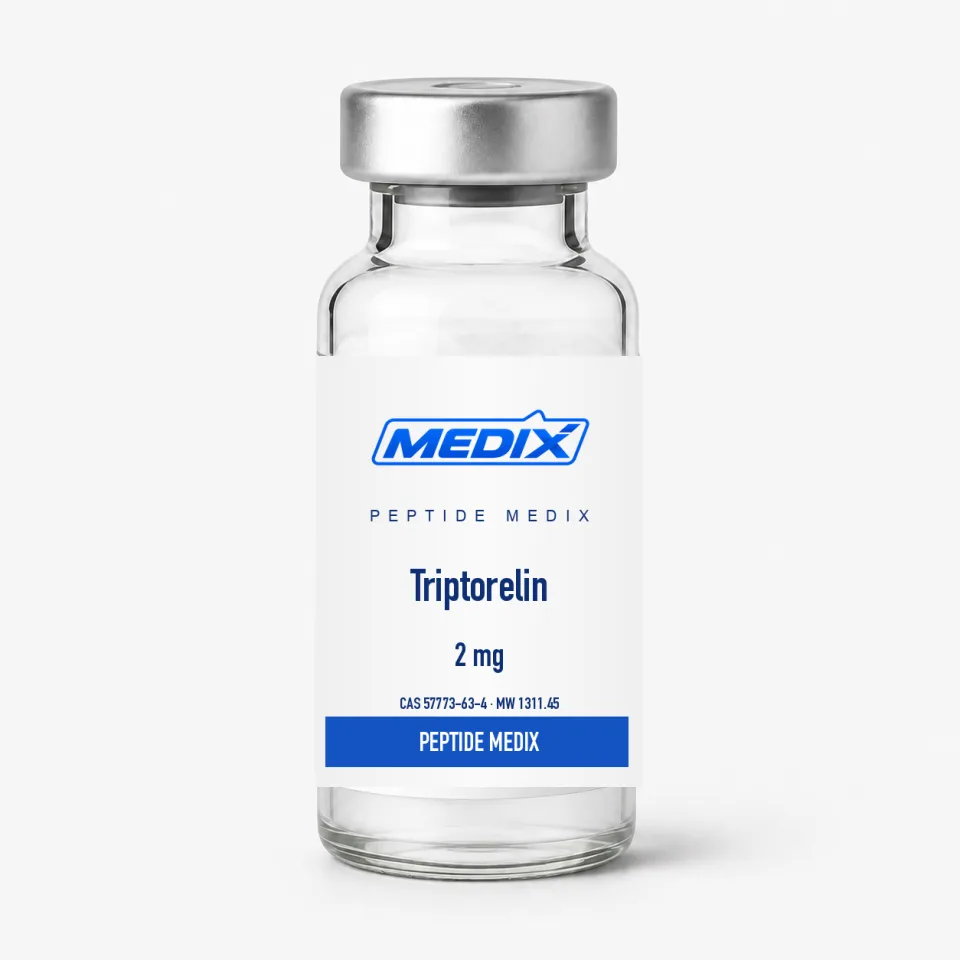
Triptorelin

Peptide Medix

Triptorelin

triptorelin
$51.00 $60.00

View options and product details

15% OFF
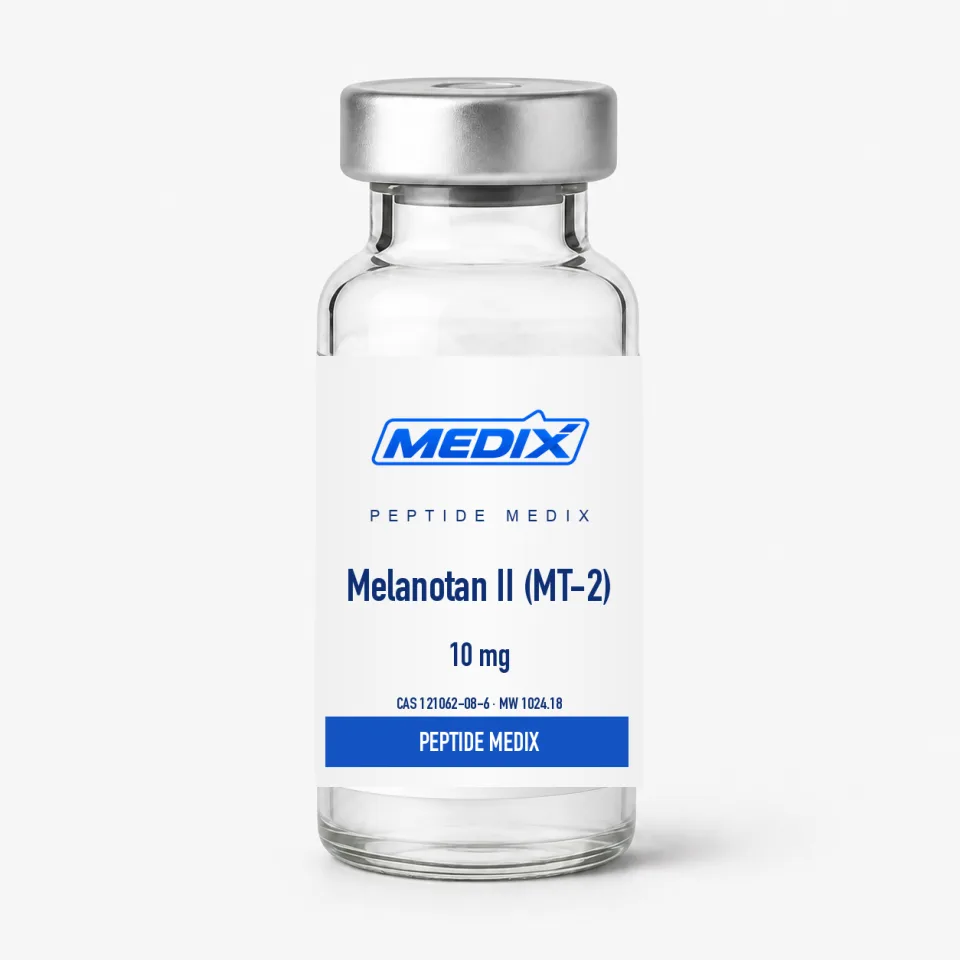
Melanotan II (MT-2)

Peptide Medix

Melanotan II (MT-2)

melanotan-2

2 options

$55.00 $65.00

View options and product details