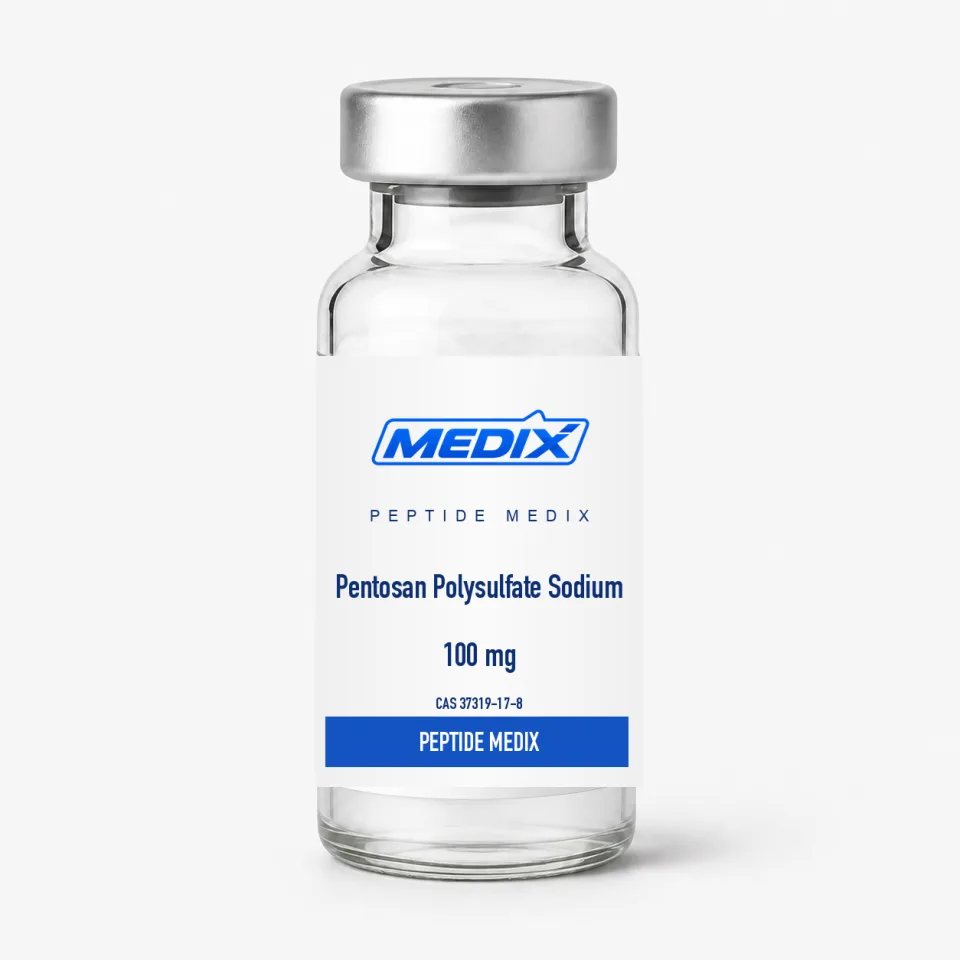
Peptide Medix product catalog

Peptide Medix

Pentosan Polysulfate Sodium

Semi-synthetic sulfated xylan polysaccharide, 100 mg and 250 mg vials

Review catalog details Secure payments
Available to order · 2 of 2 options available
$72.00 $85.00 15% OFF

Choose an option

1
Categories: pentosan polysulfate , pps , sulfated polysaccharide

Choose your delivery method

Standard Shipping is automatically selected at checkout. Customers can upgrade to a faster delivery option anytime.

Overview

Pentosan polysulfate sodium (PPS) is not a peptide at all — it is a semi-synthetic sulfated polysaccharide, made by chemically sulfating xylan extracted from beechwood hemicellulose. The result is a linear chain of β-1,4-linked xylopyranose units carrying sulfate ester groups, with a small proportion of 4-O-methylglucuronic acid side residues. Average chain length is modest by polysaccharide standards, typically in the region of 4–6 kDa, and it is that combination of short chain and dense negative charge that gives the molecule its heparin-like character without heparin's anticoagulant potency.

Researchers work with PPS because it behaves as a glycosaminoglycan mimetic. Its sulfation pattern lets it bind the same cationic protein surfaces that native GAGs such as heparan sulfate and chondroitin sulfate engage — growth factors, complement components, proteases and cartilage matrix proteins. That has made it a recurring tool compound in cartilage and connective-tissue models, in studies of epithelial barrier function, and in work on the glycocalyx.

Specifications

Brand Peptide Medix
Category Tissue Repair & Healing Peptides
Form Lyophilized powder, sealed glass vial
Available sizes 100 mg, 250 mg
Purity Third-party tested; lot-matched COA available
CAS number 37319-17-8
Chemical class Semi-synthetic sulfated polysaccharide (sulfated xylan), sodium salt
Source material Xylan from beechwood hemicellulose, chemically sulfated
Backbone β-1,4-linked xylopyranose units with sulfate ester substitution and occasional 4-O-methylglucuronic acid side residues
Molecular weight Polydisperse; average molecular weight typically reported in the 4,000–6,000 Da range
Also known as PPS, sodium pentosan polysulfate, xylan polysulfate
Functional description Glycosaminoglycan mimetic; low-affinity, heparin-like polyanion
Research areas Cartilage and connective-tissue matrix, urothelial and epithelial barrier models, glycocalyx biology, growth-factor and protease binding
Solubility Freely soluble in water; gives a clear, slightly viscous solution
Storage (lyophilized) 2–8 °C or below, sealed, protected from light and moisture — the powder is hygroscopic
Storage (reconstituted) 2–8 °C, used within the study window
SKU PENTOSAN-POLYSULFATE-100-MG

Highlights

  • Semi-synthetic sulfated polysaccharide from beechwood xylan — not a peptide
  • β-1,4-linked xylopyranose backbone with sulfate esters; CAS 37319-17-8
  • Behaves as a glycosaminoglycan mimetic with heparin-like charge density
  • Supplied lyophilized in 100 mg and 250 mg sealed vials
  • Polydisperse by nature — characterised by average MW and degree of sulfation, not a single mass
  • Studied in cartilage matrix, epithelial barrier and glycocalyx models
  • Lot-matched COA available; ships from the United States
  • Research use only — not a drug, supplement or consumer product

What's Included

  • The vial option and size selected above
  • Final item and quantity confirmed in cart
  • Laboratory-research-use labeling

Research Overview

Chemistry of a polydisperse polyanion

Unlike a synthetic peptide, PPS has no single molecular formula. Sulfation of a natural xylan yields a distribution of chain lengths and sulfation densities, so lots are characterised by average molecular weight, degree of sulfation and sulfur content rather than by an exact mass. Researchers designing quantitative experiments generally record the lot's stated average MW and sulfur content, because binding affinity for cationic protein partners scales with charge density and comparing across lots without those figures is unreliable.

Why it is described as a GAG mimetic

Connective-tissue and barrier research

  • Cartilage explant and chondrocyte models, where investigators have examined proteoglycan synthesis and aggrecanase and matrix metalloproteinase activity
  • Urothelial barrier models, reflecting the molecule's long-standing association with bladder surface GAG-layer research
  • Endothelial glycocalyx studies, where exogenous polyanions are used as probes of barrier and shear-sensing function
  • Fibrosis and matrix-remodelling models, given the role of sulfated polysaccharides in sequestering profibrotic growth factors
Regulatory context

Handling & Storage

The lyophilized powder is hygroscopic, so let a cold vial reach room temperature before breaking the seal — opening a chilled vial draws condensation onto the contents. Store sealed at 2–8 °C or below, protected from light and moisture. PPS dissolves readily in water and in aqueous buffers, giving a clear, slightly viscous solution; add diluent down the vial wall and swirl rather than shaking, since vigorous agitation foams polyanionic solutions and makes accurate withdrawal harder. Keep reconstituted material at 2–8 °C and use within the study window. Record lot number, stated average molecular weight and sulfur content alongside every experiment, because these vary between lots.

Pentosan Polysulfate Sodium FAQ

Is pentosan polysulfate a peptide?
No. Despite sitting in the tissue-repair category alongside peptides such as BPC-157 and TB-500, PPS is a sulfated polysaccharide — a xylan backbone of β-1,4-linked xylopyranose units carrying sulfate esters. It is grouped by research area, not by chemical class.
Why is no exact molecular weight given?
Because the material is polydisperse. Sulfating a natural xylan produces a distribution of chain lengths and sulfation densities rather than a single species, so lots are specified by average molecular weight — typically around 4,000–6,000 Da — plus degree of sulfation.
What purity documentation is provided?
Material is third-party tested and a lot-matched certificate of analysis is available on request. For a polysaccharide the COA reports identity, average molecular weight and sulfur or sulfate content rather than the HPLC peptide-purity figure used for synthetic peptides in this catalogue.
How should it be reconstituted and stored?
The powder is hygroscopic — warm a vial to room temperature before opening to avoid condensation. It dissolves freely in water and aqueous buffers; add diluent gently down the vial wall and swirl rather than shake. Store sealed powder at 2–8 °C or below and solutions at 2–8 °C.

This catalog listing is for laboratory research use only. It is not represented as a drug, food, supplement, cosmetic or diagnostic product, and it is not offered for human or veterinary use.

Customer Reviews

0 reviews
5 star
0%
4 star
0%
3 star
0%
2 star
0%
1 star
0%

Leave Your Review

Rating

No reviews yet — be the first!

Leave Your Review

Rating

Keep exploring

Related Products & Shopping Guides

Compare Pentosan Polysulfate Sodium with relevant categories, product topics, and practical shopping information.

Often researched together

Related research peptides, blends and lab supplies frequently ordered with Pentosan Polysulfate Sodium.

15% OFF
BPC-157

Peptide Medix

BPC-157

bpc-157

7 options

$34.00 $40.00

View options and product details

15% OFF
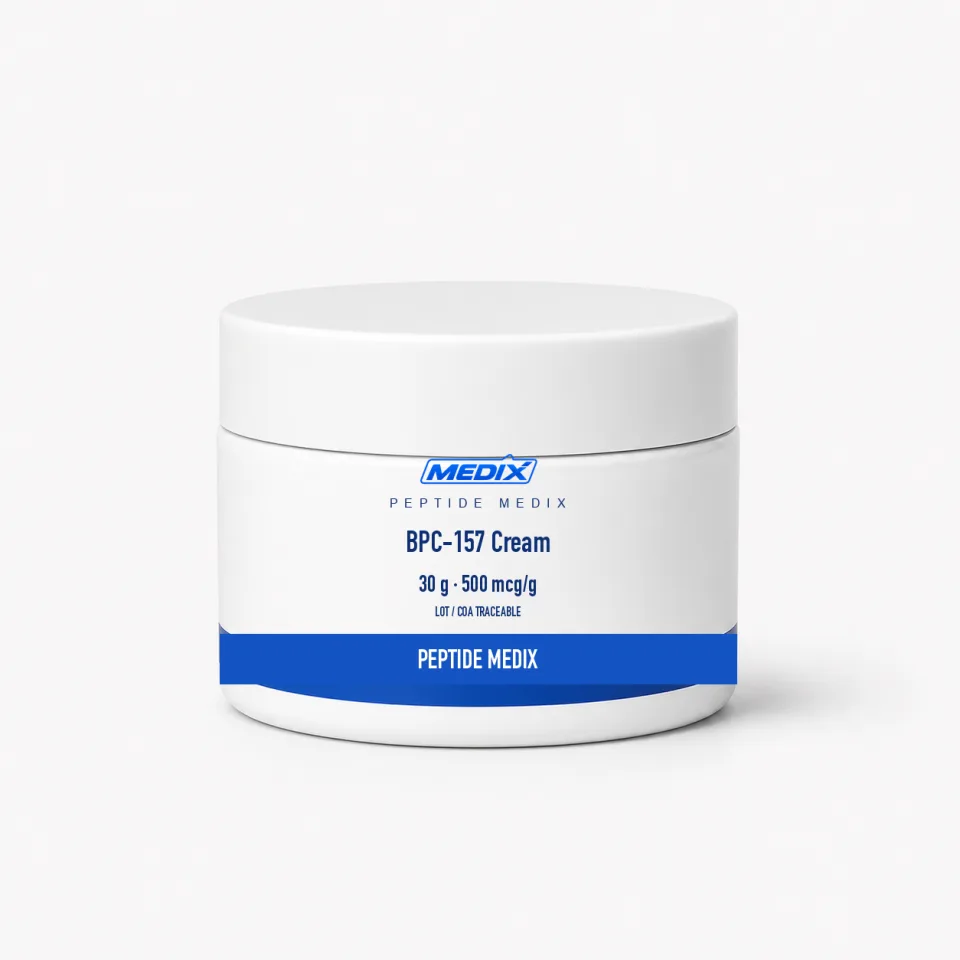
BPC-157 Cream

Peptide Medix

BPC-157 Cream

bpc-157 cream

2 options

$68.00 $80.00

View options and product details

15% OFF
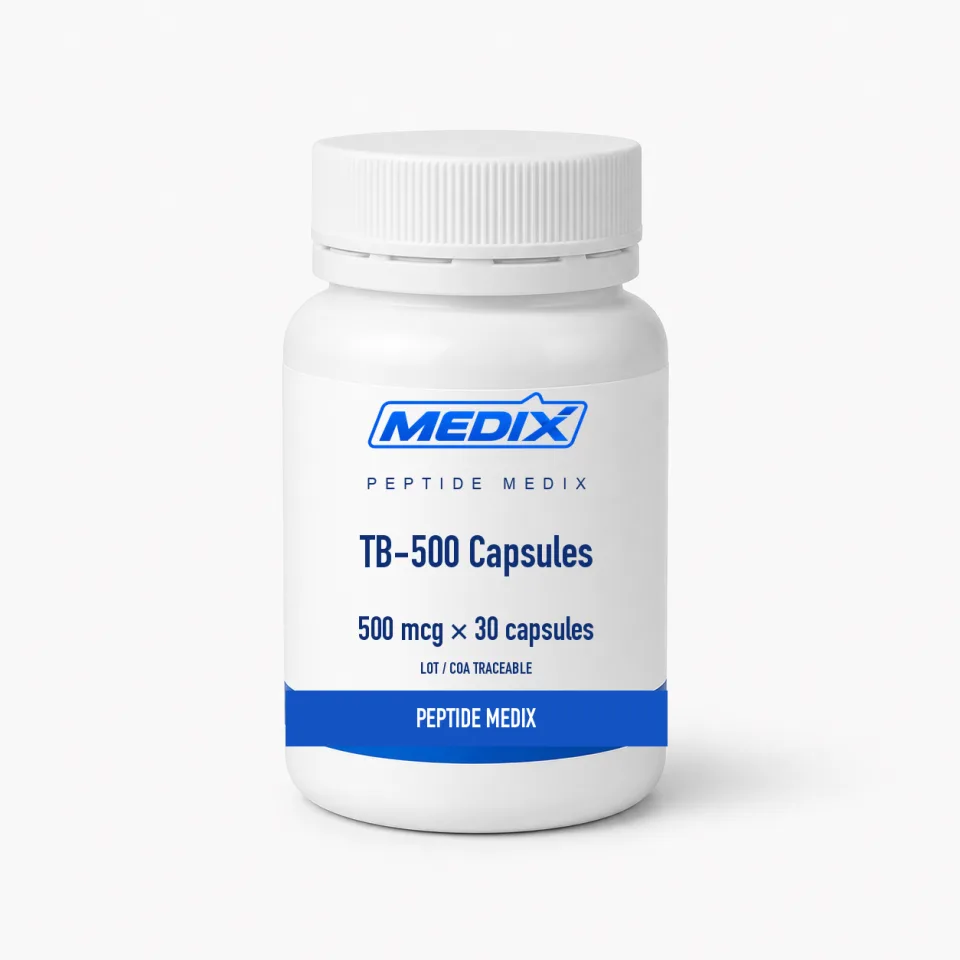
TB-500 Capsules

Peptide Medix

TB-500 Capsules

tb-500 capsules
$72.00 $85.00

View options and product details