Research Overview
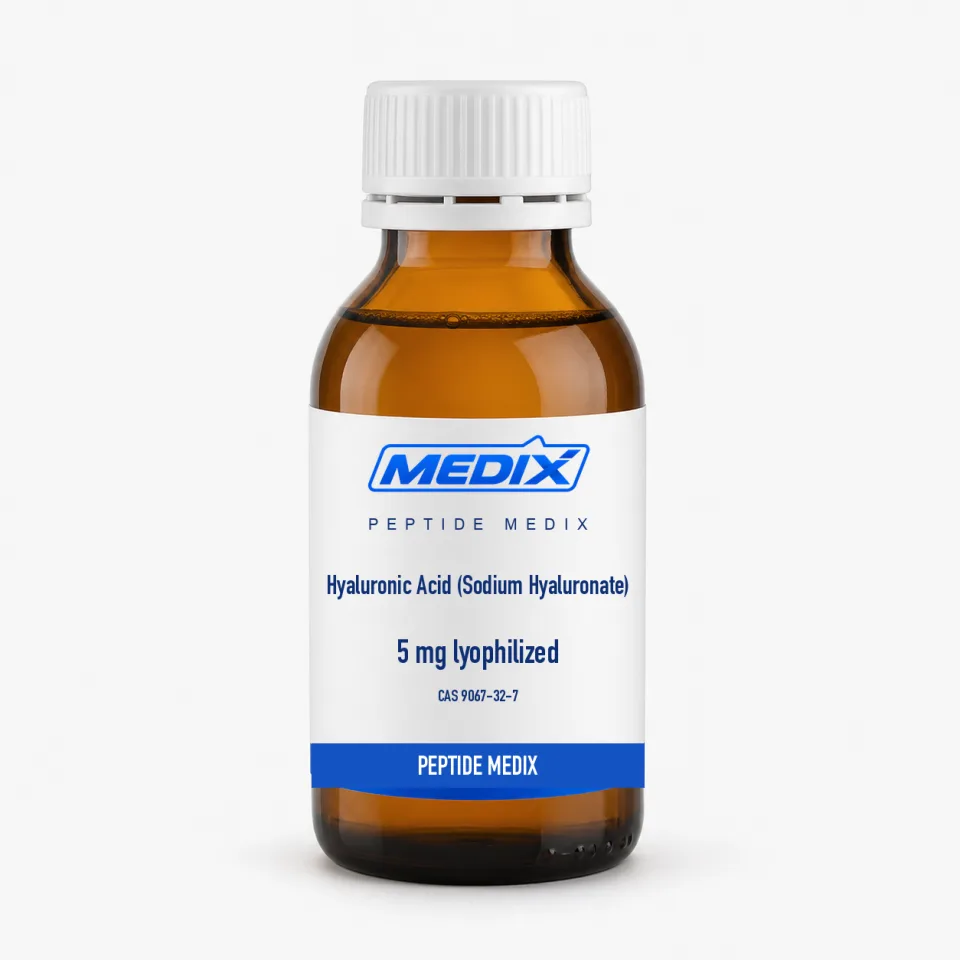
One polymer, many molecular weights
- Dermal models: water-binding capacity, effects on fibroblast culture and matrix organisation
- Joint and synovial models: viscosity, lubrication and boundary-layer behaviour in cartilage explants
- Receptor biology: CD44 clustering, RHAMM-associated motility signalling, LYVE-1 in lymphatic endothelium
Physical chemistry that matters in the lab
Hyaluronan hydrates slowly and forms lumps if the powder is dumped into a stirred vessel. Sprinkling onto the surface, allowing swelling, then mixing gently gives cleaner solutions. The polymer is shear-thinning, so viscosity readings depend on the rate at which they are taken, and chains are degraded by prolonged sonication, autoclaving and strong oxidants — all of which quietly change the material before the experiment begins.
Formulation and delivery research
Because the backbone carries carboxyl and hydroxyl groups, it is a common scaffold for chemical modification — crosslinked gels, methacrylated derivatives and drug-conjugate work all start from this polymer. Investigators also combine it with peptides such as GHK-Cu or PDRN in topical model systems to look at whether a viscous, water-retaining vehicle changes measured delivery or matrix response.