Research Overview
Glutathione as a redox and pigment-pathway agent
Glutathione is the most abundant low-molecular-weight thiol in mammalian cells and the substrate for glutathione peroxidase and glutathione S-transferase chemistry. In pigmentation research it appears in a different role. Published mechanisms proposed for its effect on melanogenesis include interaction with tyrosinase, quenching of free radicals and reactive quinone intermediates generated during melanin synthesis, and a shift in the balance between eumelanin and the lighter pheomelanin. Reviews in this area generally note that evidence quality across these routes is uneven and that topical work is less developed than the cell-culture literature.
Why the vehicle is the experiment
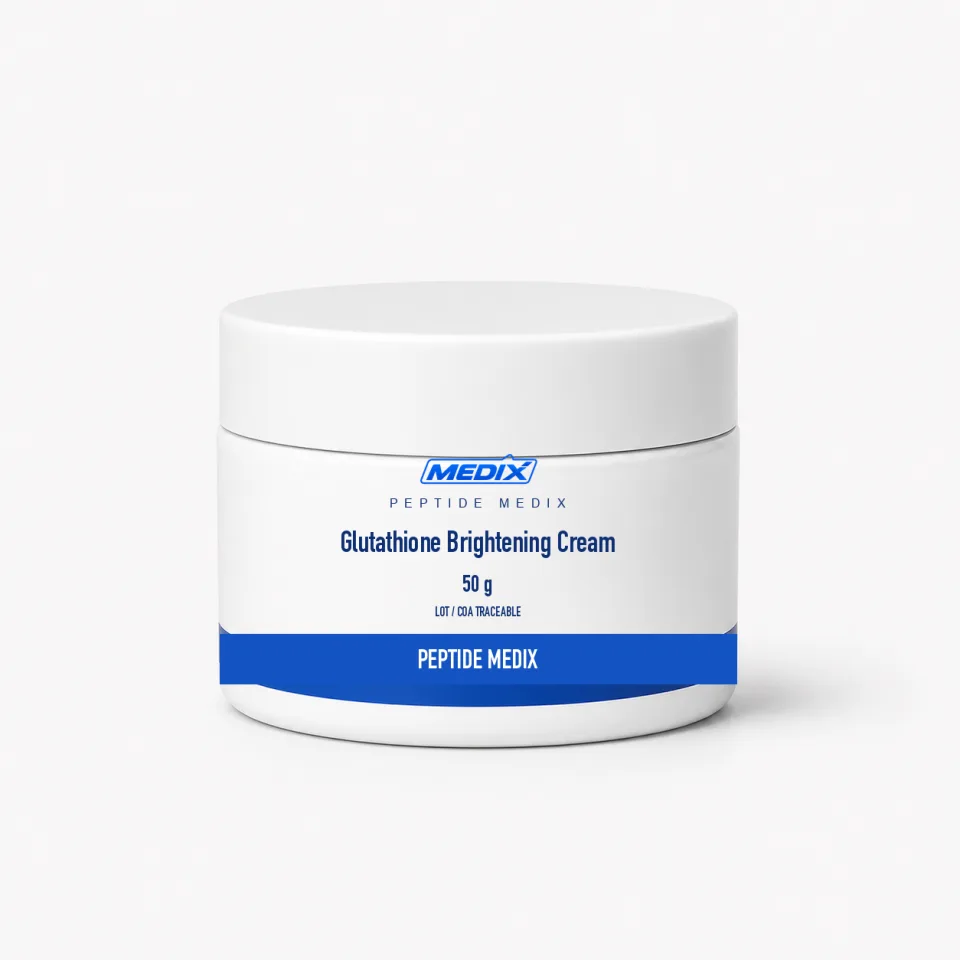
An aqueous serum is designed to deposit active and evaporate; a cream leaves an occlusive residual film. That difference changes stratum corneum hydration, extends contact time and alters how a hydrophilic charged molecule partitions at the skin surface. For a compound with glutathione's physicochemistry — small, polar, poorly permeant on its own — these are the dominant variables in whether anything measurable reaches viable epidermis at all.
Endpoints in topical glutathione research
- Franz diffusion cell permeation across excised skin or synthetic membrane, with receptor-phase quantification
- Melanin content and tyrosinase activity in melanocyte or reconstructed pigmented epidermis models
- Antioxidant capacity assays on the formulated product versus fresh solution
- Vehicle comparison: cream against serum, gel or aqueous solution at matched active loading
The stability problem
The reactive thiol that makes glutathione useful also makes it unstable in a formulated product. It oxidises to the GSSG dimer on exposure to air, and metal ions — copper and iron especially — catalyse that reaction dramatically. Any serious study of a topical glutathione preparation quantifies the reduced fraction at the time of use rather than assuming label content, because a cream that has aged in a warm, repeatedly opened jar may contain substantially more dimer than reduced tripeptide.