Research Overview
The barrier problem
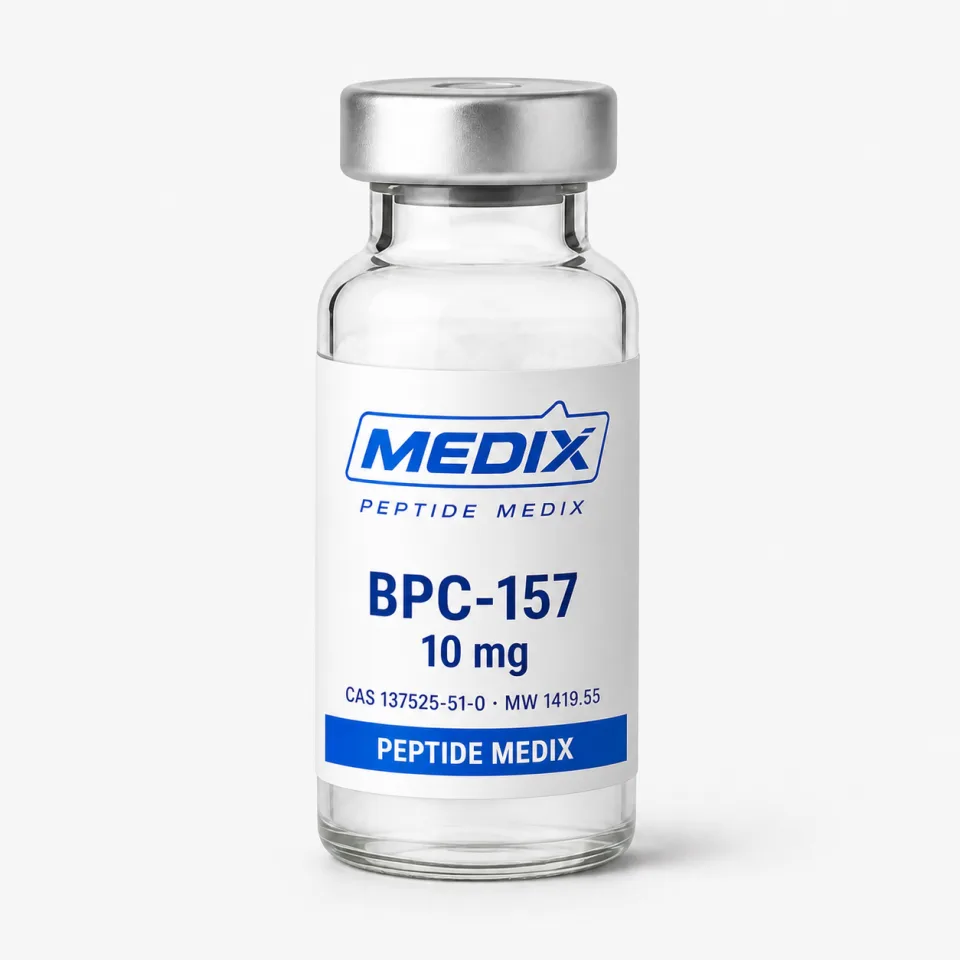
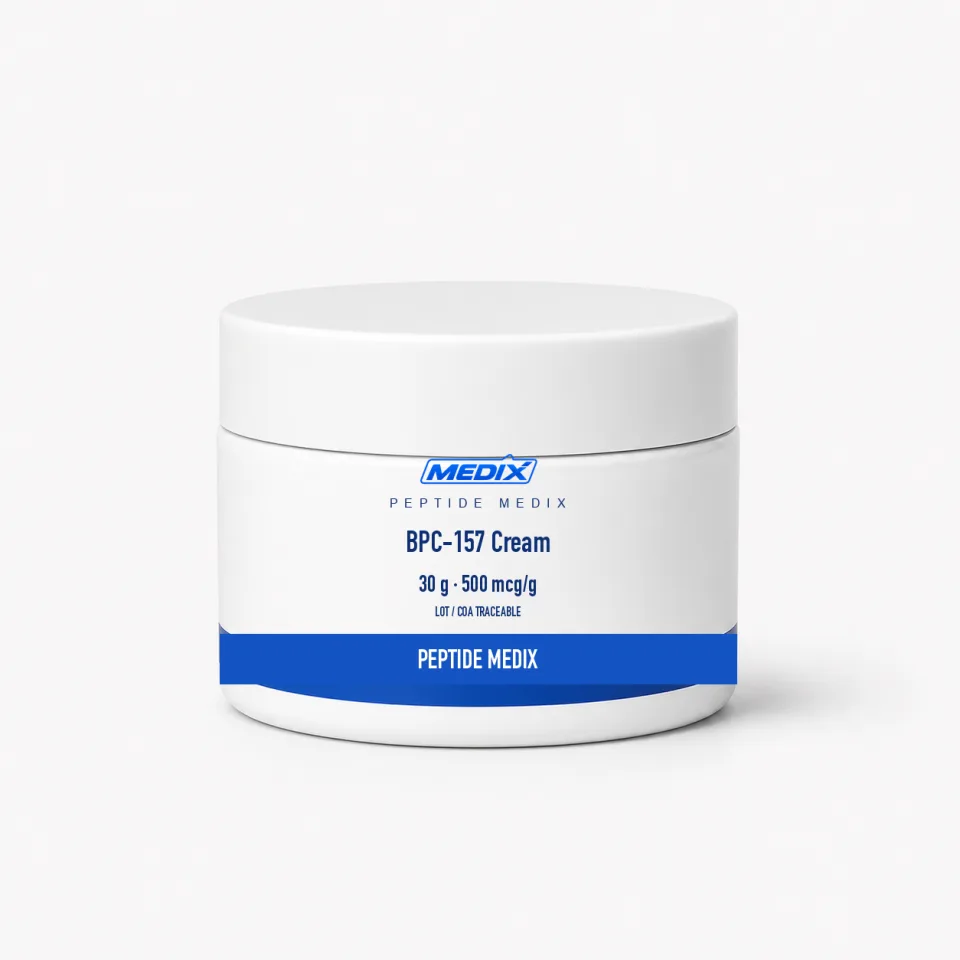
The rate-limiting step for any topical peptide is the stratum corneum. Passive diffusion across intact skin favours small, moderately lipophilic molecules, and the widely cited practical ceiling sits around 500 daltons. BPC-157 is nearly three times that and strongly hydrophilic, so unmodified passive permeation through undamaged skin should be assumed to be minimal unless a study demonstrates otherwise in its own model.
What a fixed-loading cream is useful for
Holding peptide concentration constant lets researchers vary everything else and attribute differences to the variable under test:
- Vehicle composition and the effect of emollients, humectants and surfactants on partitioning
- Occlusion, which raises skin hydration and commonly increases apparent flux
- Barrier state — intact versus tape-stripped, abraded or wounded models behave very differently
- Comparison against a parenteral or oral arm using the same peptide lot
Underlying BPC-157 literature
Published rodent work has examined tendon, ligament and muscle injury models, gastrointestinal mucosal integrity, and vascular responses, with reported mechanisms including modulation of the nitric oxide system, effects on VEGFR2 signalling and increased fibroblast migration in culture. That work almost entirely used systemic or oral routes; extrapolating it to a topical article is not warranted without direct evidence.